
Fight or Flight Meaning: What This Common Stress Response Really Means in Life
Fight or flight means the body’s natural reaction to danger, fear, stress, or pressure. When you feel threatened, your mind and body may prepare either to face the problem or escape from it. The phrase is often used in psychology, health, relationships, work stress, and everyday conversation to describe an automatic survival response.
Quick Answer
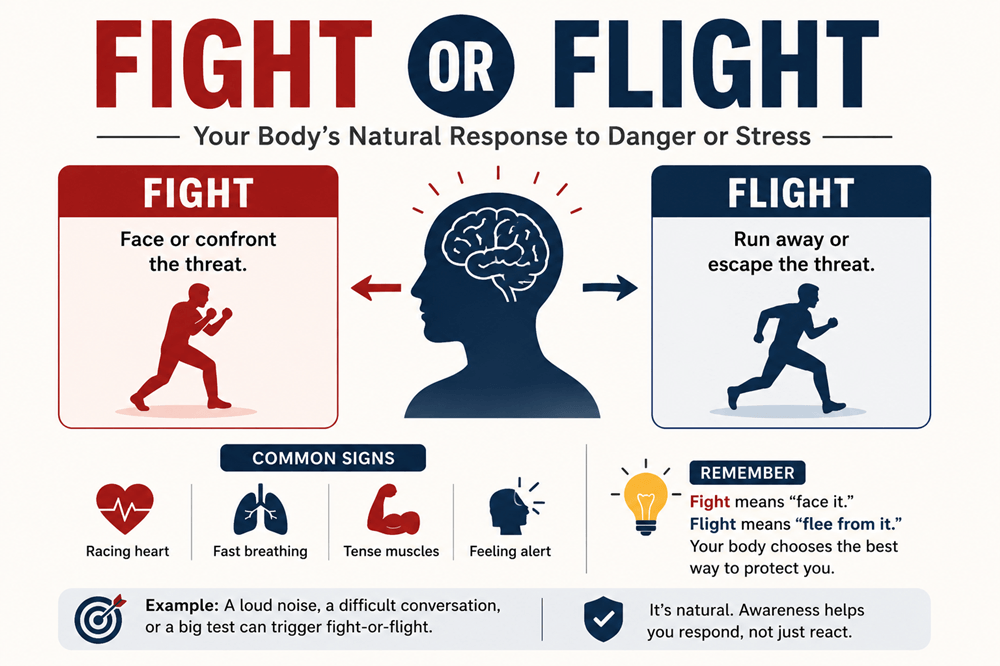
Fight or flight is a phrase used to describe the body’s instinctive response to a threat. Fight means facing or resisting the danger. Flight means running away, avoiding, or escaping the danger.
In simple terms, fight or flight means your body is getting ready to protect you.
Example:
- When the dog barked suddenly, your fight-or-flight response kicked in.
In this sentence, the phrase means the person’s body reacted quickly because it sensed possible danger.
What Does Fight or Flight Mean?
Fight or flight refers to the way your body reacts when it believes you are in danger. This danger can be physical, emotional, social, or even imagined. Your body does not always wait for you to calmly think through the situation. It reacts quickly because its main goal is protection.
The fight part means your body prepares you to confront the threat. You might feel tense, alert, angry, defensive, or ready to argue. In a literal situation, fighting could mean protecting yourself from physical danger. In everyday life, it might mean standing your ground during a conflict, pushing back in a difficult conversation, or becoming more forceful under pressure.
The flight part means your body prepares you to escape. You might want to leave the room, avoid a conversation, cancel a plan, ignore a message, or remove yourself from a stressful situation. This does not always mean physically running away. Sometimes, flight looks like avoidance, silence, distraction, or emotional withdrawal.
Both reactions come from the same basic instinct: survival. Your body senses a possible threat and tries to help you stay safe.
Fight or Flight as a Phrase
The phrase fight or flight is most often used as a noun phrase. It names a reaction or response.
For example:
- Public speaking can trigger fight or flight.
- His fight-or-flight response made him freeze during the argument.
- When the alarm went off, everyone’s fight-or-flight instinct took over.
You will often see the phrase written as fight-or-flight response. In that form, the words are usually hyphenated because they work together as a compound adjective before the noun response.
| Form | Use | Example |
|---|---|---|
| fight or flight | Noun phrase | Fear can trigger fight or flight. |
| fight-or-flight | Adjective before a noun | She had a fight-or-flight reaction. |
Should You Write Fight or Flight or Fight-or-Flight?
Use fight or flight without hyphens when the phrase stands alone as a noun.
Examples:
- The body reacts with fight or flight.
- Stress can push you into fight or flight.
- That sudden noise triggered fight or flight.
Use fight-or-flight with hyphens when the phrase comes before a noun and describes it.
Examples:
- The fight-or-flight response is automatic.
- She noticed a strong fight-or-flight reaction.
- His fight-or-flight instinct took over.
This is the same pattern you see in many compound modifiers. The hyphens help readers understand that the words belong together before the noun.
Examples of Fight or Flight in Sentences
Here are some natural examples of fight or flight in everyday writing:
- The loud crash sent your body into fight or flight.
- During the interview, nerves triggered a fight-or-flight response.
- When you feel criticized, your fight-or-flight instinct may take over before you can think clearly.
- Some people respond to conflict with fight, while others respond with flight.
- The body’s fight-or-flight reaction can make your heart beat faster.
- Her anxiety made every small problem feel like a fight-or-flight moment.
- Instead of staying calm, he went straight into fight or flight.
- The emergency alarm activated everyone’s fight-or-flight response.
In each example, the phrase describes an automatic reaction to stress, fear, or pressure.
What Happens During Fight or Flight?
When your body goes into fight or flight, it prepares you to act quickly. You may notice physical changes before you fully understand what is happening.
Common signs include:
- A faster heartbeat
- Quick or shallow breathing
- Tense muscles
- Sweaty hands
- A tight stomach
- Feeling alert or restless
- Wanting to argue, leave, hide, or escape
These reactions can be useful in real danger. If you need to move quickly, defend yourself, or avoid harm, your body is trying to help. The problem is that modern life can trigger the same response even when you are not in physical danger.
A difficult email, a tense meeting, a family argument, a test, a traffic problem, or an embarrassing moment can all make your body react as if something serious is happening. That is why people often use fight or flight when talking about stress and anxiety.
Fight, Flight, Freeze, and Fawn
Although fight or flight is the most common phrase, people sometimes mention other stress responses too. You may see the words freeze and fawn used with it.
Fight means confronting the threat. This may look like arguing, defending yourself, becoming angry, or taking control.
Flight means escaping the threat. This may look like leaving, avoiding, distracting yourself, or trying to get away from pressure.
Freeze means becoming stuck or unable to act. This may look like silence, numbness, confusion, or feeling unable to make a decision.
Fawn means trying to please or calm others to avoid danger or conflict. This may look like over-apologizing, agreeing when you do not really agree, or putting someone else’s comfort above your own safety.
Even though the full set may include fight, flight, freeze, and fawn, the shorter phrase fight or flight is still widely used as a general way to describe the body’s stress response.
Fight or Flight in Everyday Life
You do not have to be facing a dramatic emergency to experience fight or flight. It can appear in ordinary situations where your brain senses pressure.
For example, you may feel a fight-or-flight response when you receive unexpected criticism. One part of you may want to argue back. Another part may want to shut down or leave. Both reactions are ways your body tries to protect you from emotional discomfort.
You may also feel it before public speaking. Your heart may race, your hands may shake, and your thoughts may speed up. Even though the audience is not physically attacking you, your body may treat the situation as a threat.
In relationships, fight or flight can show up during conflict. One person may become defensive and intense, while the other may withdraw or avoid the conversation. Understanding the phrase can help you recognize that some reactions are not planned or logical at first. They may be automatic stress responses.
Is Fight or Flight Always Bad?
Fight or flight is not always bad. It exists for a reason. In a true emergency, this response can help you react quickly and protect yourself.
For example, if a car suddenly moves toward you, your body does not need a long explanation. It needs speed. The fight-or-flight response can help you jump back, run, shout, or act fast.
The issue is not the response itself. The issue is when your body enters fight or flight too often, too strongly, or in situations where the threat is not actually dangerous. When that happens, stress can feel exhausting. You may overreact, avoid important conversations, or feel tense long after the moment has passed.
That is why the phrase is often used when discussing emotional awareness. Noticing your fight-or-flight response can help you pause before reacting.
Common Mistakes to Avoid
One common mistake is writing fight or fly instead of fight or flight. The correct phrase is fight or flight. The word flight means escape or the act of fleeing, not only flying in the air.
Another mistake is using hyphens in every situation. You do not always need them. Write fight or flight when the phrase stands alone. Write fight-or-flight when it describes a noun, as in fight-or-flight response.
You should also avoid treating the phrase as only physical. While it can describe physical danger, it is also commonly used for emotional stress, social fear, anxiety, conflict, and pressure.
How to Remember Fight or Flight
A simple way to remember the phrase is this:
Fight means “face it.”
Flight means “flee from it.”
Both words describe what your body may want to do when it senses danger. You either move toward the problem to deal with it, or you move away from the problem to escape it.
Final Answer
Fight or flight means the body’s automatic reaction to danger, fear, stress, or pressure. Fight means preparing to face the threat, while flight means preparing to escape it. Use fight or flight when the phrase stands alone, and use fight-or-flight with hyphens when it describes a noun, as in fight-or-flight response.