Steer or Stear: Which Spelling Is Correct?
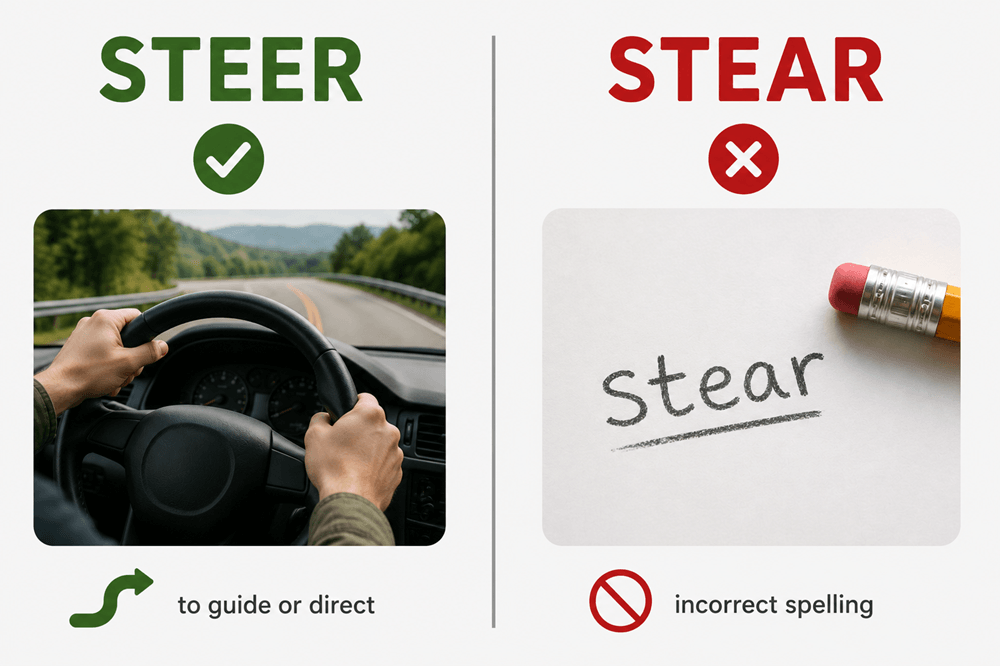
Steer is the correct spelling when you mean to guide, control, or direct something.
Stear is usually a misspelling of steer.
Examples:
Correct: She learned how to steer the boat.
Incorrect: She learned how to stear the boat.
Correct: Try to steer the conversation in a better direction.
Incorrect: Try to stear the conversation in a better direction.
If you mean guide, turn, control, direct, or lead, the correct word is steer.
What Does Steer Mean?
Steer means to guide or control the direction of something. It is often used for vehicles, boats, animals, conversations, decisions, and plans.
Examples:
He tried to steer the car carefully.
The captain had to steer the ship through rough water.
She helped steer the team toward a better solution.
The teacher tried to steer the discussion back to the topic.
In all of these sentences, steer means guide or direct.
Is Stear a Word?
In modern everyday English, stear is not the standard spelling. Most of the time, it is simply a mistake for steer.
Incorrect:
He grabbed the wheel and tried to stear.
Correct:
He grabbed the wheel and tried to steer.
You may occasionally see Stear as a surname, brand name, or old spelling in historical texts, but that does not make it the correct modern spelling for the verb meaning “to guide.”
For normal writing, use steer.
Steer as a Verb
The most common use of steer is as a verb.
Examples:
Please steer the cart to the left.
She can steer with one hand.
The driver steered around the pothole.
He steered the company through a difficult year.
The word can be literal or figurative.
Literal:
He steered the truck into the driveway.
Figurative:
She steered the project in the right direction.
In both cases, steer means to guide something.
Steer as a Noun
Steer can also be a noun. A steer is a young male cow that has been castrated.
Examples:
The farmer bought a young steer.
The ranch had several steers in the field.
This meaning is less common in everyday writing, but it is still correct.
So steer can mean:
a verb: to guide or direct
a noun: a type of male cattle
The spelling is the same in both meanings: steer.
Steer vs Stear: The Main Difference
The main difference is simple:
Steer = correct spelling
Stear = usually incorrect
Examples:
Correct: He learned to steer a bike.
Incorrect: He learned to stear a bike.
Correct: The manager helped steer the company.
Incorrect: The manager helped stear the company.
Correct: The driver steered away from danger.
Incorrect: The driver steared away from danger.
The past tense is steered, not steared.
How to Spell Steer
The correct spelling is:
S-T-E-E-R
It has two E’s in the middle.
Think of the word this way:
st + eer
The ending -eer also appears in words connected to direction, movement, or action, such as:
engineer
volunteer
pioneer
career
That does not mean they all have the same meaning, but it can help you remember the ee spelling.
Memory Trick
Here is an easy way to remember steer:
To steer, you need to see where you are going.
Steer has ee, and see has ee.
So:
You must see to steer.
That makes the spelling easier to remember:
see → steer
Both use ee.
Do not use ea. The correct spelling is steer, not stear.
Examples With Steer
Here are more examples using steer correctly:
She learned to steer the bicycle.
He tried to steer the horse toward the gate.
The pilot steered the plane safely.
The coach helped steer the players toward better habits.
The article tries to steer readers away from common mistakes.
Parents often steer children toward good choices.
The company needs someone to steer the project.
In each sentence, steer means guide, direct, or control.
Common Phrases With Steer
Steer clear of
This means avoid something.
Example:
You should steer clear of that dangerous road.
Example:
Try to steer clear of gossip.
Steer the conversation
This means guide the discussion.
Example:
She tried to steer the conversation away from politics.
Steer in the right direction
This means guide someone or something toward a good result.
Example:
His advice helped steer me in the right direction.
Steer away from
This means move away from or avoid.
Example:
The driver had to steer away from the fallen branch.
Steered or Steared?
The correct past tense is steered.
Correct:
He steered the car into the driveway.
She steered the meeting back on track.
The captain steered the boat through the storm.
Incorrect:
He steared the car.
She steared the meeting.
Because the base word is steer, you simply add -ed:
steer → steered
The spelling keeps the double e.
Steering or Stearing?
The correct form is steering.
Correct:
She is steering the boat.
He is steering the conversation.
The car has power steering.
Incorrect:
She is stearing the boat.
The spelling pattern is:
steer → steering
Again, keep the double e.
Common Mistakes
A common mistake is spelling steer as stear because many English words use ea for a long “ee” sound.
Examples:
near
clear
hear
fear
Because those words use ea, it is easy to assume stear should be correct. But it is not the standard spelling.
The correct spelling uses ee:
steer
steered
steering
Another mistake is confusing steer with stare.
Steer means guide or control.
Stare means look for a long time.
Examples:
Correct: Do not stare at people.
Correct: Do not steer the car too fast around the corner.
Quick Test
Choose the correct word:
She learned how to ___ the boat.
Answer: steer
He tried to ___ the conversation away from the argument.
Answer: steer
The driver ___ around the obstacle.
Answer: steered
The car has power ___.
Answer: steering
You should ___ clear of that mistake.
Answer: steer
Final Answer
Steer is the correct spelling.
Stear is usually a misspelling.
Use steer when you mean to guide, direct, control, or turn something.
Correct: She can steer the car.
Correct: He helped steer the team in the right direction.
Correct: Try to steer clear of trouble.
Remember: you need to see where you are going when you steer. Both see and steer use ee.