Stoped or Stopped: Which Spelling Is Correct?
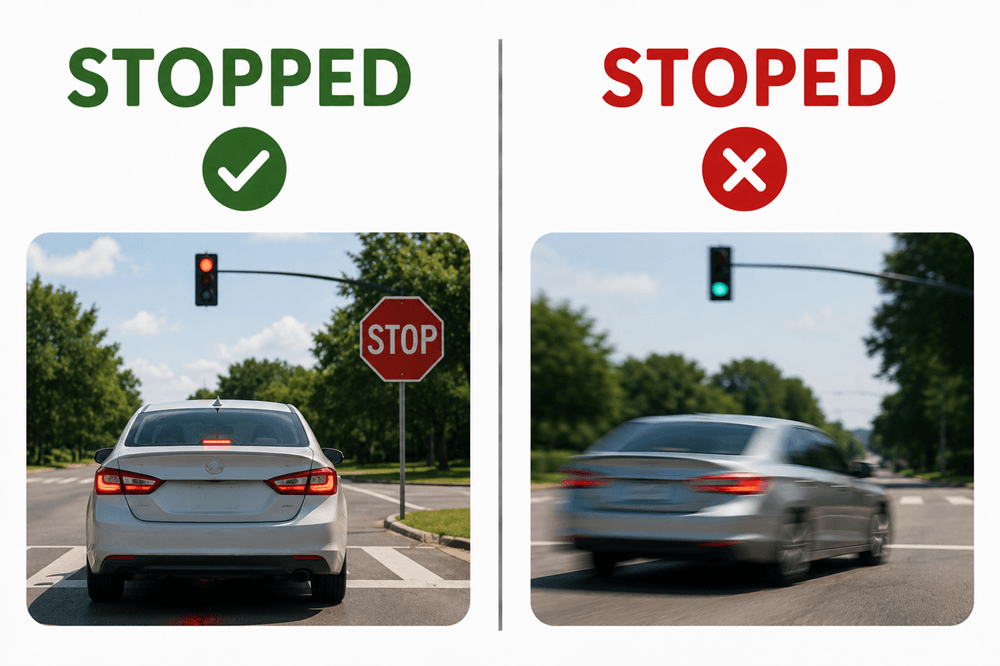
Stopped is the correct spelling when you mean the past tense of stop.
Stoped is usually a misspelling.
Examples:
Correct: The car stopped at the red light.
Incorrect: The car stoped at the red light.
Correct: She stopped talking when the movie began.
Incorrect: She stoped talking when the movie began.
If you mean something ended, paused, quit, or came to a halt, use stopped with two p’s.
What Does Stopped Mean?
Stopped is the past tense and past participle of stop. It means something came to an end, no longer moved, or was prevented from continuing.
Examples:
The rain stopped after lunch.
He stopped the video.
The bus stopped near the school.
She stopped eating sugar.
The teacher stopped the argument.
In each sentence, stopped means something ended, paused, or was made to stop.
Is Stoped a Word?
Stoped is not the correct spelling for the past tense of stop.
The correct spelling is:
stopped
Not:
stoped
Most of the time, stoped is simply a spelling mistake.
There is a rare word stope in mining, and stoped can be the past tense of that word. But that meaning is uncommon and unrelated to everyday use. If you are writing about stopping a car, stopping work, stopping a habit, or stopping an action, the correct word is stopped.
Stoped vs Stopped: The Main Difference
The difference is simple:
Stopped = correct past tense of stop
Stoped = incorrect spelling in normal use
Examples:
Correct: He stopped at the store.
Incorrect: He stoped at the store.
Correct: The music stopped suddenly.
Incorrect: The music stoped suddenly.
Correct: I stopped working at six.
Incorrect: I stoped working at six.
If the base word is stop, the past tense is stopped.
Why Does Stopped Have Two P’s?
Stopped has two p’s because of a common English spelling rule.
When a short word ends with this pattern:
consonant + vowel + consonant
and you add -ed, you usually double the final consonant.
The word stop follows this pattern:
s = consonant
o = vowel
p = consonant
So:
stop + ed = stopped
The final p doubles before -ed.
Other examples follow the same pattern:
plan → planned
drop → dropped
shop → shopped
grab → grabbed
skip → skipped
The same rule applies to stopping:
stop → stopped
stop → stopping
But not:
stoped
stoping
How to Spell Stopped
The correct spelling is:
S-T-O-P-P-E-D
Break it into parts:
stop + p + ed
The extra p is the important part.
Correct:
stopped
Incorrect:
stoped
A helpful way to remember it:
You stop at a stop sign.
A stop sign makes you pause.
The spelling also “pauses” on the p by writing it twice:
stopped
Examples With Stopped
Here are more examples using stopped correctly:
The train stopped at the station.
She stopped to tie her shoe.
He stopped drinking soda.
The dog stopped barking.
I stopped by your house yesterday.
The machine stopped working.
They stopped the game because of rain.
The baby finally stopped crying.
In each example, stopped is the correct past-tense form.
Common Phrases With Stopped
Stopped working
Example: My phone stopped working last night.
Stopped by
Example: She stopped by after school.
Stopped talking
Example: He stopped talking when the teacher entered.
Stopped suddenly
Example: The car stopped suddenly.
Stopped caring
Example: She finally stopped caring what they thought.
Stopped raining
Example: It stopped raining before dinner.
All of these phrases use stopped, not stoped.
Stop, Stops, Stopped, Stopping
The spelling changes depending on the form.
Use stop for the base verb:
Please stop.
Use stops for the present tense with he, she, or it:
The bus stops here.
Use stopped for the past tense:
The bus stopped here yesterday.
Use stopping for the -ing form:
The bus is stopping now.
The forms are:
stop
stops
stopped
stopping
Notice that stopped and stopping have double p, but stops does not.
Stopped vs Stoped in a Sentence
Compare these sentences:
Incorrect: She stoped at the corner.
Correct: She stopped at the corner.
Incorrect: The rain stoped quickly.
Correct: The rain stopped quickly.
Incorrect: I stoped watching the show.
Correct: I stopped watching the show.
The correct spelling always has two p’s when you add -ed to stop.
Stopped vs Stop
Use stop for present or command forms.
Examples:
Please stop yelling.
I need to stop at the bank.
Use stopped for something that already happened.
Examples:
He stopped yelling.
I stopped at the bank.
A simple rule:
Stop = now or future
Stopped = past
Common Mistakes
A common mistake is adding only -ed without doubling the p.
Incorrect:
stoped
Correct:
stopped
Another mistake is spelling stopping with one p.
Incorrect:
stoping
Correct:
stopping
The same doubling rule applies:
stop + ed = stopped
stop + ing = stopping
But with stops, you do not double the p because you are only adding s.
Correct:
The car stops here.
Incorrect:
The car stopps here.
Memory Trick
Here is an easy way to remember the spelling:
Stop is a short word.
When a short word ends in consonant-vowel-consonant, double the last consonant before -ed.
So:
stop → stopped
drop → dropped
shop → shopped
You can also remember it visually:
A stop sign makes you pause.
The word stopped pauses on the p twice:
stopped
That double p is the key.
Quick Test
Choose the correct spelling:
The car ___ at the light.
Answer: stopped
The spelling ___ is incorrect.
Answer: stoped
She ___ working at noon.
Answer: stopped
The dog ___ barking.
Answer: stopped
The correct word has how many p’s?
Answer: two
Final Answer
Stopped is the correct spelling.
Stoped is a misspelling when you mean the past tense of stop.
Correct: The bus stopped.
Incorrect: The bus stoped.
Correct: She stopped talking.
Incorrect: She stoped talking.
Remember: stop ends in a consonant-vowel-consonant pattern, so the final p doubles before -ed. The correct spelling is stopped with two p’s.