Vender or Vendor: Correct Spelling, Meaning, Difference, and Examples for Clear Writing
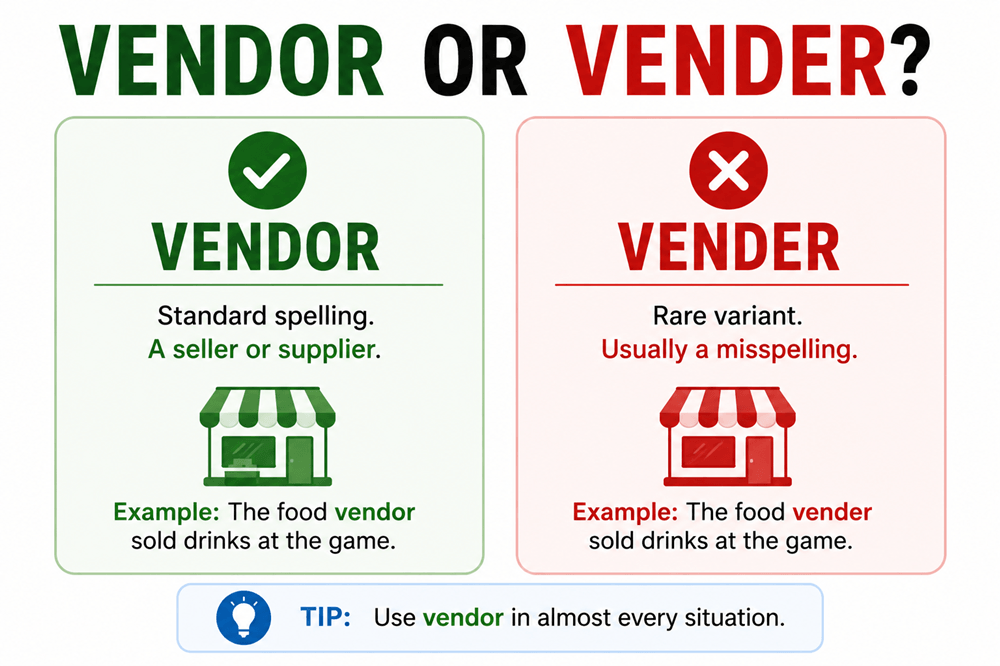
Vendor and vender both refer to someone who sells something, but vendor is the standard spelling in modern English. Use vendor when you mean a seller, supplier, company, or person who provides goods or services. Vender is rare and usually looks like a misspelling. If you want the safe choice, write vendor.
Quick Answer
Use vendor in almost every situation where you mean a seller or supplier.
- Correct: The company works with several software vendors.
- Correct: A food vendor sold tacos outside the stadium.
- Correct: The event organizer approved each vendor before the market opened.
Vender is much less common. It may appear as a variant spelling, but it is not the preferred form in standard writing.
- Less common: The vender sold snacks at the fair.
- Preferred: The vendor sold snacks at the fair.
The simple rule is this: vendor is the standard spelling. Vender is rare and usually best avoided.
Vender or Vendor: What Is the Difference?
The difference between vender and vendor is mostly spelling preference and common usage. Both words can point to someone who sells something, but vendor is the spelling most readers expect.
You will see vendor in business contracts, event planning, software discussions, invoices, online marketplaces, government documents, and everyday writing. It is the normal word for a seller or supplier.
Vender is far less common. Because it looks similar to vendor, many readers may assume it is a typo. Even if the meaning is understandable, the spelling can distract from the sentence.
| Word | Status | Example |
|---|---|---|
| Vendor | Standard spelling | The vendor delivered the supplies on Monday. |
| Vender | Rare variant | The vender delivered the supplies on Monday. |
If you are writing for school, work, a website, a business, or any polished setting, choose vendor.
What Does Vendor Mean?
Vendor means a person, business, or organization that sells goods or services. A vendor might sell food, clothing, software, office supplies, handmade products, equipment, event services, or almost anything else people buy.
Examples:
- The street vendor sold fresh fruit near the train station.
- The wedding planner contacted each vendor before the ceremony.
- The company hired a vendor to manage its payroll system.
- Several vendors set up booths at the farmers market.
In each sentence, vendor means a seller or supplier. The word can describe a single person selling something from a small stand, or it can describe a large company providing services to another business.
This flexibility is one reason vendor is so common. It works in casual settings, formal business writing, technology, retail, event planning, government purchasing, and online sales.
What Does Vender Mean?
Vender can also mean a seller, but it is rarely used in modern standard English. Most of the time, people who write vender probably mean vendor.
Examples with the less common spelling:
- The vender sold drinks at the beach.
- A local vender offered handmade candles.
- The market had one vender selling flowers.
These sentences are understandable, but they look unusual. Many readers would expect:
- The vendor sold drinks at the beach.
- A local vendor offered handmade candles.
- The market had one vendor selling flowers.
The meaning does not change much, but the spelling does. Vendor looks current, standard, and professional. Vender may look old-fashioned, regional, or simply incorrect.
Why Vendor Is the Better Spelling
Vendor is the better spelling because it is the form used in modern business and everyday English. If you look at common phrases, they almost always use vendor, not vender.
- food vendor
- street vendor
- software vendor
- approved vendor
- third-party vendor
- vendor contract
- vendor management
- vendor application
These phrases are common in real-world writing. A company may talk about vendor agreements. A market may ask vendors to apply for booth space. A school may use approved vendors for supplies. A software team may choose a vendor for a new platform.
Because vendor appears in so many normal phrases, it is the spelling you should use when you want your writing to look natural.
Is Vender Wrong?
Vender is not always impossible as a word, but it is not the preferred spelling. In most modern contexts, it will be treated as a mistake or an outdated variant.
If someone writes “food vender,” readers will probably understand the meaning. However, many readers will also notice that the spelling looks off. That is why vendor is the better choice for polished writing.
Compare these examples:
- Less preferred: The food vender parked near the festival entrance.
- Preferred: The food vendor parked near the festival entrance.
- Less preferred: We need to choose a vender for the new system.
- Preferred: We need to choose a vendor for the new system.
- Less preferred: Each vender must bring their own table.
- Preferred: Each vendor must bring their own table.
The preferred spelling is clearer, more common, and more professional.
When to Use Vendor
Use vendor when you are talking about someone who sells goods or services. This word works for both people and companies.
Use vendor for people selling products:
- A flower vendor stood outside the station.
- The popcorn vendor walked through the stadium.
- Several craft vendors sold jewelry at the fair.
Use vendor for companies that provide services:
- The business hired a vendor for website maintenance.
- The school selected a lunch vendor for the year.
- The hospital works with medical supply vendors.
Use vendor in business and purchasing contexts:
- The vendor submitted an invoice.
- The purchasing team reviewed the vendor contract.
- The company keeps a list of approved vendors.
In all of these examples, vendor is the correct and expected spelling.
When to Use Vender
There are very few reasons to choose vender in modern writing. You might keep the spelling if it appears in an old quotation, a historical document, a brand name, a username, or a title that intentionally uses that spelling. Otherwise, vendor is usually better.
For example, if a company officially calls itself “City Vender Services,” you would keep that spelling as part of the name. But in a normal sentence, you would still write:
- The vendor provided the service.
- The vendor sold coffee outside the building.
- The vendor booth opened at noon.
Unless you have a specific reason to preserve the spelling vender, avoid it.
Vendor in Business Writing
Vendor is especially common in business writing. In that setting, it often means a company or independent provider that sells something to another company.
Examples:
- The finance team reviewed the vendor’s invoice.
- Our company is comparing three vendors before signing the contract.
- The vendor must meet all security requirements.
- The project was delayed because the vendor missed the delivery date.
In business writing, vendor can sound more formal than seller. A seller may be anyone who sells something, but a vendor often sounds like an approved, contracted, or professional supplier.
For example, a person selling lemonade on a sidewalk is a seller, but they could also be called a vendor. A company providing software to a hospital is more naturally called a vendor.
Vendor in Everyday Writing
Vendor is also common in everyday writing. You might use it when talking about markets, fairs, festivals, concerts, sports events, food trucks, or local sellers.
Examples:
- The farmers market had a new bread vendor.
- A street vendor sold roasted nuts on the corner.
- The festival invited local vendors to sell handmade goods.
- The ice cream vendor was popular with children.
In these examples, vendor simply means someone selling something. The word is clear and neutral. It does not sound overly formal, and it does not look strange.
Common Mistakes With Vender and Vendor
The most common mistake is writing vender because it seems to match the verb vend. Since a person who teaches is a teacher, and a person who bakes is a baker, it may seem logical that a person who vends would be a vender. But English does not always follow the most obvious pattern.
In modern usage, the standard noun is vendor.
Incorrect or less preferred:
- The vender sent the invoice yesterday.
- We bought lunch from a street vender.
- The company needs a new software vender.
- Each vender must register before the event.
Correct:
- The vendor sent the invoice yesterday.
- We bought lunch from a street vendor.
- The company needs a new software vendor.
- Each vendor must register before the event.
Another mistake is using vendor when a simpler word like seller would sound more natural. Vendor is correct, but it can sometimes sound businesslike. In casual writing, seller may be easier.
- Natural: The seller lowered the price.
- Also correct: The vendor lowered the price.
Use the word that fits the tone. For a formal or business context, vendor is usually excellent. For everyday buying and selling, seller may sometimes feel more natural.
Vendor vs Seller
Vendor and seller are similar, but they are not always used in exactly the same way. A seller is anyone who sells something. A vendor is also someone who sells something, but the word often suggests a more official role, especially at an event, marketplace, or business arrangement.
Examples:
- The seller listed the bike online.
- The vendor rented a booth at the festival.
- The seller accepted the buyer’s offer.
- The vendor signed a contract with the company.
If you are talking about an online marketplace, either word may work. If you are talking about a company relationship, event booth, or professional supplier, vendor usually sounds more precise.
Examples of Vendor in Sentences
Here are more examples of vendor used correctly:
- The vendor arrived early to set up the booth.
- We paid the vendor after the delivery was complete.
- The school district approved a new food vendor.
- Each vendor must follow the event rules.
- The company depends on outside vendors for technical support.
- A local vendor sold handmade soap at the market.
- The software vendor released an update last week.
- The wedding vendor confirmed the schedule by email.
Each sentence uses vendor to mean a seller, supplier, or service provider. This is the standard spelling you should use in most contexts.
How to Remember Vender or Vendor
A simple way to remember the correct spelling is to connect vendor with common business phrases. You usually see vendor in phrases like vendor contract, vendor invoice, and approved vendor. Those familiar phrases all use or at the end.
- Vendor = standard seller or supplier
- Vender = rare and usually not preferred
You can also remember this sentence:
A vendor sells goods or services.
The word vendor looks natural in that sentence. Vender does not. If you are ever unsure, choose the spelling with or: vendor.
Final Answer
Vendor is the correct and standard spelling when you mean a person, company, or organization that sells goods or services. Vender is a rare variant and usually looks like a misspelling in modern English.
The easiest rule is simple: use vendor for sellers and suppliers. Avoid vender unless it appears in a specific name, title, quotation, or intentionally old-fashioned style.