Is Damn a Bad Word? Meaning, Usage, and When to Avoid It
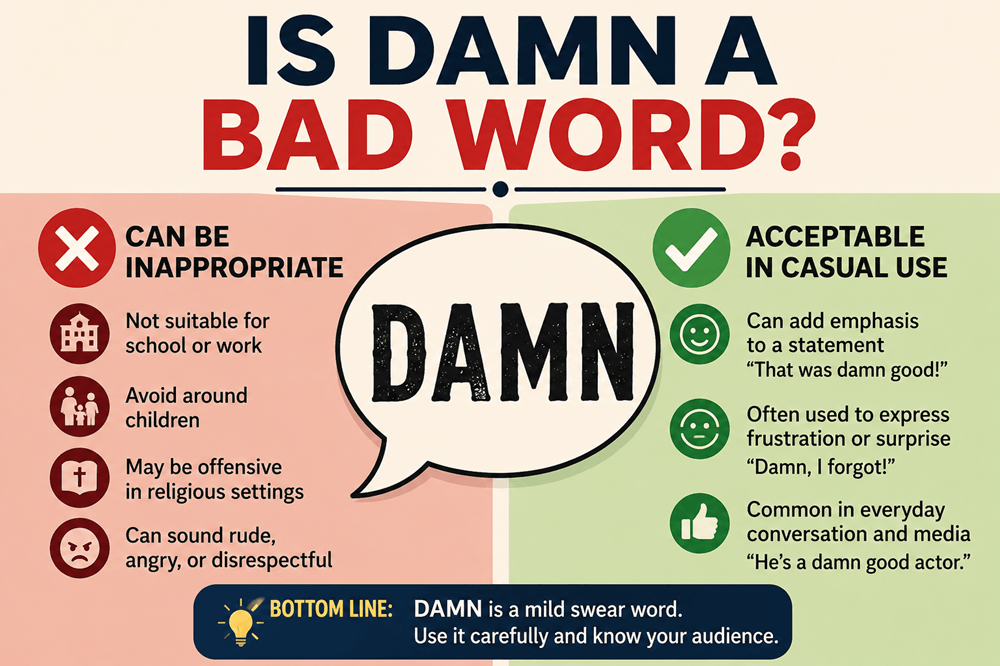
Damn is usually considered a mild bad word or mild profanity.
It is not as strong as many other swear words, but it can still sound rude, angry, disrespectful, or inappropriate in formal situations.
Examples:
- That was a damn good movie.
- I forgot my keys, damn it.
- He did not give a damn about the rules.
- The machine is damn difficult to fix.
In casual conversation, many adults use damn without thinking it is very serious. But in school, work, religious settings, family settings, or polite writing, it may be better to avoid it.
The safest answer is:
Damn is a mild swear word. It is not extremely offensive, but it is still not fully polite.
Quick Answer
Yes, damn can be a bad word.
It depends on context.
Damn can sound mild when used casually:
- That was damn impressive.
But it can sound rude or angry when used directly:
- Damn you.
- I don’t give a damn.
It can also be sensitive in religious contexts because damn originally connects to the idea of condemnation or punishment.
So the best rule is:
Use damn only in casual settings where mild profanity is acceptable. Avoid it in formal, professional, school, religious, or child-friendly writing.
What Does Damn Mean?
Damn can be used in several ways.
First, it can express anger, frustration, or surprise.
Examples:
- Damn, I missed the bus.
- Damn, that was close.
- Damn, I forgot the deadline.
Second, it can make a statement stronger.
Examples:
- That was a damn good meal.
- She is damn talented.
- This puzzle is damn hard.
Third, it can mean to condemn someone or something.
Example:
- The decision was widely damned by critics.
This meaning is more formal and less like casual swearing.
Is Damn a Swear Word?
Yes, damn is often treated as a swear word, but a mild one.
It is usually less offensive than stronger profanity. Many people hear it in movies, TV shows, songs, and everyday speech. Because of that, it may not shock most adult listeners.
However, it is still not completely neutral.
Some people may see it as:
- rude
- disrespectful
- angry
- unprofessional
- religiously offensive
- inappropriate around children
That means damn is not the kind of word you should use everywhere.
Is Damn a Curse Word?
Yes, damn can be called a curse word.
A curse word is a word used to express anger, frustration, insult, or strong emotion. Damn fits that meaning in many sentences.
Examples:
- Damn it.
- I don’t give a damn.
- Damn this weather.
It is also connected to the older idea of cursing or condemning someone.
That is why phrases like damn you sound much harsher than a casual phrase like damn good coffee.
Is Damn Offensive?
Damn can be offensive, but it depends on how it is used.
Mild:
- That was damn funny.
Stronger:
- I don’t give a damn what you think.
Very harsh:
- Damn you.
The word becomes more offensive when it is directed at a person, used in anger, or used in a serious setting.
It sounds less offensive when it is used casually among adults who are comfortable with mild profanity.
Is Damn Bad for Kids to Say?
For children, damn is usually considered inappropriate.
It is not the worst word a child could say, but many parents and teachers would still treat it as bad language.
A child-friendly replacement would be:
- darn
- dang
- oh no
- shoot
- goodness
- wow
Instead of:
- Damn, I lost.
A child could say:
- Darn, I lost.
- Oh no, I lost.
For school writing or classroom speech, damn is usually not the best choice.
Is Damn Okay in School?
In most school settings, it is better to avoid damn.
A teacher may not react strongly if a student says it once, but it can still be considered inappropriate language.
Avoid it in:
- essays
- homework
- classroom presentations
- emails to teachers
- formal school discussions
If you are writing about a book, song, or quote that contains the word, it may be acceptable to mention it when needed. But using it casually in school writing is usually not recommended.
Is Damn Okay at Work?
At work, damn depends on the workplace culture.
In a casual workplace, someone might say:
- That was a damn good presentation.
But in a formal or professional environment, it can sound too rough.
Avoid damn in:
- job interviews
- resumes
- cover letters
- business emails
- client messages
- formal reports
- meetings with people you do not know well
Professional alternatives include:
- very
- extremely
- seriously
- truly
- incredibly
- frustrating
- difficult
Instead of:
- This is damn important.
Use:
- This is very important.
- This is extremely important.
Damn vs Darn
Darn is a softer replacement for damn.
Examples:
- Damn, I forgot.
- Darn, I forgot.
Darn sounds much more polite and family-friendly.
Use darn when you want to express mild frustration without using a swear word.
Examples:
- Darn, I missed the call.
- That is a darn good idea.
- Where did I put that darn notebook?
In casual writing, darn can sound a little old-fashioned or playful, but it is safer than damn.
Damn vs Dang
Dang is another softer version of damn.
Examples:
- Dang, that was expensive.
- That was a dang good burger.
- I forgot my password again, dang it.
Dang is informal, but it is usually less offensive than damn.
It works well in casual speech, friendly writing, and humorous situations.
When Should You Avoid Damn?
Avoid damn when you want to sound polite, professional, respectful, or child-friendly.
Avoid it in:
- formal writing
- school assignments
- job applications
- business emails
- customer service messages
- religious settings
- conversations with children
- polite introductions
- serious apologies
For example, instead of:
- I am damn sorry.
Write:
- I am very sorry.
- I am truly sorry.
Instead of:
- This is a damn problem.
Write:
- This is a serious problem.
- This is a major problem.
Better Alternatives to Damn
Here are some safer alternatives.
For emphasis:
- very
- really
- extremely
- seriously
- incredibly
Examples:
- That was really good.
- This is extremely important.
For frustration:
- darn
- dang
- shoot
- oh no
- wow
Examples:
- Darn, I forgot.
- Shoot, I missed it.
For professional writing:
- significant
- serious
- major
- difficult
- frustrating
Examples:
- This is a serious issue.
- The process was difficult.
Common Phrases With Damn
Damn it
This expresses frustration.
Example:
- Damn it, I made a mistake.
This is casual and can sound rude. Use darn it or shoot for a softer version.
I don’t give a damn
This means someone does not care.
Example:
- He does not give a damn about the rules.
This phrase can sound rude or dismissive.
Softer version:
- He does not care about the rules.
Damn good
This means very good.
Example:
- That was a damn good song.
This is informal. In polished writing, use:
- very good
- excellent
- impressive
Final Answer: Is Damn a Bad Word?
Yes, damn is usually considered a mild bad word or mild swear word.
It is not the strongest profanity, but it can still sound rude, angry, disrespectful, or inappropriate in certain settings.
Use damn only in casual situations where mild swearing is acceptable.
Avoid it in formal writing, school, work, religious settings, and around children.
The easiest rule is:
Damn = mild profanity
Darn or dang = softer alternatives
Very, really, or extremely = safer formal choices
So if you want to be polite, choose a different word.