Another Word for But: Best Synonyms and Examples
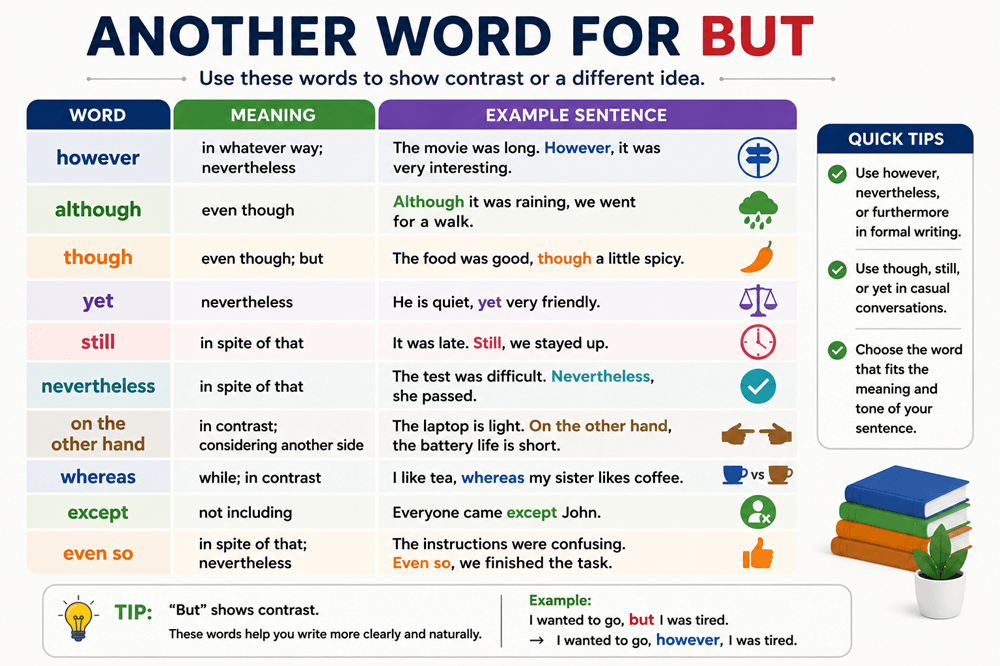
Another word for but is however. You can also use although, yet, still, nevertheless, on the other hand, though, except, or whereas, depending on the sentence.
But is used to show contrast. It connects two ideas that are different, unexpected, or opposite.
Examples:
I wanted to go outside, but it started raining.
I wanted to go outside. However, it started raining.
She is young, but very responsible.
She is young. Still, she is very responsible.
The best replacement for but depends on the tone and meaning of your sentence.
Best Synonyms for But
Here are some of the most useful words and phrases you can use instead of but:
| Word or Phrase | Best For |
|---|---|
| however | Formal or polished contrast |
| although | Showing contrast within one sentence |
| though | Casual or softer contrast |
| yet | Short and direct contrast |
| still | Showing something remains true |
| nevertheless | Formal contrast |
| on the other hand | Comparing two sides |
| whereas | Comparing differences |
| except | Showing exclusion |
| even so | Showing contrast after a fact |
Each word has a slightly different use, so you should choose the one that fits your sentence.
However
However is one of the most common formal replacements for but. It is often used at the beginning of a new sentence.
Examples:
I wanted to attend the meeting. However, I was sick.
The plan sounds simple. However, it may take a long time.
She studied hard. However, the test was difficult.
Use however when you want your writing to sound more polished. It works well in essays, reports, articles, and professional emails.
Compare:
The idea is useful, but it is expensive.
The idea is useful. However, it is expensive.
Both are correct. The second version sounds more formal.
Although
Although means “even though” or “despite the fact that.” It is used to show contrast inside one sentence.
Examples:
Although it was cold, we went for a walk.
Although she was nervous, she gave a great speech.
Although the movie was long, it was interesting.
You can also place although in the middle of a sentence:
We went for a walk, although it was cold.
She gave a great speech, although she was nervous.
Use although when you want to connect two contrasting ideas smoothly.
Though
Though is similar to although, but it usually sounds more casual.
Examples:
Though it was late, we kept working.
The food was good, though the service was slow.
I liked the book, though the ending felt rushed.
In casual speech, though often appears at the end of a sentence:
The movie was a little slow, though.
That sounds nice, though.
Use though when you want a softer or more conversational alternative to but.
Yet
Yet is a short and strong replacement for but. It shows contrast between two ideas.
Examples:
The task was difficult, yet she finished it.
He is quiet, yet confident.
The house is old, yet beautiful.
Yet is useful when the second idea is surprising or unexpected.
Compare:
The road was dangerous, but they continued.
The road was dangerous, yet they continued.
The second sentence sounds a little more dramatic or polished.
Still
Still can replace but when you want to show that something remains true despite another fact.
Examples:
It was raining. Still, we went outside.
The price is high. Still, the product is worth it.
She was tired. Still, she finished her homework.
Use still when the second idea continues or happens anyway.
Nevertheless
Nevertheless is a formal synonym for but. It means “despite that” or “even so.”
Examples:
The project was difficult. Nevertheless, the team completed it.
The weather was bad. Nevertheless, the event continued.
He had little experience. Nevertheless, he did an excellent job.
Use nevertheless in formal writing, essays, reports, and serious explanations. In everyday speech, it may sound too formal.
On the Other Hand
On the other hand is useful when comparing two sides of an issue.
Examples:
The apartment is small. On the other hand, it is close to work.
Online classes are convenient. On the other hand, they can feel lonely.
The job pays well. On the other hand, the hours are long.
Use this phrase when you are weighing advantages and disadvantages.
Whereas
Whereas is used to compare two different facts, people, or situations.
Examples:
She prefers tea, whereas he prefers coffee.
Cats are usually independent, whereas dogs often need more attention.
The first plan is cheap, whereas the second plan is faster.
Use whereas when you want to show a clear difference between two things.
Except
Except can replace but when the meaning is “not including” or “leaving out.”
Examples:
Everyone came except John.
I like all vegetables except onions.
The store is open every day except Sunday.
In these sentences, except does not mean the same thing as however. It shows exclusion, not general contrast.
Even So
Even so means “despite that.” It is useful when the second idea happens even though the first idea might suggest otherwise.
Examples:
The instructions were confusing. Even so, she completed the form.
He was nervous. Even so, he spoke clearly.
The trip was expensive. Even so, we enjoyed it.
Use even so when the second idea feels surprising after the first one.
But vs However
But and however are close in meaning, but they are used differently.
But usually connects two ideas in one sentence:
I wanted to help, but I was busy.
The dress is pretty, but it is too expensive.
However often starts a new sentence:
I wanted to help. However, I was busy.
The dress is pretty. However, it is too expensive.
A simple rule:
Use but for normal everyday contrast.
Use however for a more formal or polished tone.
Formal Synonyms for But
For essays, reports, business writing, and professional emails, these are good formal alternatives:
- however
- nevertheless
- although
- whereas
- on the other hand
- even so
- despite that
Examples:
The evidence is limited. However, it is still useful.
The policy is unpopular. Nevertheless, it remains in effect.
Although the results were mixed, the study was important.
The first option is affordable, whereas the second is more reliable.
Formal alternatives can make your writing sound more mature, but do not overuse them.
Casual Synonyms for But
For everyday writing, messages, and conversation, these alternatives sound more natural:
- though
- still
- yet
- except
- even so
- on the other hand
Examples:
I liked the movie, though.
It was late. Still, we stayed.
The shirt is nice, except the sleeves are too long.
The restaurant is small. On the other hand, the food is great.
These choices sound less stiff than very formal words like nevertheless.
Common Mistakes
One common mistake is using however exactly like but without changing punctuation.
Incorrect: I wanted to go, however I was tired.
Correct: I wanted to go. However, I was tired.
Correct: I wanted to go; however, I was tired.
Correct: I wanted to go, but I was tired.
Another mistake is choosing a synonym that changes the meaning.
For example:
I like every fruit but bananas.
In this sentence, but means except.
Better: I like every fruit except bananas.
Not: I like every fruit however bananas.
Always check whether but means contrast or exclusion.
Final Answer
Another word for but is however.
Other good synonyms include although, though, yet, still, nevertheless, on the other hand, whereas, except, and even so.
Use however for formal writing.
Use though or still for a more casual tone.
Use although when connecting two contrasting ideas in one sentence.
Use except when but means “not including.”
The best replacement depends on the meaning of the sentence and how formal you want the writing to sound.