Is Piss a Bad Word? Meaning, Usage, and When to Avoid It
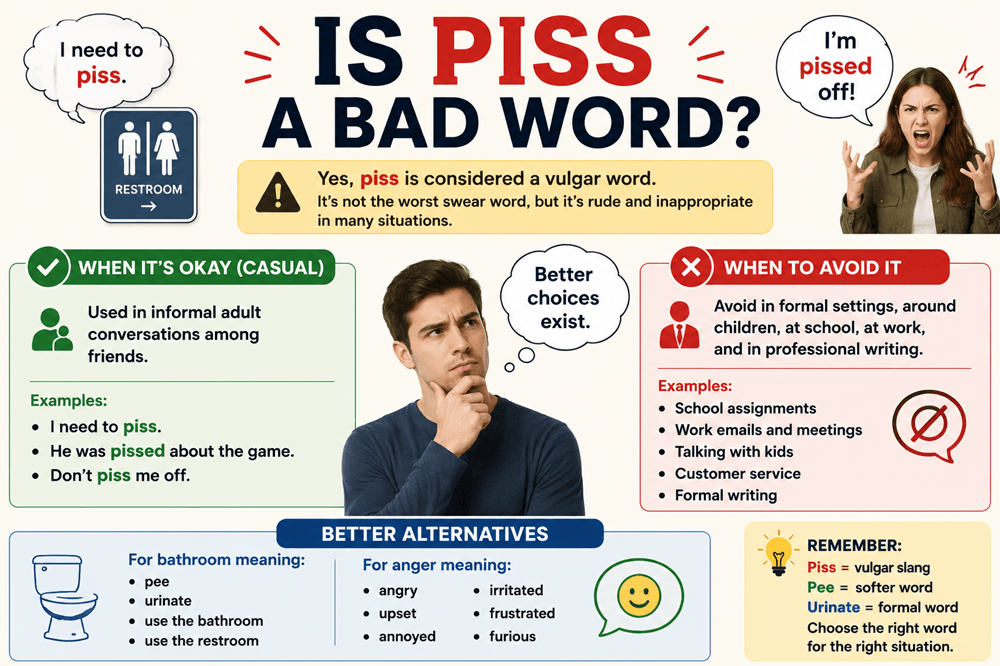
Piss is usually considered a bad word or vulgar slang.
It is not the strongest swear word in English, but it can still sound rude, crude, angry, or inappropriate, especially in formal situations.
Examples:
- I need to piss.
- He was really pissed.
- Don’t piss me off.
- She looked pissed off after the meeting.
In casual adult conversation, some people use piss without thinking it is very serious. But in school, work, polite conversation, professional writing, or around children, it is usually better to avoid it.
The safest answer is:
Piss is a vulgar word. It is common in casual speech, but it is not polite.
Quick Answer
Yes, piss can be a bad word.
It depends on how it is used, but it is generally considered rude or vulgar.
Mildly crude:
- I need to piss.
Angry or rude:
- Don’t piss me off.
Informal:
- He was pissed about the delay.
More polite alternatives include:
- urinate
- pee
- use the bathroom
- angry
- annoyed
- upset
- irritated
If you want to sound polite, professional, or child-friendly, do not use piss.
What Does Piss Mean?
Piss has two common meanings.
First, it can mean to urinate.
Examples:
- He went outside to piss.
- The dog pissed on the floor.
- I really need to piss.
This use is vulgar. A more polite word is urinate. A softer casual word is pee.
Second, piss can be used in expressions about anger.
Examples:
- That really pissed me off.
- She was pissed off at the comment.
- He gets pissed when people interrupt him.
In American English, pissed often means angry. In British English, pissed can also mean drunk, depending on context.
Is Piss a Swear Word?
Yes, piss is often treated as a swear word or vulgar slang.
It is not usually as offensive as stronger profanity, but it is still not polite. Some people may hear it as rough, crude, or disrespectful.
The word can feel especially inappropriate when used:
- in school
- at work
- in formal writing
- around children
- in customer service
- in polite conversation
- in religious or conservative settings
So while piss is common, it is not neutral.
Is Piss Offensive?
Piss can be offensive, depending on the sentence and audience.
Less offensive but still crude:
- I need to piss.
More offensive:
- You’re starting to piss me off.
Very rude:
- Piss off.
The phrase piss off can be especially rude because it may mean “go away” in an angry or insulting way.
Example:
- He told them to piss off.
That sounds much harsher than simply saying someone is annoyed.
Is Piss Bad for Kids to Say?
Yes, piss is usually inappropriate for children.
Many parents and teachers would not want children using it. Even though children may hear the word in movies, online videos, or casual speech, it is still considered bad language in many homes and schools.
Better alternatives for children include:
- pee
- go to the bathroom
- use the restroom
- angry
- upset
- annoyed
Instead of:
- I need to piss.
A child should say:
- I need to pee.
- I need to use the bathroom.
Instead of:
- I’m pissed.
A child should say:
- I’m upset.
- I’m angry.
- I’m annoyed.
Is Piss Okay at School?
In most school settings, it is better to avoid piss.
A teacher may understand what it means, but it can still be considered inappropriate language.
Avoid it in:
- essays
- homework
- classroom speech
- presentations
- emails to teachers
- school discussions
Instead of writing:
- The character was pissed off.
Write:
- The character was angry.
- The character was furious.
- The character was deeply upset.
These alternatives sound more appropriate for school writing.
Is Piss Okay at Work?
At work, piss is risky.
Some casual workplaces may tolerate it, especially in private conversation between coworkers. But in professional settings, it can sound too crude or aggressive.
Avoid piss in:
- emails
- meetings
- interviews
- client messages
- customer service
- reports
- professional articles
Instead of:
- The client was pissed off.
Write:
- The client was upset.
- The client was frustrated.
- The client was angry.
Instead of:
- This problem is pissing everyone off.
Write:
- This problem is frustrating everyone.
- This issue is causing frustration.
Professional writing should usually avoid vulgar slang.
Piss vs Pee
Pee is the softer and more polite casual word.
Examples:
- I need to pee.
- The child has to pee.
- The dog peed on the rug.
Piss means the same thing in this context, but it sounds more vulgar.
Examples:
- I need to piss.
- The dog pissed on the rug.
Use pee in casual but polite conversation.
Use urinate in medical, formal, or professional writing.
Avoid piss unless the tone is intentionally rough, casual, or expressive.
Pissed or Pissed Off
Pissed and pissed off usually mean angry in American English.
Examples:
- He was pissed about the mistake.
- She was pissed off after waiting for an hour.
- That comment really pissed him off.
These phrases are informal and can sound rude.
More polite alternatives include:
- angry
- upset
- annoyed
- irritated
- frustrated
- furious
Examples:
- He was angry about the mistake.
- She was frustrated after waiting for an hour.
- That comment really upset him.
Piss Off
Piss off is usually rude.
It can mean to annoy someone.
Example:
- Loud chewing really pisses me off.
It can also mean “go away,” especially in British English or informal speech.
Example:
- He told the stranger to piss off.
This phrase is blunt and insulting. Avoid it in polite or professional situations.
Softer alternatives include:
- leave me alone
- go away
- stop bothering me
- that annoys me
- that frustrates me
When Should You Avoid Piss?
Avoid piss when you want to sound polite, respectful, professional, or child-friendly.
Avoid it in:
- school assignments
- business emails
- formal writing
- job interviews
- customer messages
- polite conversation
- conversations with children
- serious apologies
- public speeches
Instead of:
- I was pissed.
Use:
- I was upset.
- I was angry.
- I was frustrated.
Instead of:
- I need to piss.
Use:
- I need to use the bathroom.
- I need to pee.
- I need to urinate.
Better Alternatives to Piss
For bathroom meaning:
- pee
- urinate
- use the bathroom
- use the restroom
- go to the bathroom
For anger meaning:
- angry
- upset
- annoyed
- irritated
- frustrated
- furious
- bothered
For “piss off”:
- annoy
- irritate
- frustrate
- anger
- upset
Examples:
- That noise annoys me.
- The delay frustrated everyone.
- She was upset about the decision.
- He needed to use the restroom.
Final Answer: Is Piss a Bad Word?
Yes, piss is usually considered a bad word or vulgar slang.
It can mean to urinate, or it can be used in anger-related phrases like pissed, pissed off, and piss off.
It is common in casual adult speech, but it is not polite.
The easiest rule is:
Piss = vulgar slang
Pee = softer casual word
Urinate = formal word
Angry, upset, or frustrated = polite alternatives for pissed
Use piss only in very casual settings where rough language is acceptable. For school, work, children, or polite writing, choose a cleaner word.