Spelled or Spelt: Correct Past Tense, Regional Difference, Usage, and Examples Explained Clearly
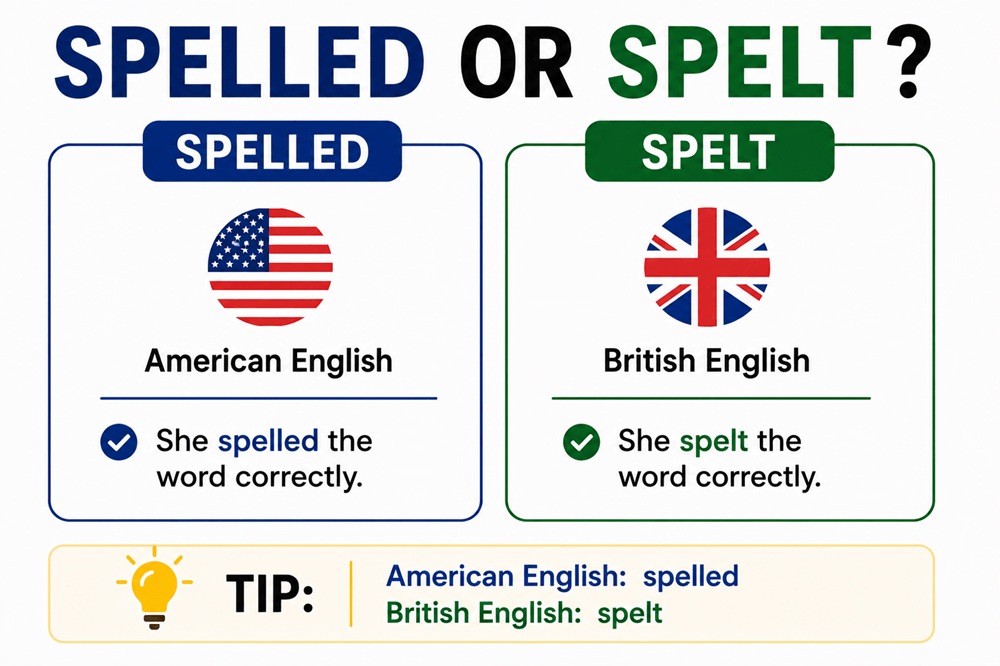
Spelled and spelt can both be correct past-tense forms of spell, but they are not used the same way everywhere. Spelled is the standard choice in American English. Spelt is more common in British English, especially as a past tense or past participle. The easiest rule is this: use spelled for American writing and spelt only when British-style English fits your audience.
Quick Answer
Use spelled in American English when you mean wrote or said the letters of a word correctly or incorrectly.
- Correct: She spelled the word correctly.
- Correct: His name is spelled with two l’s.
- Correct: You spelled “necessary” wrong.
Use spelt in British English when you want the traditional British past-tense form of spell.
- British: She spelt the word correctly.
- British: His name is spelt with two l’s.
- British: You spelt “necessary” wrong.
The simple rule is this: spelled is the safer choice for most modern writing, especially for a U.S. audience. Spelt is mainly British, and it can also mean a type of grain.
Spelled or Spelt: What Is the Difference?
The difference between spelled and spelt is mostly regional style. Both words can be past-tense forms of the verb spell, which means to form a word by naming or writing its letters in the correct order.
In American English, spelled is the normal and expected form. American readers usually write spelled in school papers, business emails, articles, instructions, captions, and grammar explanations.
In British English, spelt is common and accepted. British readers may use either spelled or spelt, but spelt often looks natural in British-style writing.
| Word | Best Use | Example |
|---|---|---|
| Spelled | American English; also accepted elsewhere | The word is spelled correctly. |
| Spelt | British English past tense; also a grain | The word is spelt correctly. |
The meaning is the same when both words are used as past-tense forms of spell. The difference is the spelling style.
What Does Spelled Mean?
Spelled is the regular past tense and past participle of spell. It means formed a word by writing, saying, or arranging its letters.
Examples:
- She spelled her last name for the receptionist.
- The child spelled every word on the list.
- The sign was spelled incorrectly.
- His name is spelled differently in the old records.
In these sentences, spelled refers to letters and word formation. Someone wrote a word, said its letters, or showed how the word should appear.
Spelled can also mean “brought about” or “resulted in,” especially in phrases like spelled trouble or spelled disaster.
- The missing documents spelled trouble for the company.
- One mistake could have spelled disaster.
- The bad weather spelled the end of the outdoor event.
This figurative meaning is more formal or dramatic, but it is still common enough to recognize. In American English, spelled is the preferred form for both the literal and figurative meanings.
What Does Spelt Mean?
Spelt can be the British past tense and past participle of spell. It means the same thing as spelled when talking about writing or saying letters.
Examples:
- She spelt her name slowly.
- The word was spelt wrong on the invitation.
- He spelt “colour” the British way.
- The child spelt the difficult word correctly.
These examples are natural in British English. In American English, however, most people would write spelled instead.
Spelt also has another meaning. It can refer to an ancient type of wheat used in flour, bread, pasta, cereal, and other foods.
- She baked bread with spelt flour.
- Spelt has a nutty flavor.
- The bakery sells spelt loaves on weekends.
This grain meaning is always spelled spelt. It is not a past-tense form of spell in that context.
Is Spelt Wrong?
Spelt is not wrong, but it depends on the context. If you are writing in British English, spelt is acceptable as the past tense of spell. If you are writing in American English, spelt may look unusual or old-fashioned when you mean spelled.
Compare these examples:
- American style: The word is spelled correctly.
- British style: The word is spelt correctly.
Both sentences can be correct. The better choice depends on your audience. For a U.S.-focused website, spelled is usually the cleaner and safer form.
However, spelt is always correct when you mean the grain.
- Correct: The recipe uses spelt flour.
- Incorrect: The recipe uses spelled flour.
If the sentence is about food, wheat, flour, or baking, spelt is probably the correct word.
Is Spelled Wrong?
Spelled is not wrong. It is the standard spelling in American English and is also accepted in British English. Even British readers usually understand spelled without any issue.
Examples:
- The student spelled the word perfectly.
- The name was spelled wrong on the certificate.
- Please check whether the address is spelled correctly.
For most modern writing, especially online articles, school assignments, emails, and business content, spelled is the safest default. It is widely recognized, clear, and less likely to be confused with the grain spelt.
When to Use Spelled
Use spelled when you are writing in American English or when you want the most widely understood form.
Examples:
- You spelled my name wrong.
- The word is spelled with a silent letter.
- She spelled every word on the quiz correctly.
- The company name was spelled differently on the invoice.
Use spelled in grammar articles, U.S. school writing, business communication, professional documents, and general website content.
- How is your name spelled?
- The title was spelled incorrectly.
- He spelled the word out letter by letter.
If your audience is mostly American, spelled should be your first choice.
When to Use Spelt
Use spelt as a past tense of spell when you are writing in British English or following a British-style spelling guide.
Examples:
- Her surname is spelt with an extra e.
- The sign was spelt incorrectly.
- He spelt the word aloud for the class.
- The word is commonly spelt differently in British English.
Use spelt for the grain in any variety of English.
- Spelt flour gives the bread a rich flavor.
- The shop sells spelt pasta.
- She prefers spelt crackers to regular wheat crackers.
This is an important distinction. If you are talking about the grain, spelled is not correct. If you are talking about letters and words, spelled is usually better for American writing.
Spelled Correctly or Spelt Correctly?
Both phrases can be correct, depending on regional style.
American English:
- The word is spelled correctly.
- Her name was spelled correctly on the form.
- Make sure every word is spelled correctly.
British English:
- The word is spelt correctly.
- Her name was spelt correctly on the form.
- Make sure every word is spelt correctly.
If you are writing for WordBriefs or another U.S.-focused site, use spelled correctly. It looks more natural to American readers.
Spelled Wrong or Spelt Wrong?
Both spelled wrong and spelt wrong can be correct. Again, the choice depends on regional English.
American English:
- The word is spelled wrong.
- Your last name was spelled wrong on the ticket.
- The street name is spelled wrong on the map.
British English:
- The word is spelt wrong.
- Your last name was spelt wrong on the ticket.
- The street name is spelt wrong on the map.
In more formal writing, you may prefer misspelled instead of spelled wrong.
- The word is misspelled.
- Her name was misspelled on the certificate.
Spelled Out or Spelt Out?
Spelled out and spelt out can both mean said or written in full. They can also mean explained clearly and directly.
American English:
- She spelled out her name for the clerk.
- The rules were spelled out in the contract.
- He spelled out the plan step by step.
British English:
- She spelt out her name for the clerk.
- The rules were spelt out in the contract.
- He spelt out the plan step by step.
For U.S. writing, spelled out is the better default. For British-style writing, spelt out is acceptable.
Common Mistakes With Spelled and Spelt
The most common mistake is assuming one spelling is always wrong. That is not true. Spelled and spelt can both be correct past-tense forms of spell. The difference is mainly regional.
Another mistake is using spelt in American writing when spelled would look more natural.
Less common in American English:
- His name is spelt with one n.
- The word was spelt incorrectly.
- She spelt the answer on the board.
More common in American English:
- His name is spelled with one n.
- The word was spelled incorrectly.
- She spelled the answer on the board.
A third mistake is using spelled for the grain.
Incorrect:
- She bought spelled flour.
- The bread is made with spelled.
Correct:
- She bought spelt flour.
- The bread is made with spelt.
If the sentence is about food or grain, use spelt.
Examples of Spelled in Sentences
Here are examples of spelled used correctly:
- The word was spelled correctly on the first try.
- She spelled her email address slowly.
- His name is spelled differently in Spanish.
- The student spelled every word on the test.
- The label was spelled wrong.
- The teacher asked him to spell the word, and he spelled it perfectly.
- The warning signs spelled trouble for the project.
- The instructions spelled out the process clearly.
In these sentences, spelled is the standard American form.
Examples of Spelt in Sentences
Here are examples of spelt used as a British-style past tense:
- The word was spelt correctly.
- Her name is spelt with a silent h.
- He spelt the address for the delivery driver.
- The sentence was spelt out clearly in the instructions.
Here are examples of spelt used as a grain:
- The bakery sells spelt bread.
- Spelt flour can be used in pancakes.
- She added cooked spelt to the salad.
- The crackers are made with whole-grain spelt.
The first group uses spelt as a verb form. The second group uses spelt as a noun for a type of grain.
How to Remember Spelled or Spelt
A simple way to remember the difference is this:
- Spelled = American English past tense
- Spelt = British English past tense or a grain
You can also remember that spelled follows the regular -ed pattern:
- call → called
- help → helped
- spell → spelled
That makes spelled easy to use as the default form. If you are unsure which spelling to choose, use spelled unless you are writing in British English or talking about the grain.
Final Answer
Spelled and spelt can both be correct past-tense forms of spell. Spelled is the standard choice in American English and the safest option for most modern writing. Spelt is more common in British English and is also the name of a type of grain.
The easiest rule is simple: use spelled for U.S. writing and spelt for British-style writing. If you are talking about food or flour, use spelt, because that spelling names the grain.