Principle or Principal: Difference, Correct Usage, Meanings, Examples, and Memory Tips Explained
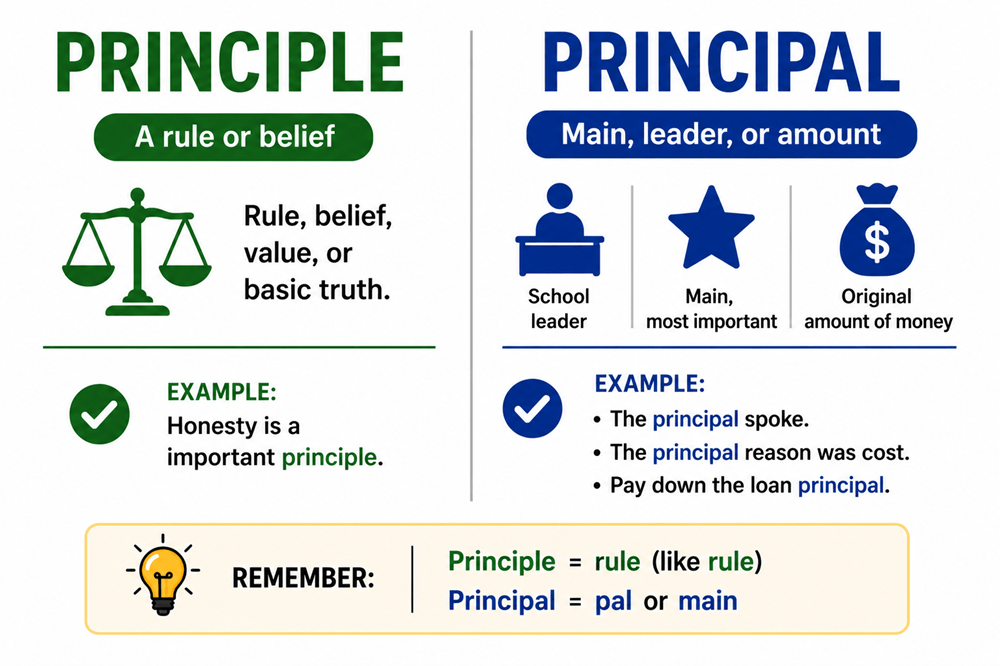
Principle and principal are both correct words, but they mean different things. Principle means a rule, belief, truth, or moral standard. Principal usually means main, most important, a school leader, or an original amount of money. The easiest rule is: a principle is a rule; a principal is main or a person in charge.
Quick Answer
Use principle when talking about a rule, belief, value, law, or basic truth.
- Honesty is an important principle.
- The plan is based on a simple principle.
- She refused to lie because of her principles.
Use principal when talking about something main, most important, a school leader, or the original amount of a loan or investment.
- The principal reason was cost.
- The principal spoke at the assembly.
- Each payment reduces the loan principal.
The simple rule is: principle means rule or belief; principal means main, leader, or money amount.
Principle or Principal: What Is the Difference?
The difference between principle and principal is meaning. They sound the same, but they are not interchangeable. Principle is always a noun. It refers to an idea, rule, belief, standard, or truth. Principal can be a noun or an adjective. It can describe something as main or name a person or amount.
| Word | Main Meaning | Example |
|---|---|---|
| Principle | A rule, belief, value, or truth | Freedom is a guiding principle. |
| Principal | Main, most important, school leader, or loan amount | The principal issue is money. |
If the sentence is about values, morals, rules, science, ideas, or beliefs, use principle. If the sentence is about importance, leadership, school administration, or finance, use principal.
What Does Principle Mean?
Principle means a rule, standard, belief, or basic truth. It often appears in serious writing because it deals with ideas, ethics, science, law, behavior, and reasoning.
Examples:
- She lives by the principle of kindness.
- The company’s principles guide every decision.
- The experiment proved a basic scientific principle.
- He disagreed with the policy on principle.
- The legal system depends on the principle of fairness.
Principle can be personal, moral, scientific, political, legal, or practical. A person can have principles. A system can be based on principles. A theory can explain principles. In every case, the word points to an idea or rule, not a person in charge.
What Does Principal Mean?
Principal has several meanings. As an adjective, it means main, chief, or most important.
- The principal cause of the delay was bad weather.
- Her principal concern was safety.
- The principal goal is to reduce waste.
As a noun, principal can mean the head of a school.
- The principal greeted students at the door.
- Parents met with the principal after school.
- The principal announced a new attendance policy.
In finance, principal means the original amount of money borrowed, invested, or owed, not including interest.
- The borrower paid down the principal.
- Interest is calculated on the remaining principal.
- Extra payments can reduce the loan principal faster.
These meanings may look unrelated at first, but they all connect to the idea of something being main or primary. The principal person is the main leader. The principal amount is the main amount. The principal reason is the main reason.
Spelling Structure: Why Principle Ends in “le”
Principle ends in -ple. It is the word for rules, beliefs, and ideas.
- principle = rule, belief, truth, or standard
A helpful memory clue is that principle and rule both end with le.
- principle
- rule
If you are talking about a rule, choose the word that ends like rule: principle.
Spelling Structure: Why Principal Ends in “al”
Principal ends in -pal. This spelling can help you remember the school meaning.
- The principal is your pal.
This old memory trick is useful because principal contains pal at the end. A school principal is a person, and pal can remind you of a person. It is not a perfect definition, but it is a strong spelling clue.
For the adjective meaning, remember that principal means main. Both principal and main point to importance.
When to Use Principle
Use principle when the sentence is about a belief, rule, value, standard, or basic truth.
- She stood by her principles.
- The teacher explained the principle behind the formula.
- The decision violated an important principle.
- Respect is a principle of good communication.
- The argument depends on one central principle.
Common phrases include:
- moral principle
- basic principle
- guiding principle
- scientific principle
- on principle
The phrase on principle means because of a belief or standard, not because of convenience.
- He refused the offer on principle.
When to Use Principal
Use principal when you mean main or most important.
- The principal problem is lack of time.
- The principal reason for leaving was stress.
- Her principal responsibility is managing the team.
Use principal for a school leader.
- The principal visited the classroom.
- The student spoke with the principal.
Use principal for the original amount of a loan or investment.
- The payment goes toward interest and principal.
- The principal balance is lower now.
Common Mistakes
A common mistake is writing principle when the sentence needs principal.
Incorrect:
- The principle reason was cost.
- The school principle called home.
Correct:
- The principal reason was cost.
- The school principal called home.
Another common mistake is writing principal when the sentence is about values or rules.
Incorrect:
- Honesty is an important principal.
- She acted according to her principals.
Correct:
- Honesty is an important principle.
- She acted according to her principles.
How to Remember Principle and Principal
Use these memory tips:
- Principle means a rule, and both principle and rule end in le.
- Principal can mean a school leader, and it ends in pal.
- Principal can also mean main or most important.
- If the sentence is about morals or ideas, use principle.
- If the sentence is about the main thing, a school leader, or money, use principal.
A simple memory sentence is: A principle is a rule; a principal is your pal or the main thing.
Final Answer
Principle means a rule, belief, value, standard, or basic truth. Example: Honesty is one of her principles.
Principal means main, most important, a school leader, or the original amount of money in a loan or investment. Example: The principal reason was cost.
To remember the difference, use this rule: principle ends like rule, and principal ends with pal. A principle guides behavior or thought. A principal is the main thing, the school leader, or the main amount of money.