Another Word for Such As: Better Alternatives With Examples
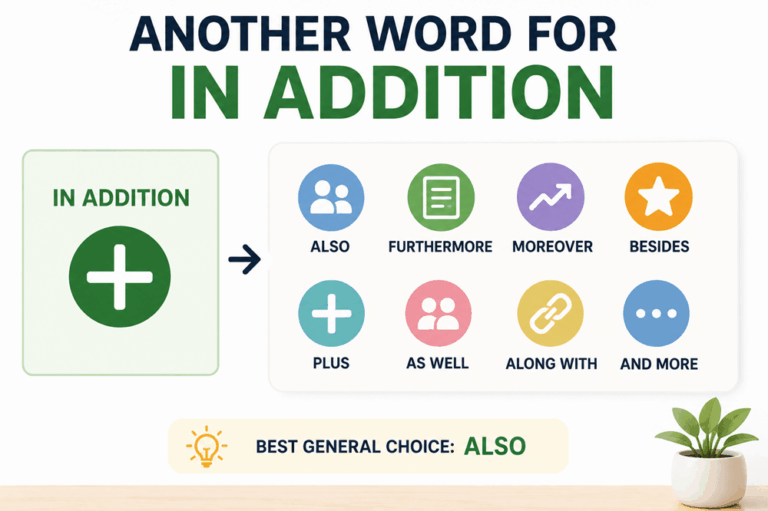
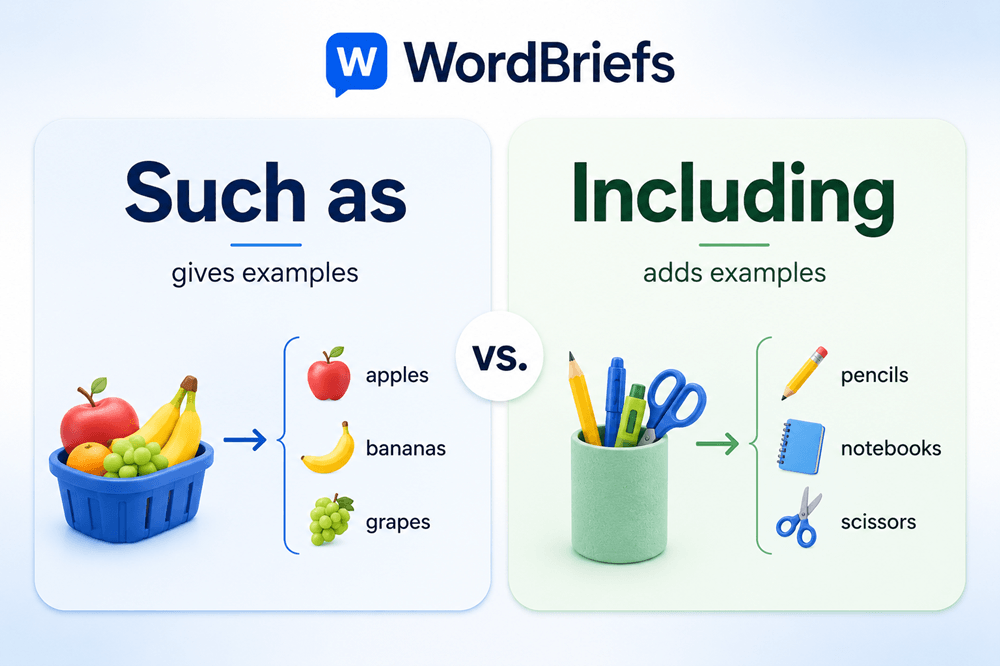
If you need another word for such as, the best choice is usually including.
Such as is used to introduce examples. It means “for example” or “like.”
Examples:
- I enjoy outdoor activities such as hiking, biking, and swimming.
- She likes citrus fruits such as oranges, lemons, and grapefruit.
- Many pets, such as cats and dogs, need regular care.
You can replace such as with words or phrases like:
- including
- for example
- for instance
- like
- especially
- in particular
- namely
- as an example
- among others
The best choice depends on the sentence. Some alternatives are formal, some are casual, and some change the meaning slightly.
Quick Answer
Good alternatives for such as include:
- including
- for example
- for instance
- like
- especially
- in particular
- namely
- as an example
- among others
Best everyday replacement:
including
Example:
- She enjoys sports such as soccer and tennis.
- She enjoys sports including soccer and tennis.
Best formal replacement:
for example
Example:
- Several factors, for example cost and timing, affect the decision.
Best casual replacement:
like
Example:
- I like simple meals like soup and pasta.
What Does Such As Mean?
Such as introduces examples of a larger group.
Example:
- Fruits such as apples and bananas are easy to pack.
This means apples and bananas are examples of fruits. They are not necessarily the only fruits.
Another example:
- Some animals, such as dolphins and elephants, are known for intelligence.
This means dolphins and elephants are examples of intelligent animals.
The phrase such as is useful because it makes examples clear. It is common in essays, articles, school writing, explanations, and formal writing.
Including
Including is one of the best replacements for such as.
Examples:
- We sell office supplies, including pens, notebooks, and folders.
- The class studies many topics, including history, science, and art.
- Several people attended, including teachers, parents, and students.
Including works well when you are listing examples as part of a larger group.
Compare:
- The store sells drinks such as tea and coffee.
- The store sells drinks, including tea and coffee.
Both sentences are correct.
One small difference: including can sometimes sound slightly more complete or practical, while such as clearly signals examples.
For Example
For example is another strong alternative.
Examples:
- Some habits can improve sleep. For example, reading before bed may help you relax.
- Many words are often misspelled. For example, people often write “seperate” instead of “separate.”
- You can use stronger verbs. For example, use “whispered” instead of “said quietly.”
For example often works best at the beginning of a new sentence.
It can also appear in the middle of a sentence:
- Some habits, for example reading before bed, can improve sleep.
This phrase is useful in essays, reports, articles, and educational writing.
For Instance
For instance means almost the same thing as for example.
Examples:
- Some foods are rich in vitamin C. For instance, oranges and strawberries are good sources.
- Many jobs require communication skills. For instance, teachers, nurses, and managers use them every day.
- Some words have different spellings by region. For instance, “color” and “colour” are both correct.
For instance sounds slightly more formal than like, but still natural.
You can use it when you want to introduce a clear example without repeating such as.
Like
Like is a casual alternative to such as.
Examples:
- I enjoy quiet hobbies like reading and drawing.
- She likes warm drinks like tea and hot chocolate.
- We need basic tools like scissors, tape, and glue.
In everyday speech, like is very common.
However, in formal writing, such as or including may sound more polished.
Casual:
- I like fruits like apples and grapes.
More formal:
- I like fruits such as apples and grapes.
Polished:
- I like fruits, including apples and grapes.
Especially
Especially can replace such as when you want to highlight important examples.
Examples:
- I enjoy music, especially jazz and classical.
- The weather affects outdoor workers, especially farmers and builders.
- Some vegetables, especially spinach and kale, are rich in nutrients.
Especially does not simply mean “for example.” It means the examples are important, notable, or more strongly included than others.
Compare:
- I enjoy fruits such as apples and oranges.
- I enjoy fruits, especially apples and oranges.
The second sentence suggests apples and oranges are favorites or especially important examples.
In Particular
In particular is useful when you want to focus on one or more specific examples.
Examples:
- She enjoys science, in particular biology.
- Many cities are expensive, in particular New York and San Francisco.
- He likes classic novels, in particular works by Jane Austen.
In particular is more focused than such as.
It does not just introduce examples. It points to examples that deserve special attention.
Namely
Namely is used when you are naming something specific.
Examples:
- Three people were absent, namely Jack, Maria, and Ben.
- The plan has one major problem, namely cost.
- She focused on two skills, namely reading and writing.
Namely is more exact than such as.
Use such as when giving examples.
Use namely when identifying the exact thing or complete list.
Compare:
- We need supplies such as pens and paper.
This suggests pens and paper are examples.
- We need two supplies, namely pens and paper.
This suggests pens and paper are the exact supplies needed.
Among Others
Among others means the list is not complete.
Examples:
- The committee included teachers, parents, and students, among others.
- The museum displays paintings by Monet and Renoir, among others.
- The course covers grammar, spelling, and punctuation, among others.
This phrase is useful when you want to show that there are more examples than the ones listed.
It often comes after the examples, not before them.
Example:
- The article discusses spelling, grammar, and vocabulary, among others.
Formal Alternatives to Such As
For formal writing, use:
- including
- for example
- for instance
- in particular
- namely
- among others
- as an example
- as illustrated by
Examples:
- The policy affects several groups, including students and teachers.
- Some strategies, for example daily practice and review, can improve learning.
- The report identifies two concerns, namely cost and safety.
In essays and academic writing, including, for example, and for instance are usually the safest choices.
Casual Alternatives to Such As
For casual writing, use:
- like
- including
- for example
- say
- things like
Examples:
- I like snacks like chips and popcorn.
- Bring something warm, like a jacket or sweater.
- We need cleaning stuff, things like soap, towels, and wipes.
Avoid things like in formal writing because it sounds conversational.
Better formal version:
- We need supplies such as soap, towels, and wipes.
Such As vs Including
Such as clearly introduces examples.
Including can also introduce examples, but it may sound slightly more direct.
Examples:
- We visited several cities such as Paris and Rome.
- We visited several cities, including Paris and Rome.
Both are correct.
However, punctuation can change the meaning.
- The package includes snacks such as crackers and fruit.
- The package includes snacks, including crackers and fruit.
Both suggest crackers and fruit are examples, not necessarily the full list.
Such As vs Like
Such as is more formal.
Like is more casual.
Examples:
- Formal: I enjoy authors such as Toni Morrison and George Orwell.
- Casual: I enjoy authors like Toni Morrison and George Orwell.
Both are common, but such as is better in polished writing.
Use like in casual speech, friendly writing, and relaxed blog posts.
Use such as in essays, reports, and professional explanations.
Common Mistakes
Mistake 1: Using namely when the list is not complete
Less clear:
- I enjoy sports, namely soccer and tennis.
This suggests soccer and tennis may be the exact sports.
Better:
- I enjoy sports such as soccer and tennis.
- I enjoy sports, including soccer and tennis.
Mistake 2: Using too many example phrases
Too wordy:
- Fruits such as, for example, apples and oranges are healthy.
Better:
- Fruits such as apples and oranges are healthy.
- Fruits, for example apples and oranges, are healthy.
Choose one phrase.
Mistake 3: Using like in very formal writing
Casual:
- Studies like this one show the trend.
More formal:
- Studies such as this one show the trend.
- Studies including this one show the trend.
Final Answer: Another Word for Such As
Good alternatives for such as include including, for example, for instance, like, especially, in particular, namely, and among others.
The best replacement depends on tone:
Including = best general replacement
For example = clear and formal
For instance = formal and natural
Like = casual
Especially = highlights important examples
In particular = focuses on specific examples
Namely = names exact items
Among others = shows the list is not complete
For most writing, the safest replacement is:
including