Is Bastard a Swear Word? Meaning, Usage, and When to Avoid It
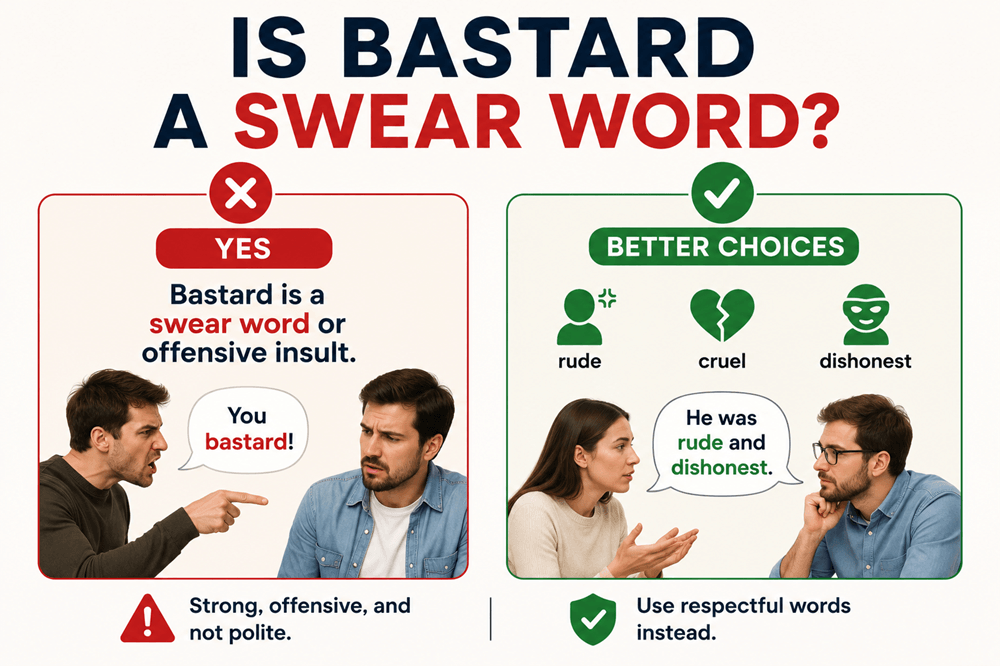
Bastard is usually considered a bad word, insult, or mild-to-strong profanity, depending on how it is used.
It is not always the strongest swear word in English, but it can sound very rude, harsh, offensive, or disrespectful when directed at a person.
Examples:
- He called the man a bastard.
- That bastard lied to everyone.
- The villain in the movie was a cruel bastard.
- In older legal language, bastard meant a child born to unmarried parents.
The word has an older literal meaning, but in modern everyday English, it is usually used as an insult.
The safest answer is:
Bastard is a swear word or offensive insult in most modern contexts. Avoid it in polite, professional, school, or child-friendly writing.
Quick Answer
Yes, bastard can be a swear word.
It is often used to insult someone.
Rude:
- He is a bastard.
Very rude:
- You bastard!
Older or historical:
- The document used bastard to describe a child born outside marriage.
Today, the insult meaning is much more common. Even if the word is not always censored, it is still not polite.
Better alternatives include:
- rude person
- cruel person
- jerk
- dishonest person
- unpleasant person
- harsh person
- difficult person
For formal writing, describe the behavior instead of using the insult.
What Does Bastard Mean?
Bastard has two main meanings.
First, it has an older meaning: a child born to parents who were not married to each other.
Example:
- In old legal records, the word bastard was sometimes used for a child born outside marriage.
This meaning is now considered old-fashioned, harsh, and often offensive.
Second, bastard is commonly used as an insult.
Examples:
- He was a selfish bastard.
- That bastard stole my idea.
- The character is written as a cold, cruel bastard.
In this meaning, the word attacks a person’s character. It can suggest someone is cruel, unpleasant, dishonest, or contemptible.
Is Bastard a Swear Word?
Yes, bastard is often treated as a swear word or profanity.
It is also an insult.
Some people may consider it milder than very strong curse words, but it can still be offensive because it is usually directed at a person.
Compare:
- That was a bad decision.
- That bastard made a bad decision.
The second sentence is much more aggressive because it insults the person, not just the action.
Is Bastard Offensive?
Yes, bastard can be offensive.
It can offend people for two reasons.
First, it is often used as a personal insult.
Example:
- You bastard!
This sounds angry and disrespectful.
Second, its older meaning refers to someone’s birth or family status. Because of that history, the word can feel cruel or judgmental, especially when used literally.
For modern polite writing, it is better to avoid the word unless you are analyzing dialogue, quoting a text, or explaining its meaning.
Is Bastard Bad for Kids to Say?
Yes, bastard is generally inappropriate for children.
Many parents and teachers would treat it as bad language.
A child should not use phrases like:
- You bastard.
- He is a bastard.
Better child-friendly alternatives include:
- mean person
- rude person
- bad guy
- bully
- unfair person
Instead of:
- He is a bastard.
A child could say:
- He is being mean.
- He was rude.
- That was not fair.
Is Bastard Okay at School?
In most school settings, avoid using bastard casually.
It may be acceptable if you are discussing a book, historical document, movie, or character and the word appears in the source.
Example:
- The novel uses the word bastard to show how harshly the character is judged.
But do not use it as your own insult in school writing.
Avoid:
- The character is a bastard.
Better:
- The character is cruel and dishonest.
- The character treats others unfairly.
- The character behaves selfishly.
These alternatives are more appropriate for essays and assignments.
Is Bastard Okay at Work?
No, bastard is usually not appropriate at work.
Avoid it in:
- emails
- meetings
- client messages
- reports
- interviews
- presentations
- customer service
- professional articles
Instead of:
- The client was a bastard.
Write:
- The client was difficult.
- The client was rude.
- The client was unreasonable.
- The client was unpleasant to work with.
Professional writing should focus on behavior, not insults.
Bastard as an Insult
As an insult, bastard is usually negative and personal.
Examples:
- He is a lying bastard.
- That bastard ruined everything.
- You selfish bastard.
These sentences are emotionally strong. They show anger, contempt, or disgust.
Because of that, the word can create conflict quickly.
If you want to sound calm or respectful, choose another word.
Bastard in Movies and Books
You may see bastard in movies, novels, TV shows, songs, or dialogue.
Writers may use it to show:
- anger
- conflict
- rough speech
- a character’s personality
- historical judgment
- emotional intensity
Example:
- The soldier shouted at the enemy and called him a bastard.
This may be realistic dialogue, but it is still offensive language.
Just because a word appears in entertainment does not mean it is polite in everyday life.
Bastard in Historical or Legal Contexts
In older legal, religious, or social contexts, bastard referred to a child born outside marriage.
Today, this use is considered outdated and offensive by many people.
Modern writing usually avoids it unless discussing historical language.
Better modern alternatives include:
- child born outside marriage
- nonmarital child
- child of unmarried parents
These phrases are more neutral and respectful.
Better Alternatives to Bastard
For a rude person:
- jerk
- rude person
- unpleasant person
- difficult person
For a cruel person:
- cruel person
- heartless person
- harsh person
- abusive person
For a dishonest person:
- liar
- dishonest person
- manipulator
- cheat
For formal writing:
- unfair
- cruel
- dishonest
- disrespectful
- unreasonable
- unethical
- hostile
Examples:
- He acted dishonestly.
- She made an unfair decision.
- The manager was unreasonable.
- The character behaves in a cruel way.
These words are clearer and more professional than bastard.
When Should You Avoid Bastard?
Avoid bastard when you want to sound polite, professional, respectful, or child-friendly.
Avoid it in:
- school assignments
- business emails
- formal writing
- job interviews
- customer service
- conversations with children
- polite conversation
- serious apologies
- public speeches
Instead of:
- He is a bastard.
Use:
- He was rude.
- He acted cruelly.
- He behaved dishonestly.
- He treated people badly.
This keeps the meaning without the insult.
Common Mistakes
Mistake 1: Thinking bastard is always neutral
It is not neutral in most modern conversations.
Even if the word has an older literal meaning, many people hear it as an insult.
Mistake 2: Using bastard in professional writing
Too rude:
- The boss was a bastard.
Better:
- The boss was unfair and disrespectful.
Mistake 3: Using bastard to describe someone’s birth
Avoid:
- He was a bastard child.
Better:
- He was born to unmarried parents.
The modern version is more respectful.
Mistake 4: Using bastard around children
This word is generally not child-friendly. Use softer words like mean, rude, or unfair.
Example Sentences
Offensive or rude:
- He called his enemy a bastard.
- That bastard betrayed his friends.
- You selfish bastard!
Historical or explanatory:
- In older records, bastard referred to a child born outside marriage.
- The word bastard is now often considered offensive.
Polite alternatives:
- He acted cruelly.
- She was treated unfairly.
- That person was rude and dishonest.
- The character behaves in a selfish way.
Final Answer: Is Bastard a Swear Word?
Yes, bastard is usually considered a swear word, bad word, or offensive insult.
It can also have an older meaning related to being born outside marriage, but that use is now often considered outdated and disrespectful.
The easiest rule is:
Bastard as an insult = offensive
Bastard in historical/legal context = outdated and sensitive
Rude, cruel, dishonest, or unfair = safer alternatives
Use bastard only when the context clearly allows strong language. For school, work, children, polite writing, or professional settings, choose a cleaner and more specific word.