Another Word for Moreover: Best Synonyms and Examples
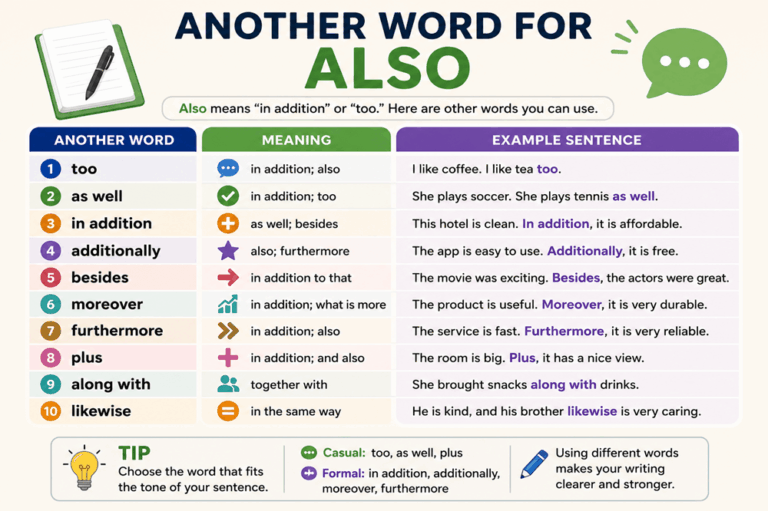
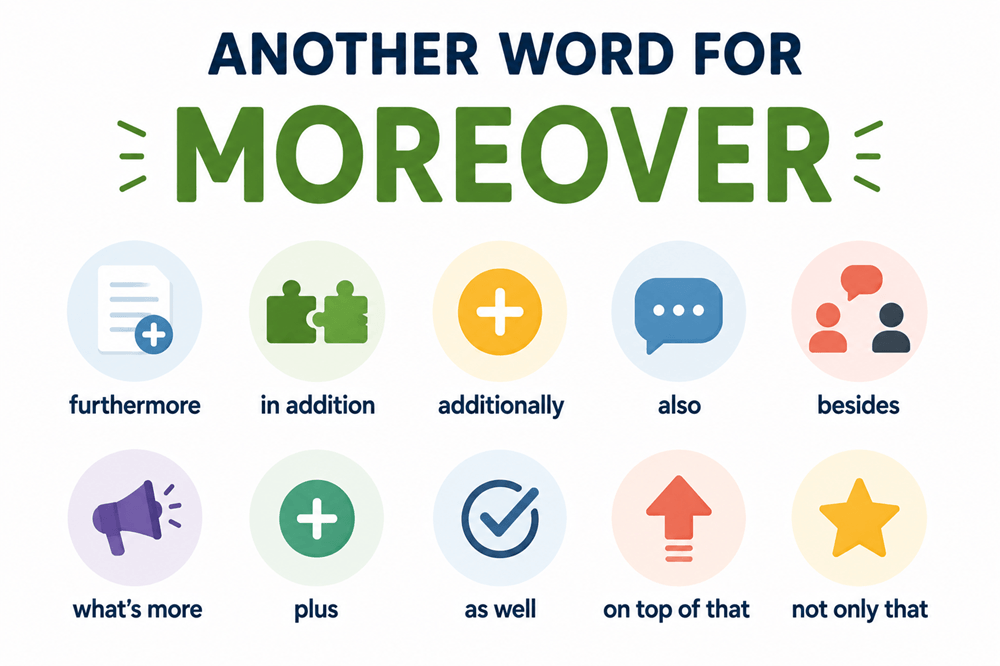
Another word for moreover is furthermore. You can also use in addition, also, besides, what’s more, additionally, plus, as well, on top of that, or not only that, depending on the sentence.
Moreover is used to add another point, reason, or fact. It often sounds formal and is common in essays, reports, articles, and professional writing.
Examples:
The plan is affordable. Moreover, it is easy to follow.
The plan is affordable. Furthermore, it is easy to follow.
The book is interesting. Moreover, it explains the topic clearly.
The book is interesting. In addition, it explains the topic clearly.
The best replacement depends on how formal or casual you want the sentence to sound.
Best Synonyms for Moreover
Here are some common synonyms for moreover:
| Synonym | Best For |
|---|---|
| furthermore | Formal addition |
| in addition | Clear formal writing |
| additionally | Essays and reports |
| also | Simple everyday addition |
| besides | Adding another reason |
| what’s more | Conversational emphasis |
| plus | Casual writing |
| as well | Natural and smooth addition |
| on top of that | Informal emphasis |
| not only that | Strong extra point |
Each word has a slightly different tone, so choose the one that fits your sentence.
Furthermore
Furthermore is the closest synonym for moreover. It means “in addition” and is often used to add a formal point.
Examples:
The method is simple. Moreover, it saves time.
The method is simple. Furthermore, it saves time.
The rule is clear. Furthermore, it is easy to apply.
The company lowered costs. Furthermore, it improved service.
Use furthermore in essays, reports, formal articles, and professional writing.
In Addition
In addition is a clear and useful replacement for moreover. It sounds formal but not too heavy.
Examples:
The hotel is clean. Moreover, it is close to the beach.
The hotel is clean. In addition, it is close to the beach.
The course teaches grammar. In addition, it includes writing practice.
The plan saves money. In addition, it reduces stress.
Use in addition when you want to add another fact clearly.
Additionally
Additionally is another formal synonym for moreover. It works well in essays, reports, and business writing.
Examples:
The app is free. Moreover, it works offline.
The app is free. Additionally, it works offline.
The team finished early. Additionally, the final result was strong.
The article is short. Additionally, it is easy to understand.
Use additionally when listing points or adding another piece of information.
Also
Also is a simple, common synonym for moreover. It works in both casual and standard writing.
Examples:
The room is bright. Moreover, it is quiet.
The room is bright. It is also quiet.
She speaks French. She also speaks Spanish.
The guide explains spelling. It also gives examples.
Use also when you want the sentence to sound natural and easy to read.
Besides
Besides can replace moreover when adding another reason or supporting point.
Examples:
I do not want to go out. Moreover, it is raining.
I do not want to go out. Besides, it is raining.
The job pays well. Besides, it is close to home.
The movie was funny. Besides, the acting was excellent.
Use besides when the second point gives extra support to the first idea.
What’s More
What’s more is a conversational way to say moreover. It adds emphasis and sounds less formal.
Examples:
The product is cheap. Moreover, it lasts a long time.
The product is cheap. What’s more, it lasts a long time.
She was kind. What’s more, she was honest.
The game is fun. What’s more, it is easy to learn.
Use what’s more in blog posts, reviews, speeches, and conversational writing.
Plus
Plus is a casual synonym for moreover. It means “also” or “in addition.”
Examples:
The food was good. Moreover, it was inexpensive.
The food was good. Plus, it was inexpensive.
I like the design. Plus, it is easy to use.
The jacket is warm. Plus, it looks nice.
Use plus in casual writing, everyday speech, and relaxed articles. Avoid it in very formal writing.
As Well
As well means “also.” It usually comes near the end of a sentence.
Examples:
The store sells shoes. Moreover, it sells bags.
The store sells shoes and bags as well.
She helped with the design. She edited the text as well.
The article gives examples and tips as well.
Use as well when you want a smooth, natural phrase.
On Top of That
On top of that is an informal phrase that adds a stronger extra point.
Examples:
The trip was expensive. Moreover, the weather was bad.
The trip was expensive. On top of that, the weather was bad.
The phone is slow. On top of that, the battery dies quickly.
The room was small. On top of that, it was noisy.
Use on top of that when the added point feels important, surprising, or frustrating.
Not Only That
Not only that is another informal way to add emphasis.
Examples:
The service was fast. Moreover, the staff was friendly.
The service was fast. Not only that, the staff was friendly.
The book is useful. Not only that, it is fun to read.
She finished early. Not only that, she did excellent work.
Use not only that when you want the second point to feel like an extra bonus.
Formal Synonyms for Moreover
For essays, reports, business writing, and professional documents, these are good formal alternatives:
- furthermore
- in addition
- additionally
- also
- besides
- what is more
- likewise
Examples:
The results were promising. Furthermore, the method was cost-effective.
The policy is practical. In addition, it is easy to enforce.
The study was small. Additionally, the results were limited.
These choices sound polished and clear in formal writing.
Casual Synonyms for Moreover
For everyday speech, blog posts, messages, and simple writing, these alternatives sound more natural:
- also
- plus
- as well
- besides
- what’s more
- on top of that
- not only that
Examples:
The room is clean. Plus, it has a great view.
The movie was funny. What’s more, the ending was clever.
I like the price. I like the color as well.
Use casual synonyms when moreover sounds too stiff.
Moreover vs Furthermore
Moreover and furthermore are very close in meaning. Both are formal ways to add another point.
Examples:
The plan is useful. Moreover, it is affordable.
The plan is useful. Furthermore, it is affordable.
The difference is small. Moreover can sometimes feel a little stronger or more argumentative. Furthermore often feels smoother in essays and reports.
In most sentences, you can use either one.
Moreover vs Also
Moreover sounds formal.
Also sounds simpler and more common.
Examples:
Formal: The system is efficient. Moreover, it is secure.
Simple: The system is efficient. It is also secure.
Use moreover in formal writing when adding a strong supporting point. Use also when you want clear, simple writing.
Common Mistakes
One common mistake is using moreover in very casual sentences where it sounds too formal.
Too formal:
I like pizza. Moreover, I like fries.
Better:
I like pizza. I also like fries.
Better:
I like pizza. Plus, I like fries.
Another mistake is using moreover to show contrast. Moreover adds information; it does not show opposition.
Incorrect:
I wanted to go. Moreover, I was too tired.
Correct:
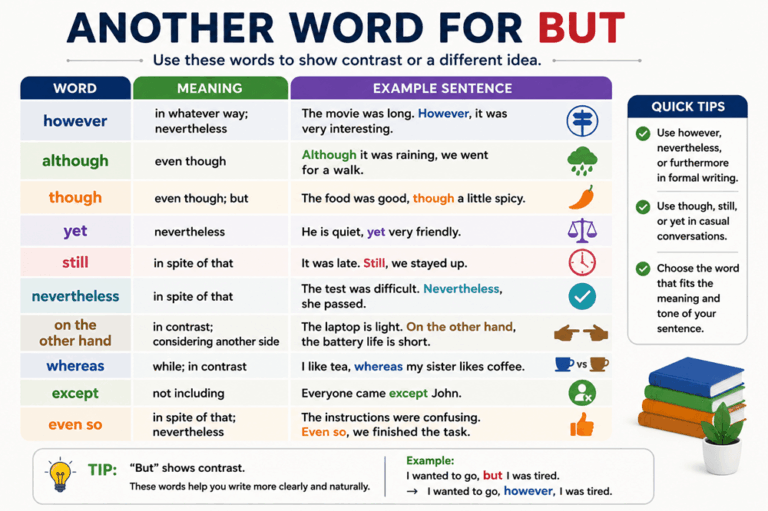
I wanted to go. However, I was too tired.
Correct:
I wanted to go, but I was too tired.
Use moreover when adding a similar or supporting point. Use however or but when showing contrast.
Final Answer
Another word for moreover is furthermore.
Other good synonyms include in addition, additionally, also, besides, what’s more, plus, as well, on top of that, and not only that.
Use furthermore or in addition for formal writing.
Use also for simple everyday writing.
Use plus or on top of that for casual writing.
Use besides when adding another reason.
The best synonym for moreover depends on how formal your sentence is and whether you are adding a fact, reason, or extra point.