Comradery or Camaraderie: Correct Spelling, Meaning, Usage, and Easy Examples Explained
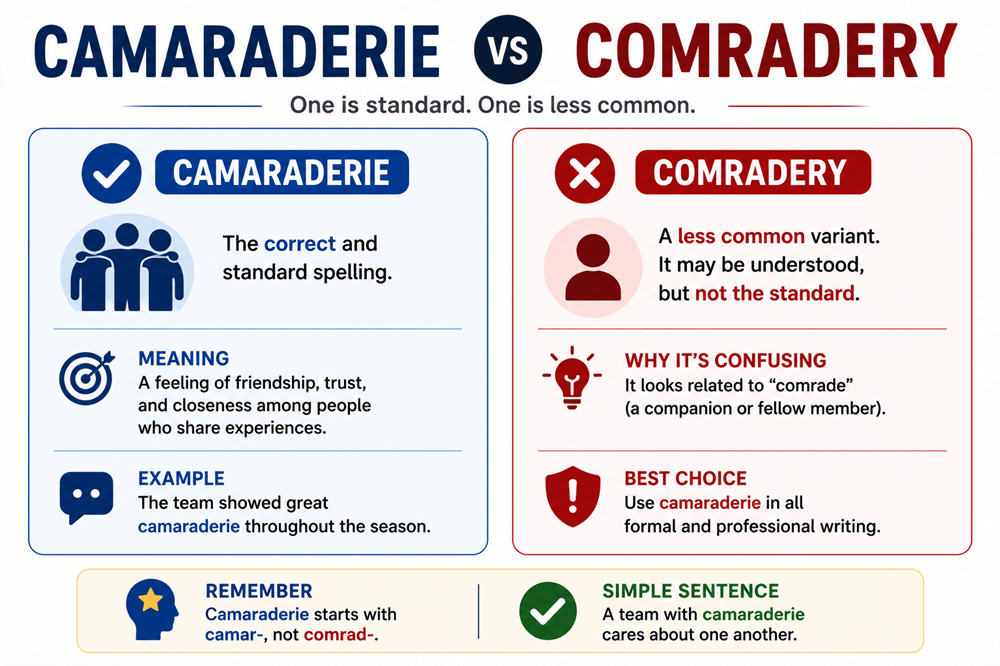
The best spelling to use is camaraderie. It means a warm feeling of friendship, trust, and closeness among people who spend time together or share an experience. Comradery is sometimes seen as a variant, but it is much less common and may look like a misspelling to many readers. For clear, polished writing, use camaraderie.
Quick Answer
Use camaraderie in standard English.
- Correct: The team developed strong camaraderie during the season.
- Less preferred: The team developed strong comradery during the season.
Camaraderie is the safer and more widely accepted spelling. Comradery may be understood, but it is not the best choice for formal, academic, professional, or polished writing.
Comradery or Camaraderie: Which One Is Correct?
Camaraderie is the standard spelling. It is the form most readers expect to see when you are talking about friendship, team spirit, mutual trust, or closeness within a group.
Comradery is sometimes used because it looks related to the word comrade. That connection makes sense because a comrade is a companion, friend, or fellow member of a group. However, the established spelling of the noun is camaraderie, not comradery.
| Word | Recommended? | Use |
|---|---|---|
| Camaraderie | Yes | The standard spelling for friendship and group closeness |
| Comradery | Usually no | A much less common variant that may look like a mistake |
If you are writing for school, work, publishing, business, or a general audience, choose camaraderie. It looks more professional and avoids confusion.
What Does Camaraderie Mean?
Camaraderie means a friendly feeling of trust, closeness, and mutual support among people in a group. It often develops when people work together, train together, struggle together, travel together, or share meaningful experiences.
You might use camaraderie when describing a sports team, military unit, workplace, class, club, volunteer group, creative team, or close circle of friends.
Examples:
- The long trip created a sense of camaraderie among the students.
- The team’s camaraderie helped them stay focused during a difficult season.
- There was real camaraderie among the volunteers.
- The small office had a warm feeling of camaraderie.
- Shared challenges can build strong camaraderie.
In each sentence, camaraderie describes more than ordinary friendliness. It suggests a bond created by shared effort, shared purpose, or shared experience.
Why Comradery Looks Tempting
Comradery looks tempting because it resembles comrade. A comrade is a companion, fellow member, or friend, especially someone connected to the same group, cause, team, or experience.
Because comrade and camaraderie have related meanings, some writers assume the spelling should be comradery. The logic is understandable:
- comrade = companion or fellow member
- comradery = the feeling among comrades
However, English does not always follow the most obvious spelling path. The standard word is camaraderie. If you write comradery, some readers may pause, and some spelling tools may mark it as incorrect or less preferred.
Is Comradery a Word?
Comradery does appear sometimes, and some people use it as a simplified spelling of camaraderie. However, it is far less common and much less standard.
For most writing, the practical answer is simple: avoid comradery and use camaraderie.
This is especially important in:
- school essays
- college papers
- business writing
- professional emails
- news articles
- published blog posts
- resumes and cover letters
Even if a reader understands comradery, the spelling may distract from your message. Camaraderie is the clearer and safer choice.
Examples of Camaraderie in Sentences
Here are natural examples of camaraderie used correctly:
- The players built strong camaraderie during training camp.
- There was a sense of camaraderie in the kitchen as everyone cooked together.
- The project created unexpected camaraderie among coworkers.
- Military life can create deep camaraderie among service members.
- The club is known for its friendly camaraderie.
- Long hours and shared pressure brought the staff a sense of camaraderie.
- The students missed the camaraderie of the classroom after graduation.
- Good leaders often encourage camaraderie within a team.
These examples show that camaraderie works well when describing group warmth, loyalty, trust, and shared spirit.
Common Places You See Camaraderie
Camaraderie is especially common in writing about teams, groups, and shared experiences. It often appears in positive descriptions of people working or living together.
Team Camaraderie
In sports and work settings, team camaraderie means the friendly connection that helps team members trust and support each other.
- The coach wanted to improve team camaraderie.
- Strong camaraderie helped the team recover after a hard loss.
Workplace Camaraderie
In office or business writing, workplace camaraderie describes a friendly, supportive work environment.
- The company picnic helped build workplace camaraderie.
- Remote work can make it harder to create everyday camaraderie.
Military Camaraderie
In military contexts, camaraderie often describes the close bond that forms between people who train, serve, or face danger together.
- The veterans spoke about the camaraderie they felt during service.
- Shared hardship created a lasting sense of camaraderie.
Camaraderie vs Friendship
Camaraderie and friendship are related, but they are not exactly the same.
Friendship usually refers to a personal relationship between people who like and care about each other.
Camaraderie often refers to the friendly bond within a group, especially one formed through shared effort, shared purpose, or shared experience.
| Word | Meaning | Example |
|---|---|---|
| Friendship | A personal bond between friends | Their friendship lasted for years. |
| Camaraderie | A warm group bond built through shared experience | The trip created camaraderie among the group. |
You can have friendship with one person, but camaraderie often suggests a wider group feeling.
Common Mistakes to Avoid
The biggest mistake is using comradery when camaraderie would be more standard.
Less preferred:
- The team showed great comradery.
- The trip created strong comradery.
- The office had a sense of comradery.
Better:
- The team showed great camaraderie.
- The trip created strong camaraderie.
- The office had a sense of camaraderie.
Another mistake is misspelling camaraderie because the word looks unusual. Common misspellings include:
- cameraderie
- camraderie
- camaradery
- comaraderie
- comradery
The correct standard spelling is camaraderie.
How to Remember Camaraderie
Here is an easy way to remember the spelling:
Camaraderie starts with camar-, not comrad-.
You can break the word into parts:
- ca + ma + ra + derie
You can also remember this sentence:
A team with camaraderie cares about one another.
The word may look long, but the safest spelling is always camaraderie in standard writing.
Final Answer
Camaraderie is the standard spelling and the best choice for most writing. It means a warm feeling of friendship, trust, and closeness among people in a group. Comradery is sometimes used as a variant, but it is much less common and may look like a misspelling. For clear, professional, and polished writing, use camaraderie.