Doughnut or Donut: Correct Spelling, Meaning, and When to Use Each
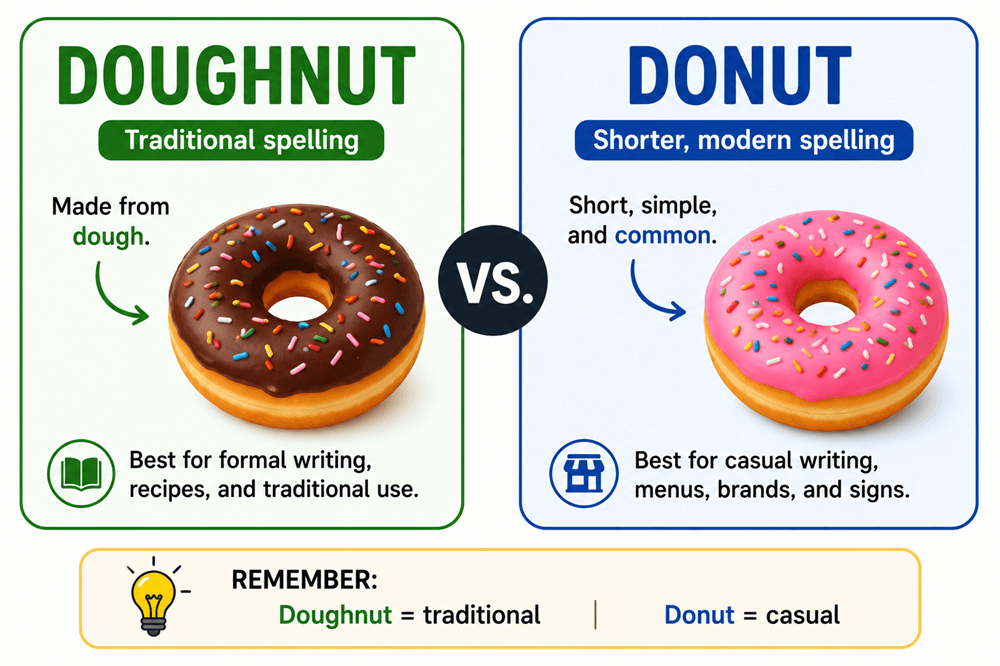
If you are choosing between doughnut or donut, both spellings can be correct. Doughnut is the traditional spelling, while donut is a shorter, informal spelling that is especially common in American English, branding, menus, and casual writing. If you want the most standard spelling, choose doughnut. If you want a modern, familiar, casual spelling, donut is widely accepted.
Doughnut or Donut: Which Spelling Is Correct?
Doughnut is the original and more traditional spelling. It is the safer choice in formal writing, schoolwork, edited articles, recipes, and general explanations.
Donut is a shorter spelling that has become very common, especially in the United States. It appears often in shop names, advertisements, packaging, social media captions, and everyday food writing.
You can write:
Traditional: You bought a glazed doughnut with coffee.
Casual: You bought a glazed donut with coffee.
Both sentences are understandable. The difference is mostly tone. Doughnut looks more traditional and formal. Donut looks shorter, simpler, and more casual.
What Does Doughnut Mean?
A doughnut is a sweet fried or baked pastry, usually round, often with a hole in the center. Doughnuts may be glazed, frosted, powdered, filled, sprinkled, twisted, old-fashioned, cake-style, yeast-raised, or topped with chocolate, cinnamon, sugar, fruit, cream, or icing.
For example:
The bakery sells fresh doughnuts every morning.
This means the bakery sells sweet pastries made from dough.
You might also write:
You chose a chocolate doughnut from the box.
Here, doughnut refers to one sweet pastry.
The spelling doughnut makes the word’s origin clearer because it contains dough. A doughnut is made from dough, so the longer spelling shows the connection between the food and its ingredients.
What Does Donut Mean?
Donut means the same thing as doughnut. It is simply a shorter spelling. The meaning does not change.
For example:
You stopped for coffee and donuts before work.
This means you bought coffee and doughnuts.
You might also write:
The kids wanted sprinkle donuts after school.
Here, donuts means the same thing as doughnuts, but the tone feels more casual.
Donut is very common in American food culture. It is short, easy to read, and strongly associated with donut shops, coffee counters, fast-food menus, and casual conversation. That is why many readers will not see donut as wrong, even though doughnut is the more traditional form.
Why Doughnut Looks Strange to Some Readers
The spelling doughnut can look strange because dough is not pronounced the way it looks to many learners. The gh is silent, and the word sounds like doe. When you add nut, the full word becomes doughnut, but it sounds much simpler than it looks.
This is one reason donut became popular. It looks closer to the way the word sounds. It removes the silent letters and gives readers a shorter spelling:
doughnut → donut
That shorter spelling feels more modern and practical, especially on signs, menus, logos, and packaging. Still, the longer spelling has the advantage of tradition and clarity in careful writing.
A Simple Way to Remember Doughnut
The easiest memory trick is:
A doughnut is made from dough.
This works because doughnut begins with dough. If you want the traditional spelling, remember the food’s base ingredient.
You can break the word into two parts:
dough + nut = doughnut
The word does not usually mean there is a nut inside the pastry. The nut part is historical and visual, not a promise of nuts as an ingredient. But the first half, dough, is the useful spelling clue.
You can also remember:
Doughnut keeps the dough.
If you want the fuller, more standard spelling, keep dough at the beginning.
A Simple Way to Remember Donut
To remember donut, think of a shop sign. Many shops use short, bold spellings because they are easy to fit on signs, boxes, bags, and menus.
You can remember:
Donut is the short shop spelling.
This does not mean donut is only for shops. It simply helps you remember the tone. Donut feels casual, commercial, and modern.
Another easy clue is:
Donut sounds like it looks.
Unlike doughnut, the spelling donut does not ask you to remember silent gh. It is short, direct, and easy to spell.
When to Use Doughnut
Use doughnut when you want a more traditional, formal, or standard spelling. It works well in writing where you want to sound careful and polished.
For example:
The recipe explains how to make yeast-raised doughnuts at home.
The bakery specializes in handmade doughnuts.
A doughnut can be fried, baked, filled, glazed, or powdered.
The article compared cake doughnuts with yeast doughnuts.
In these sentences, doughnut feels natural because the writing is more explanatory. If you are writing an article, recipe, school sentence, or formal description, doughnut is usually the safer choice.
When to Use Donut
Use donut when you want a casual, modern, or brand-friendly tone. It works especially well in everyday writing, captions, menus, product names, informal blog posts, and social media.
For example:
You grabbed a donut before the meeting.
The office brought in donuts for everyone.
She ordered a coffee and a maple donut.
The kids decorated mini donuts with frosting and sprinkles.
In these sentences, donut feels relaxed and familiar. It does not look out of place because the context is casual.
Doughnut vs Donut in Side-by-Side Examples
Side-by-side examples can help you see how the tone changes:
Traditional: The bakery made fresh doughnuts before sunrise.
Casual: The bakery made fresh donuts before sunrise.
Traditional: You learned how to fry doughnuts at home.
Casual: You learned how to fry donuts at home.
Traditional: The doughnut was covered in powdered sugar.
Casual: The donut was covered in powdered sugar.
Traditional: She bought a dozen doughnuts for the party.
Casual: She bought a dozen donuts for the party.
Both versions are clear. The choice depends on whether you want the traditional spelling or the shorter casual spelling.
Is Donut Wrong?
Donut is not usually considered wrong in modern everyday writing. It is widely recognized and widely used, especially in American English. However, some teachers, editors, or formal style preferences may still favor doughnut.
If you are unsure which spelling your audience expects, doughnut is the safer traditional answer. If you are writing casually or matching a brand, menu, or shop name, donut may fit better.
The practical rule is:
Doughnut is more formal and traditional.
Donut is more casual and modern.
What Is the Plural: Doughnuts or Donuts?
The plural forms are simple:
doughnut → doughnuts
donut → donuts
For example:
The box was full of doughnuts.
The box was full of donuts.
Again, both can be correct. The spelling choice should match the singular form you are using. If your article begins with doughnut, use doughnuts consistently. If your menu uses donut, use donuts consistently.
Common Phrases With Doughnut and Donut
Both spellings appear in common phrases, though donut is especially common in casual food writing.
Glazed doughnut or glazed donut means a doughnut covered with a sweet glaze.
You picked the glazed doughnut first.
Jelly doughnut or jelly donut means a filled doughnut with jelly or jam inside.
The jelly donut left sugar on your fingers.
Doughnut hole or donut hole means a small round piece of doughnut, often made from the center cutout.
The box included chocolate donut holes.
Donut shop is especially common because the shorter spelling often appears in business names.
The donut shop opens before dawn.
How to Check Which Spelling You Need
Before choosing between doughnut and donut, ask what kind of writing you are doing.
If the writing is formal, traditional, educational, or recipe-based, choose doughnut.
If the writing is casual, modern, promotional, or brand-like, donut is usually fine.
You can use this quick check:
Do you want the traditional spelling? Use doughnut.
Do you want the shorter casual spelling? Use donut.
Are you following a brand name or menu spelling? Match the spelling used by the brand or menu.
The Final Answer on Doughnut or Donut
Doughnut and donut both refer to the same sweet pastry. Doughnut is the traditional and more formal spelling. Donut is the shorter, casual spelling that is especially common in American English, advertising, shop names, menus, and everyday writing.
To remember the difference, use these two clues: doughnut keeps the dough, and donut is the short shop spelling. If you want the safest standard spelling, choose doughnut. If you want a relaxed, modern spelling, donut is widely understood.
So when you are writing a polished article or recipe, doughnut may look best. When you are writing casually about coffee and donuts, donut works perfectly well.