Tortellini or Tortelloni: Meaning, Size Difference, Filling, and Correct Pasta Usage Explained
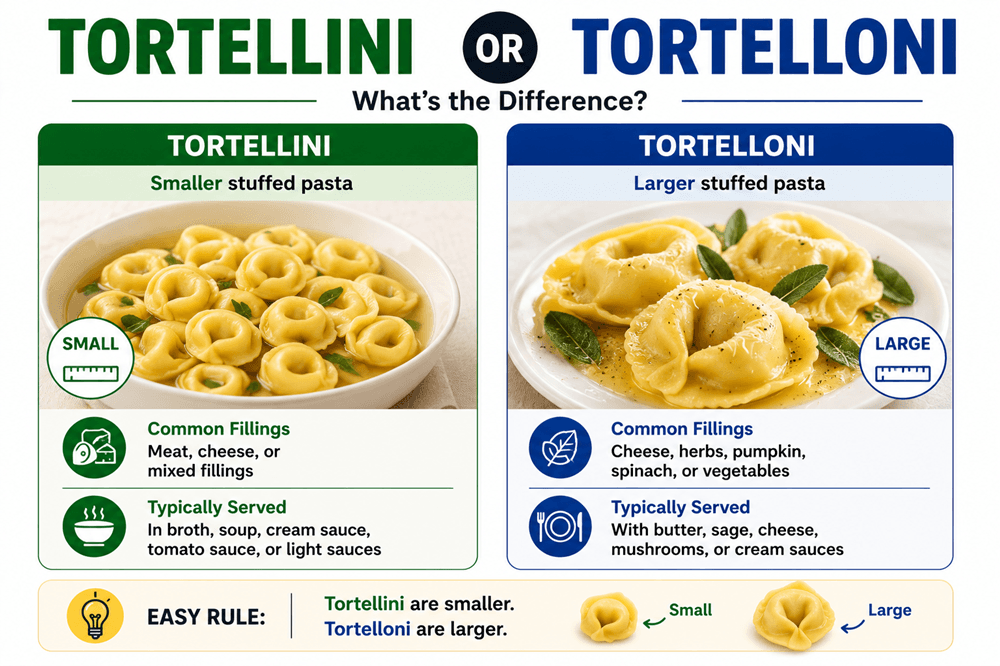
Tortellini and tortelloni are both ring-shaped Italian stuffed pastas, but they are not exactly the same. The quick difference is size: tortellini are smaller, while tortelloni are larger. Their fillings are often different too. Tortellini commonly have meat or cheese fillings, while tortelloni are often filled with cheese, herbs, pumpkin, or vegetables.
Quick Answer
Use tortellini when you mean the smaller stuffed pasta.
- We ordered tortellini in broth.
- The soup was filled with tiny cheese tortellini.
Use tortelloni when you mean the larger stuffed pasta.
- She made spinach and ricotta tortelloni.
- The restaurant served pumpkin tortelloni with butter and sage.
The simple rule is: tortellini are smaller, and tortelloni are larger.
Tortellini or Tortelloni: What Is the Difference?
The main difference between tortellini and tortelloni is size. Both words describe stuffed pasta folded into a small ring or navel-like shape, but tortelloni are generally bigger than tortellini.
The endings of the words help explain the difference. In Italian, -ini often suggests something smaller, while -oni often suggests something larger. That is why tortellini are the smaller version and tortelloni are the larger version.
| Word | Basic Meaning | Common Size | Typical Filling |
|---|---|---|---|
| Tortellini | Small stuffed pasta rings | Smaller | Meat, cheese, or mixed fillings |
| Tortelloni | Larger stuffed pasta rings | Larger | Cheese, herbs, pumpkin, greens, or vegetables |
In everyday English, people sometimes use the two words loosely, especially on menus or packaged foods. Still, if you want to be precise, remember that tortellini are small and tortelloni are large.
What Are Tortellini?
Tortellini are small pieces of stuffed pasta shaped like little rings. They are usually made from thin pasta dough wrapped around a filling, then folded into their familiar rounded shape.
Tortellini are often served in soup, broth, cream sauce, tomato sauce, or simple butter-based sauces. Because they are small, they work especially well in brothy dishes where each bite feels light but flavorful.
Common tortellini fillings include:
- Cheese
- Pork
- Prosciutto
- Mortadella
- Chicken
- Spinach and cheese
- Mixed meat and cheese
Examples:
- The restaurant served tortellini in a rich chicken broth.
- She added cheese tortellini to the soup.
- We had tortellini with tomato sauce and grated Parmesan.
- The small tortellini cooked quickly in boiling water.
If the pasta pieces are small, compact, and served by the spoonful or in a bowl of broth, tortellini is probably the word you want.
What Are Tortelloni?
Tortelloni are larger stuffed pasta rings. They look similar to tortellini, but they are bigger and often served as a main pasta dish instead of in broth.
Tortelloni are commonly filled with cheese, vegetables, herbs, or seasonal ingredients. Because they are larger, the filling is usually more noticeable. You may taste the ricotta, pumpkin, spinach, herbs, or other ingredients more clearly than you would in smaller tortellini.
Common tortelloni fillings include:
- Ricotta
- Spinach and ricotta
- Pumpkin or squash
- Cheese and herbs
- Mushrooms
- Greens
- Vegetable-based fillings
Examples:
- The pumpkin tortelloni came with brown butter and sage.
- She ordered spinach and ricotta tortelloni.
- The plate had six large tortelloni in a creamy sauce.
- Homemade tortelloni can be filled with cheese and herbs.
If the pasta pieces are larger and served as a plated dish, tortelloni is often the better word.
Why the Endings Matter
The endings -ini and -oni are useful clues. You do not need to speak Italian to remember the basic idea.
-ini often points to something smaller. That is why tortellini are the smaller pasta.
-oni often points to something larger. That is why tortelloni are the larger pasta.
This same idea appears in other Italian food words too, though not every word follows the pattern in a perfectly simple way. For this pair, however, the size clue is very helpful:
- Tortellini = smaller stuffed pasta
- Tortelloni = larger stuffed pasta
Tortellini and Tortelloni in Sentences
Here are some natural examples that show how to use both words correctly.
Examples with Tortellini
- The soup had small cheese tortellini in every bite.
- He bought refrigerated tortellini for a quick dinner.
- The tortellini were served in broth with fresh herbs.
- She prefers meat-filled tortellini with a light sauce.
- Frozen tortellini can be useful for easy weeknight meals.
Examples with Tortelloni
- The tortelloni were filled with ricotta and spinach.
- He ordered large pumpkin tortelloni at the Italian restaurant.
- The homemade tortelloni had a soft cheese filling.
- She served tortelloni with sage butter and grated cheese.
- The plate came with five large tortelloni in a creamy sauce.
In these examples, tortellini sounds right for small stuffed pasta, while tortelloni sounds right for larger stuffed pasta.
Are Tortellini and Tortelloni the Same Shape?
Tortellini and tortelloni are similar in shape. Both are usually folded into a ring-like form. This is why they are so easy to confuse.
The difference is not usually the basic shape. The difference is more about size, filling, and how the pasta is commonly served.
Tortellini are small enough to fit easily into soup or broth. You can eat several in one serving without the dish feeling heavy.
Tortelloni are larger, so they usually stand out more on the plate. A serving may include fewer pieces because each one is bigger and more filling.
Tortellini or Tortelloni on a Menu
If you see tortellini on a menu, expect smaller stuffed pasta. It may appear in broth, cream sauce, tomato sauce, pesto, or a baked pasta dish.
If you see tortelloni on a menu, expect larger stuffed pasta. It may be served with butter, sage, cheese, mushrooms, tomato sauce, or a light cream sauce.
Menus can vary, and restaurants may use terms differently, but the traditional distinction is still useful. When you are writing or ordering, tortellini usually signals small stuffed pasta, while tortelloni signals larger stuffed pasta.
Common Mistakes to Avoid
One common mistake is assuming tortelloni is just a fancy spelling of tortellini. It is not. The two words refer to related but different pasta types.
Another mistake is using tortellini for every ring-shaped stuffed pasta. While many people understand the general meaning, tortelloni is more accurate when the pasta pieces are larger.
You should also avoid spelling mistakes such as:
- tortelini
- tortellinni
- torteloni
- tortellonni
The correct spellings are tortellini and tortelloni.
How to Remember Tortellini or Tortelloni
Use the endings to remember the difference:
Tortellini has -ini, which can remind you of tiny.
Tortelloni has -oni, which can remind you of only bigger.
The easiest memory trick is:
- Tortellini = tiny stuffed pasta
- Tortelloni = larger stuffed pasta
This is not a perfect translation, but it is a helpful way to keep the two words straight in everyday writing.
Final Answer
Tortellini and tortelloni are both stuffed Italian pastas with similar ring-like shapes. The main difference is size: tortellini are smaller, while tortelloni are larger. Tortellini often have meat or cheese fillings and may be served in broth, while tortelloni are often filled with cheese, herbs, pumpkin, spinach, or other vegetables and served as a larger pasta dish.