Wont or Won’t: What’s the Difference?
Won’t and wont are both real words, but they mean very different things.
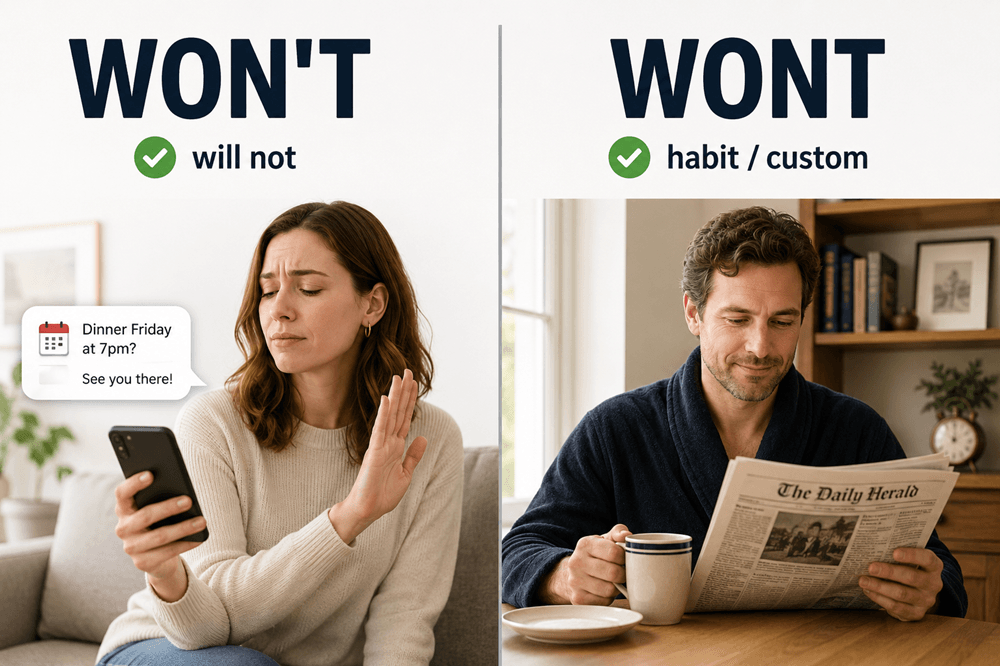
Use won’t with an apostrophe when you mean will not.
Use wont without an apostrophe only in a rare, formal sense meaning accustomed to doing something or a habit/custom.
Examples:
- I won’t be late.
- She won’t answer the phone.
- He was wont to take a walk after dinner.
- As was her wont, she arrived early.
In everyday English, the word you usually want is won’t.
Wont without the apostrophe is much less common. Most of the time, when people write wont, they actually mean won’t.
Quick Answer
Use won’t when you mean will not.
Use wont only when you mean someone’s habit, custom, or usual behavior.
Correct:
- I won’t forget.
Incorrect:
- I wont forget.
Correct but formal:
- He was wont to speak softly.
That means he was accustomed to speaking softly.
For modern everyday writing, won’t is almost always the correct choice.
What Does Won’t Mean?
Won’t is a contraction of will not.
A contraction is a shortened form of two words. The apostrophe shows that letters have been left out.
Examples:
- I won’t go.
- She won’t listen.
- They won’t agree.
- The door won’t open.
- We won’t know until tomorrow.
In each sentence, won’t means will not.
You can test it by replacing won’t with will not:
- I will not go.
- She will not listen.
- They will not agree.
If will not fits, use won’t with an apostrophe.
What Does Wont Mean?
Wont without an apostrophe is a much rarer word.
It can mean accustomed, used to, or in the habit of doing something.
Examples:
- He was wont to rise before sunrise.
- She was wont to read late into the night.
- They were wont to gather after church.
This use sounds old-fashioned or literary. Most people do not use wont this way in normal conversation.
Wont can also be a noun meaning a habit or custom.
Example:
- As was his wont, he checked every detail twice.
That means checking every detail twice was his usual habit.
Won’t vs Wont: The Main Difference
The main difference is meaning:
Won’t = will not
Wont = habit, custom, or accustomed behavior
Compare these sentences:
- I won’t stay late.
- He was wont to stay late.
The first sentence means: I will not stay late.
The second sentence means: He was accustomed to staying late.
They sound similar, but they do not mean the same thing.
Why the Apostrophe Matters
The apostrophe in won’t is important because it changes the word completely.
Without the apostrophe, wont is not the contraction of will not.
Incorrect:
- I wont be there.
Correct:
- I won’t be there.
If you are writing a sentence about refusing, not doing something, or something not happening in the future, use won’t.
Examples:
- The car won’t start.
- My phone won’t charge.
- He won’t admit the mistake.
- We won’t have enough time.
All of these need the apostrophe.
Is Wont a Misspelling?
Wont is not always a misspelling because it is a real word.
However, in everyday writing, wont is often a mistake for won’t.
If someone writes:
- I wont go.
They almost certainly mean:
- I won’t go.
But if someone writes:
- As was his wont, he arrived early.
Then wont is correct because it means habit or custom.
So the key question is:
Can you replace the word with will not?
If yes, use won’t.
If no, and the meaning is habit or custom, use wont.
How to Remember the Difference
A simple memory trick:
Won’t has an apostrophe because it means two words: will not.
Think:
won’t = will not
The apostrophe reminds you that it is a contraction.
For wont, think:
wont = way of doing things
Both wont and way start with w, and both can connect to a person’s usual behavior.
You can also remember:
Won’t = refusal or future negative
Wont = habit or custom
Examples:
- I won’t eat that.
- It was his wont to eat early.
The first means he will not eat.
The second means eating early was his habit.
Spelling Structure
Won’t is spelled:
w-o-n-apostrophe-t
The apostrophe is required.
Wont is spelled:
w-o-n-t
No apostrophe.
The difference is small, but it changes the meaning.
Correct contraction:
won’t
Rare habit word:
wont
Common mistake:
wont when you mean won’t
Common Mistakes
Mistake 1: Forgetting the apostrophe
Incorrect:
- I wont be able to come.
Correct:
- I won’t be able to come.
Since the meaning is will not, the apostrophe is needed.
Mistake 2: Thinking wont always means won’t
Incorrect:
- As was his won’t, he walked every morning.
Correct:
- As was his wont, he walked every morning.
Here, the meaning is habit, so wont is correct.
Mistake 3: Using wont in casual writing when won’t is needed
Incorrect:
- The website wont load.
Correct:
- The website won’t load.
A website will not load, so use won’t.
Mistake 4: Avoiding wont because it looks wrong
Wont can be correct, but it is formal and uncommon.
Correct:
- She was wont to keep her thoughts private.
This means she was accustomed to keeping her thoughts private.
Example Sentences With Won’t
- I won’t forget your birthday.
- She won’t answer the question.
- They won’t arrive before noon.
- The computer won’t turn on.
- We won’t make the same mistake again.
- He won’t change his mind.
- The weather won’t improve today.
In all of these examples, won’t means will not.
Example Sentences With Wont
- He was wont to sit by the window.
- She was wont to speak carefully.
- As was their wont, they gathered every Sunday.
- It was his wont to check the locks twice.
- The old professor was wont to quote poetry during lectures.
These examples sound more formal or literary. In everyday speech, people would usually say used to or was in the habit of instead.
Final Answer: Wont or Won’t?
Use won’t when you mean will not.
Use wont only when you mean a habit, custom, or being accustomed to something.
For most modern writing, the correct word is won’t with an apostrophe.
The easiest way to remember the difference is:
Won’t = will not
Wont = habit or custom
So write:
- I won’t go.
- The car won’t start.
- As was his wont, he arrived early.
The apostrophe makes all the difference.