Boujee or Bougie: Meaning Difference, Correct Spelling, Slang Usage, and Examples Today
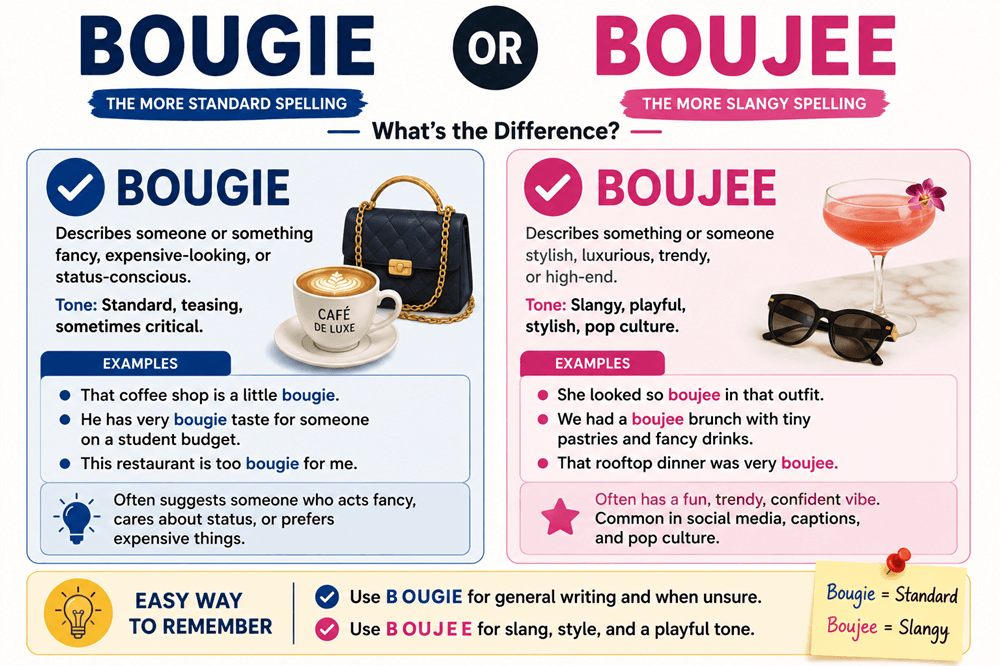
Bougie and boujee are both used in modern English, but they do not always feel the same. Bougie is the more standard spelling and is often used for someone or something that seems fancy, status-conscious, or a little pretentious. Boujee is a slangier spelling that often feels more playful, trendy, stylish, or connected to pop culture.
Quick Answer
Use bougie when you want the more standard spelling.
- That coffee shop is a little bougie.
- He has very bougie taste for someone on a student budget.
Use boujee when you want a more casual, slangy, playful, or pop-culture feel.
- She looked so boujee in that outfit.
- We had a boujee brunch with tiny pastries and fancy drinks.
The simplest rule is: bougie is the safer spelling for general writing, while boujee feels more casual and stylish.
Boujee or Bougie: What Is the Difference?
The difference between bougie and boujee is mostly spelling, tone, and context. Both words can describe something fancy, expensive-looking, luxurious, or connected with high social status. However, they often create slightly different feelings.
Bougie is the older and more standard-looking spelling. It comes from bourgeois, a word connected with middle-class status, material comfort, and respectability. In slang, bougie often describes someone who acts fancy, cares about status, or prefers expensive things.
Boujee is a newer, more phonetic-looking slang spelling. It sounds the same as bougie, but it often feels more playful, trendy, or stylish. You may see boujee more often in social media captions, music references, lifestyle posts, jokes, and casual conversation.
| Word | Best Use | Tone |
|---|---|---|
| Bougie | General writing, lifestyle writing, casual criticism | Standard, teasing, sometimes negative |
| Boujee | Slang, social media, pop culture, playful writing | Trendy, stylish, playful, informal |
What Does Bougie Mean?
Bougie is an informal word used to describe someone or something that seems fancy, upper-class, expensive, materialistic, or concerned with status. Depending on the tone, it can be funny, critical, affectionate, or teasing.
For example, if someone refuses regular coffee and only wants a handmade oat milk latte from a boutique cafe, a friend might jokingly call them bougie. The word suggests that the person has expensive or refined taste, or at least wants to seem that way.
Examples:
- This restaurant is too bougie for a quick lunch.
- She bought a bougie candle that costs more than dinner.
- His apartment looks very bougie for a college student.
- I like simple hotels, but my sister prefers something more bougie.
- That grocery store feels bougie, but the bread is amazing.
In these sentences, bougie describes something fancy, expensive, polished, or status-focused. It may be light teasing rather than a serious insult.
What Does Boujee Mean?
Boujee means something similar to bougie, but the spelling usually feels more casual, expressive, and slangy. It is often used when someone wants to describe a stylish, luxurious, confident, or high-end vibe.
Boujee can sound more positive than bougie. It often suggests looking good, treating yourself, enjoying luxury, or presenting a glamorous image. Still, context matters. It can also be used jokingly or critically.
Examples:
- She felt boujee in her new sunglasses.
- We made boxed pasta but served it on fancy plates, so it felt boujee.
- That rooftop dinner was very boujee.
- He posted a boujee vacation photo from the hotel balcony.
- I bought one expensive coffee and suddenly felt boujee.
In these examples, boujee has a playful or stylish feeling. It sounds less formal than bougie and fits casual writing better.
Is Bougie the Correct Spelling?
Bougie is the safer spelling in most writing. If you are writing an article, essay, product description, review, or general explanation, bougie will usually look more standard.
Use bougie when you want the word to feel more established or when you are writing for readers who may not be familiar with the slangier spelling boujee.
Examples:
- The hotel has a bougie lobby with marble floors and gold lights.
- Some readers found the character charming, while others thought she was bougie.
- The brand uses bougie packaging to make simple products feel luxurious.
If you are unsure which spelling to use, choose bougie. It is the better default for clean, clear writing.
Is Boujee a Real Word?
Boujee is a real slang spelling, but it is more informal than bougie. It is common in social media, music culture, captions, comments, jokes, and casual speech.
Use boujee when you want a fun, modern, stylish tone. It works well in informal writing, but it may look too casual in formal writing.
Examples:
- This outfit makes me feel boujee.
- We turned a cheap dinner into a boujee picnic.
- She loves anything that feels soft, shiny, and boujee.
In professional or academic writing, however, bougie is usually the better choice.
Bougie and Boujee in Sentences
Seeing both spellings side by side can make the tone difference clearer.
| Bougie | Boujee |
|---|---|
| That cafe is a little bougie. | This brunch feels so boujee. |
| He has bougie taste in furniture. | She looked boujee in that silk dress. |
| The shop sells bougie candles and imported soap. | We had a boujee night out downtown. |
| Her friends teased her for being bougie. | She joked that the hotel made her feel boujee. |
Bougie often sounds like a comment on taste, status, or pretension. Boujee often sounds more playful, fashionable, or fun.
Is Bougie an Insult?
Bougie can be an insult, but it does not have to be. Tone matters.
If someone says, “You are so bougie,” they might mean it as a joke. They may be teasing you for liking expensive coffee, luxury skincare, fancy hotels, or carefully styled home decor.
But bougie can also sound critical. It may suggest that someone is trying too hard to seem rich, polished, important, or better than others.
Examples with a teasing tone:
- You brought sparkling water to a picnic? That is so bougie.
- She bought designer treats for her dog. Very bougie.
Examples with a critical tone:
- He acts bougie now that he has a better job.
- The event felt bougie and unwelcoming.
Because the word can sound judgmental, use it carefully when describing real people.
Is Boujee Positive?
Boujee is often more positive or playful than bougie, but it can still depend on context. It may describe someone who looks stylish, enjoys nice things, or gives off a glamorous energy.
Examples:
- Her outfit was simple but boujee.
- We felt boujee ordering dessert first.
- The room had candles, flowers, and a very boujee vibe.
In these sentences, boujee sounds more like a compliment or playful description than an insult.
Bougie, Boujee, and Bourgeois
Bougie is connected to the word bourgeois. Bourgeois originally refers to the middle class, but it can also suggest materialism, respectability, social status, or conventional values.
Bougie is a shortened slang form. It is easier to say and much more casual than bourgeois.
Boujee is a stylized slang spelling that sounds like bougie. It is less formal and more connected with pop culture and casual expression.
| Word | Tone | Use |
|---|---|---|
| Bourgeois | Formal or academic | Class, society, politics, culture |
| Bougie | Informal but more standard | Fancy, status-conscious, pretentious |
| Boujee | Very informal and slangy | Stylish, luxurious, trendy, playful |
Do Not Confuse Bougie With Boogie
Bougie and boujee should not be confused with boogie.
Boogie is a different word. It usually means to dance or move to music.
- They wanted to boogie all night.
Bougie and boujee are about fancy taste, luxury, status, or a stylish vibe.
- That restaurant is too bougie for me.
- Her new bag looks boujee.
The spelling difference matters because boogie has a completely different meaning.
Common Mistakes to Avoid
One common mistake is treating bougie and boujee as perfect replacements in every situation. They are similar, but their tone can feel different.
Use bougie when you want a more standard spelling:
- The neighborhood has become more bougie over the years.
Use boujee when you want a more playful slang tone:
- This hotel robe makes me feel boujee.
Another mistake is using either word in formal writing without thinking about tone. These are slang or informal words. In formal writing, you may want a clearer word such as luxurious, expensive, pretentious, status-conscious, or upscale.
Better Words to Use Instead
If bougie or boujee feels too informal, choose a more precise word.
| If You Mean… | Use Instead |
|---|---|
| Fancy in a positive way | luxurious, elegant, upscale |
| Trying too hard to seem rich | pretentious, status-conscious |
| Expensive-looking | high-end, premium, polished |
| Trendy and stylish | fashionable, glamorous, chic |
For example, instead of saying “a bougie hotel” in formal writing, you could say “an upscale hotel.” Instead of “a boujee outfit,” you could say “a glamorous outfit.”
How to Remember Bougie or Boujee
Here is an easy way to remember the difference:
Bougie is the more standard spelling.
Boujee is the more slangy spelling.
You can also remember it this way:
- Bougie = standard, fancy, sometimes pretentious
- Boujee = slangy, stylish, playful, pop-culture tone
If you are unsure which spelling to use, choose bougie. If you are writing a casual caption, joke, or social media post, boujee may fit the tone better.
Final Answer
Bougie and boujee are both used in English, but bougie is the safer standard spelling. It often describes someone or something fancy, status-conscious, expensive-looking, or slightly pretentious. Boujee is a slangier spelling that usually feels more playful, trendy, stylish, or connected to pop culture. Use bougie for general writing and boujee for casual slang.