Trick or Treating: Correct Spelling, Hyphenation, Meaning, and Halloween Usage Explained Clearly
Trick-or-treating is the standard spelling when you mean the Halloween activity of going door to door for candy. The spoken phrase is usually written trick or treat without hyphens. Use trick-or-treating for the activity, trick-or-treaters for the children or people doing it, and trick or treat for the words they say at the door.
Quick Answer
Use trick-or-treating when referring to the Halloween activity.
- The children went trick-or-treating after dinner.
- We bought candy for trick-or-treating.
- Trick-or-treating starts early in our neighborhood.
Use trick or treat when quoting or naming the phrase people say.
- The children shouted, “Trick or treat!”
- She practiced saying trick or treat.
The simple rule is: trick-or-treating is the activity. Trick or treat is the phrase.
Trick or Treating or Trick-or-Treating: Which Is Correct?
The most polished spelling for the Halloween activity is trick-or-treating, with hyphens. The hyphens show that the words work together as one compound idea.
Trick or treating without hyphens may appear in casual writing, but trick-or-treating is clearer and more standard in edited writing, school writing, articles, event pages, and signs.
| Form | Best Use | Example |
|---|---|---|
| trick-or-treating | The Halloween activity | They went trick-or-treating. |
| trick or treat | The spoken phrase | They said, “Trick or treat!” |
| trick-or-treaters | The people doing the activity | The trick-or-treaters came early. |
If you are writing about the activity itself, choose trick-or-treating.
What Does Trick-or-Treating Mean?
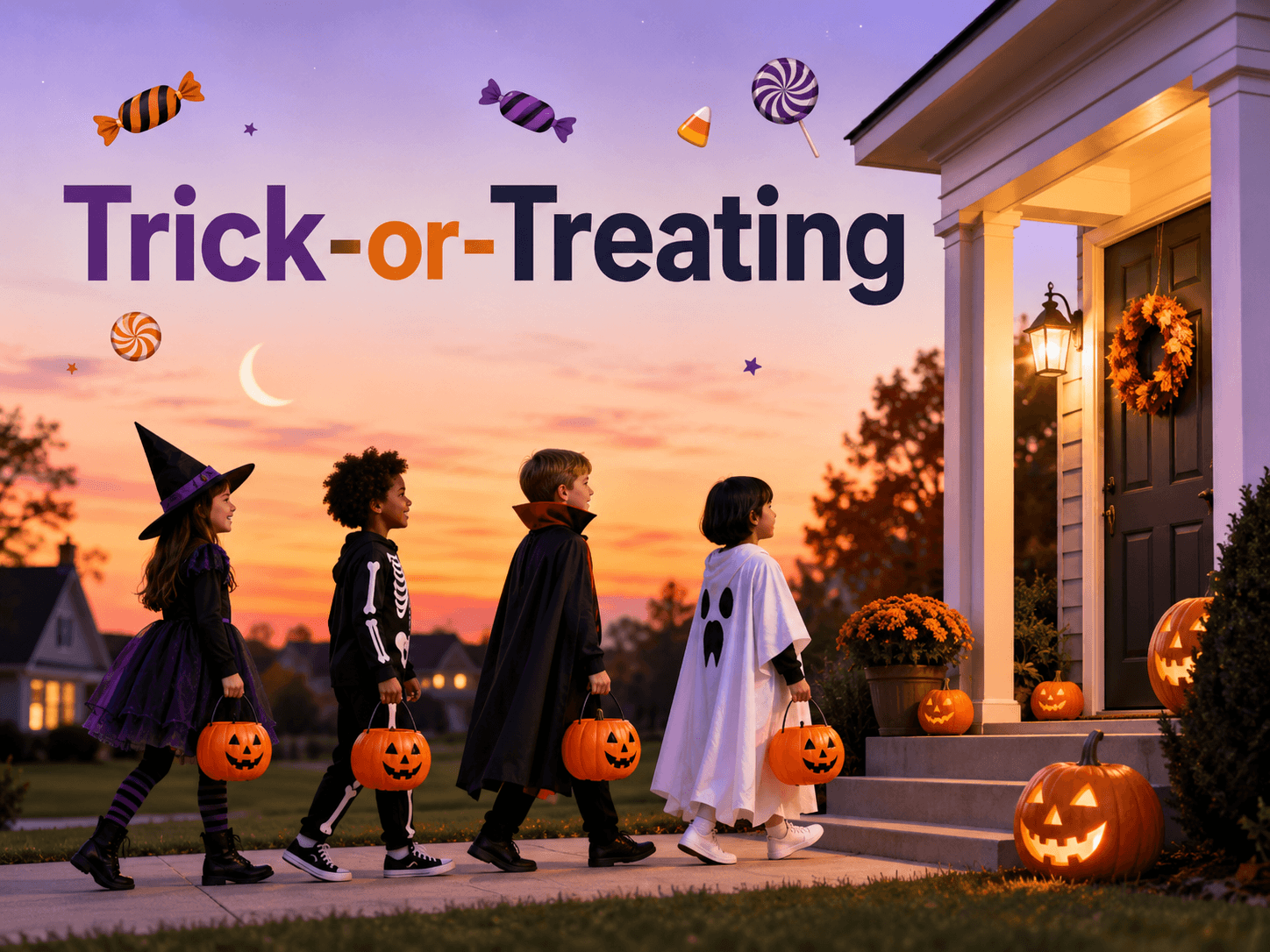
Trick-or-treating means going from house to house on Halloween, usually in costume, asking for candy or small treats. Children often say trick or treat when someone opens the door.
Examples:
- The kids are excited for trick-or-treating.
- Our neighborhood is popular for trick-or-treating.
- Parents walked with their children while trick-or-treating.
- They carried flashlights during trick-or-treating.
The word is strongly connected with Halloween, costumes, candy, decorated houses, porch lights, and neighborhood traditions.
Why Trick-or-Treating Has Hyphens
Trick-or-treating has hyphens because it is a compound word. The words trick, or, and treat work together before the ending -ing to name one activity.
Without hyphens, the phrase can still be understood, but it looks looser and less polished. The hyphens help readers see the words as a single unit.
Correct:
- The family went trick-or-treating.
- Trick-or-treating is allowed from 5 p.m. to 8 p.m.
- She bought a pumpkin bucket for trick-or-treating.
Less polished:
- The family went trick or treating.
For website articles, event announcements, school newsletters, and public signs, trick-or-treating is the better spelling.
Trick or Treat as the Spoken Phrase
The phrase children say at the door is usually written trick or treat without hyphens.
Examples:
- The children yelled, “Trick or treat!”
- He was too shy to say trick or treat.
- The toddler whispered, “Trick or treat,” and held out her bucket.
This form works because you are writing the words as a spoken phrase, not as a compound activity name.
Think of it this way:
- Trick or treat! = what someone says
- trick-or-treating = what someone does
Trick-or-Treat as an Adjective
Trick-or-treat can also work as an adjective before a noun. In this use, it usually has hyphens because it describes another word.
Examples:
- They planned a trick-or-treat route.
- The town posted trick-or-treat hours.
- We bought trick-or-treat bags.
- The school hosted a trick-or-treat event.
In these examples, trick-or-treat describes route, hours, bags, and event. The hyphens make the phrase easier to read as one modifier.
Trick-or-Treater or Trick or Treater?
The correct spelling for a person who goes trick-or-treating is usually trick-or-treater. The plural is trick-or-treaters.
Examples:
- The first trick-or-treater arrived at six o’clock.
- We had more than fifty trick-or-treaters this year.
- The little trick-or-treater wore a dinosaur costume.
Because trick-or-treater is a compound noun, the hyphens help hold the word together. Trick or treater without hyphens is understandable, but it looks less standard.
Examples of Trick-or-Treating in Sentences
Here are natural examples of trick-or-treating used correctly:
- The children went trick-or-treating before it got too late.
- Our town sets official trick-or-treating hours every year.
- She wore a witch costume for trick-or-treating.
- Parents should bring flashlights while trick-or-treating.
- The rain stopped just in time for trick-or-treating.
- They filled two bags while trick-or-treating.
- Some neighborhoods are busier for trick-or-treating than others.
- The family took photos before trick-or-treating.
Each sentence refers to the Halloween activity, so the hyphenated form is the best choice.
Examples of Trick or Treat in Sentences
Here are examples of trick or treat used correctly as the spoken phrase:
- The children said, “Trick or treat!”
- She smiled when the kids shouted trick or treat.
- He practiced saying trick or treat before they left.
- The toddler forgot to say trick or treat at the first house.
When you are writing the words someone says, do not add hyphens unless you are using the phrase as a modifier or part of a compound word.
Is Trick-or-Treating Capitalized?
Trick-or-treating is not usually capitalized unless it starts a sentence, appears in a title, or is part of an official event name.
Lowercase in a sentence:
- The kids went trick-or-treating.
Capitalized at the start of a sentence:
- Trick-or-treating begins at six.
Capitalized in an event title:
- Downtown Trick-or-Treating Night
For normal sentences, use lowercase.
Common Phrases With Trick-or-Treating
Here are common phrases connected to the word:
- go trick-or-treating
- trick-or-treating hours
- trick-or-treating route
- safe trick-or-treating
- Halloween trick-or-treating
- trick-or-treat bags
- trick-or-treat candy
- trick-or-treaters
Examples:
- We planned our trick-or-treating route before leaving.
- The city announced official trick-or-treating hours.
- They bought extra candy for trick-or-treaters.
Common Mistakes to Avoid
The biggest mistake is using the unhyphenated form in formal or polished writing when the activity is meant.
Less polished:
- The kids went trick or treating.
Better:
- The kids went trick-or-treating.
Another mistake is hyphenating the spoken phrase when it is written as dialogue.
Less natural:
- The children shouted, “Trick-or-treat!”
Better:
- The children shouted, “Trick or treat!”
Use hyphens for the compound activity and related compound nouns. Leave the spoken phrase open.
How to Remember Trick-or-Treating
Here is an easy way to remember the difference:
If it names the activity, hyphenate it.
- trick-or-treating = the activity
- trick-or-treater = the person
- trick or treat = the words spoken
You can also remember this sentence:
Kids say “trick or treat” while trick-or-treating.
Final Answer
Trick-or-treating is the best spelling for the Halloween activity of going door to door for candy. Use trick-or-treaters for the people doing it and trick-or-treat when the phrase describes another noun, such as trick-or-treat bags. Use trick or treat without hyphens when writing the words children say at the door.