Fiance or Fiancee: Correct Spelling, Meaning, Gender Difference, Usage, and Examples Explained Clearly
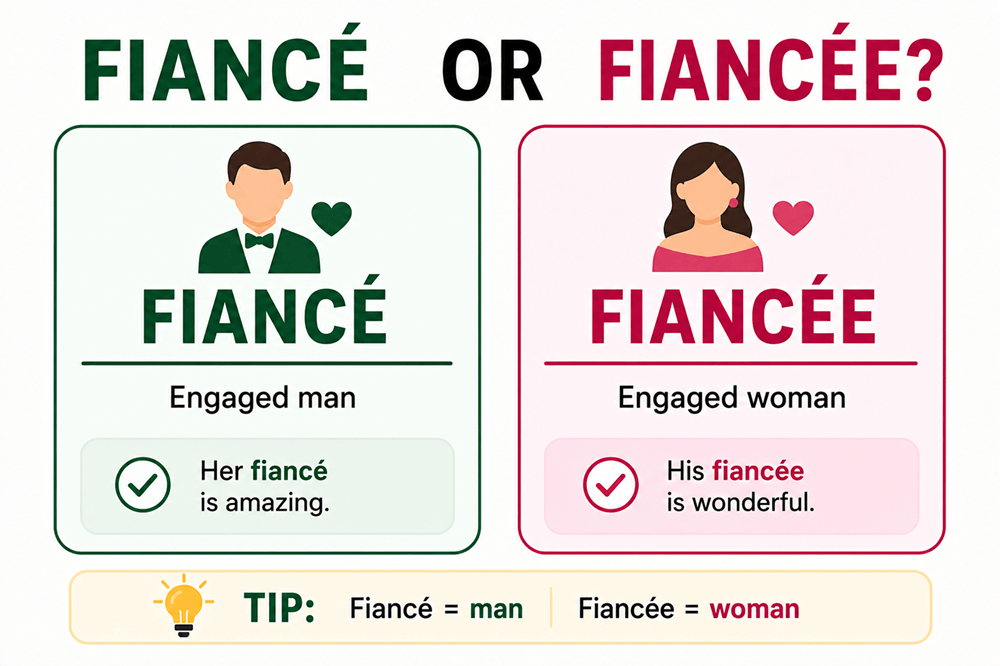
Fiancé and fiancée are both correct words, but they are traditionally used for different people. Fiancé usually means a man who is engaged to be married. Fiancée usually means a woman who is engaged to be married. In everyday English, many people write them without accent marks as fiance and fiancee, but the accented forms are more formal and traditional. The easiest rule is this: fiancé is masculine, and fiancée is feminine.
Quick Answer
Use fiancé for a man who is engaged to be married.
- Correct: Her fiancé proposed last winter.
- Correct: My fiancé and I are planning a small wedding.
- Correct: He introduced himself as her fiancé.
Use fiancée for a woman who is engaged to be married.
- Correct: His fiancée chose the wedding venue.
- Correct: My fiancée and I are getting married in June.
- Correct: She introduced herself as his fiancée.
The simple rule is this: fiancé refers to an engaged man, and fiancée refers to an engaged woman. If gender is unknown, irrelevant, or intentionally neutral, use partner, future spouse, or the person they are engaged to.
Fiance or Fiancee: What Is the Difference?
The difference between fiance and fiancee is traditionally gender. These words come from French, where some nouns and adjectives change form depending on gender. English borrowed both forms and kept the distinction.
The traditional spellings include accent marks:
- Fiancé = an engaged man
- Fiancée = an engaged woman
In casual English, people often drop the accent marks and write:
- Fiance = an engaged man
- Fiancee = an engaged woman
Both unaccented forms are common online, in texts, and in casual writing. However, if you want the most polished spelling, especially in a wedding announcement, article, invitation, or formal note, use fiancé and fiancée with accents.
| Word | Traditional Meaning | Example |
|---|---|---|
| Fiancé | A man engaged to be married | Her fiancé arrived early. |
| Fiancée | A woman engaged to be married | His fiancée arrived early. |
If you are writing quickly and cannot use accent marks, fiance and fiancee are widely understood. Still, the accented forms look more careful and traditional.
What Does Fiancé Mean?
Fiancé means a man who is engaged to be married. The word is used after an engagement and before the wedding. Once the wedding happens, the fiancé becomes a husband, spouse, or partner, depending on the couple’s wording.
Examples:
- Her fiancé helped choose the wedding music.
- My fiancé proposed during a trip to the mountains.
- She brought her fiancé to the family dinner.
- He is not her boyfriend anymore; he is her fiancé.
In these sentences, fiancé refers to an engaged man. It is more specific than boyfriend because it tells the reader that the couple has agreed to marry.
Fiancé can also appear in wedding stories, celebrity news, family announcements, engagement captions, and formal introductions.
- She announced her engagement to her fiancé online.
- The bride thanked her fiancé during the rehearsal dinner.
- Her fiancé’s family traveled from another state for the ceremony.
When the person is male and engaged, fiancé is the traditional spelling.
What Does Fiancée Mean?
Fiancée means a woman who is engaged to be married. Like fiancé, it is used during the engagement period before the wedding. After the wedding, the fiancée becomes a wife, spouse, or partner, depending on the couple’s preferred wording.
Examples:
- His fiancée designed the wedding invitations.
- My fiancée and I are planning a fall wedding.
- He introduced his fiancée to his coworkers.
- She is not his girlfriend anymore; she is his fiancée.
In these sentences, fiancée refers to an engaged woman. The extra e at the end is the traditional feminine form.
Fiancée is common in wedding-related writing, personal announcements, relationship articles, and social captions.
- His fiancée wore a simple engagement ring.
- The groom thanked his fiancée for her patience during wedding planning.
- My fiancée chose the flowers for the ceremony.
When the person is female and engaged, fiancée is the traditional spelling.
Fiancé vs Fiancée Without Accent Marks
The traditional spellings are fiancé and fiancée, but many English writers omit the accent marks. That gives you fiance and fiancee.
Examples without accent marks:
- Her fiance proposed in Paris.
- His fiancee chose the wedding cake.
- My fiance and I are moving after the wedding.
- My fiancee and I are planning the ceremony together.
These versions are common, especially in casual writing. However, the accents help show that the words came from French and keep the spelling more formal.
If you are writing for a polished article, invitation, wedding program, biography, or formal announcement, use:
- fiancé
- fiancée
If you are writing a text message, quick note, social caption, or search query, the unaccented forms are usually understood.
When to Use Fiancé
Use fiancé when referring to a man who is engaged to be married.
Examples:
- Her fiancé helped plan the honeymoon.
- The bride’s fiancé waited near the altar.
- She met her fiancé through mutual friends.
- Her fiancé asked for her parents’ blessing before proposing.
You can also use fiancé when the speaker is talking about their own male partner.
- My fiancé and I bought our wedding rings.
- I introduced my fiancé to my grandparents.
- My fiancé is nervous about the first dance.
The word clearly tells readers that the person is engaged and male. If you do not want to specify gender, choose a neutral word instead.
When to Use Fiancée
Use fiancée when referring to a woman who is engaged to be married.
Examples:
- His fiancée found the perfect dress.
- The groom’s fiancée wrote her own vows.
- He met his fiancée during college.
- His fiancée wanted a quiet beach ceremony.
You can also use fiancée when the speaker is talking about their own female partner.
- My fiancée and I are getting married next spring.
- I bought flowers for my fiancée.
- My fiancée loves simple wedding decorations.
The extra e at the end helps mark the feminine form. A simple memory trick is this: fiancée has an extra e, and she also has an e.
Fiancé, Fiancée, or Partner?
Sometimes fiancé and fiancée are not the best choices. If the person’s gender is unknown, private, nonbinary, or not relevant, a gender-neutral word may be clearer and more respectful.
Good neutral options include:
- partner
- future spouse
- engaged partner
- the person they are engaged to
Examples:
- Alex and their partner are getting married next year.
- Jordan introduced their future spouse at dinner.
- The invitation includes space for each guest’s engaged partner.
- She has not shared the name of the person she is engaged to.
These alternatives avoid gendered language while still making the relationship clear. In modern writing, partner and future spouse can be especially useful.
Fiancé or Boyfriend?
Fiancé and boyfriend are not the same. A boyfriend is a male romantic partner. A fiancé is a male romantic partner who is engaged to be married.
| Word | Meaning | Example |
|---|---|---|
| Boyfriend | A male romantic partner | Her boyfriend took her to dinner. |
| Fiancé | A male partner she is engaged to marry | Her fiancé proposed last month. |
Use boyfriend before engagement. Use fiancé after engagement and before marriage.
Fiancée or Girlfriend?
Fiancée and girlfriend are also different. A girlfriend is a female romantic partner. A fiancée is a female romantic partner who is engaged to be married.
| Word | Meaning | Example |
|---|---|---|
| Girlfriend | A female romantic partner | His girlfriend joined him for dinner. |
| Fiancée | A female partner he is engaged to marry | His fiancée chose the wedding date. |
Use girlfriend before engagement. Use fiancée after engagement and before marriage.
Common Mistakes With Fiance and Fiancee
The most common mistake is using fiance for everyone. In casual writing, this happens often because many people do not know that the extra e changes the traditional gender meaning.
Less precise:
- He introduced his fiance at the party.
More precise:
- He introduced his fiancée at the party.
Another common mistake is using fiancée for a man.
Incorrect in traditional usage:
- She introduced her fiancée, Daniel.
Correct:
- She introduced her fiancé, Daniel.
A third mistake is using either word when the person is already married.
Incorrect:
- Her fiancé is her husband of five years.
Correct:
- Her husband is her spouse of five years.
A fiancé or fiancée is someone engaged to be married, not someone already married.
Examples of Fiancé in Sentences
Here are examples of fiancé used correctly:
- Her fiancé planned a surprise engagement dinner.
- My fiancé and I are choosing wedding songs.
- She smiled when her fiancé walked into the room.
- The bride’s fiancé helped greet guests before the ceremony.
- Her fiancé proposed after three years of dating.
- I met my fiancé’s family last weekend.
- Her fiancé is excited about the wedding.
- She posted a photo with her fiancé after the proposal.
In each sentence, fiancé refers to an engaged man.
Examples of Fiancée in Sentences
Here are examples of fiancée used correctly:
- His fiancée picked the wedding flowers.
- My fiancée and I are writing our vows.
- He brought his fiancée to the family reunion.
- The groom’s fiancée wanted a simple ceremony.
- His fiancée showed everyone her engagement ring.
- I met my fiancée’s parents last month.
- His fiancée is planning the reception.
- He posted a photo with his fiancée after the proposal.
In each sentence, fiancée refers to an engaged woman.
How to Remember Fiance or Fiancee
A simple way to remember the difference is this:
- Fiancé = engaged man
- Fiancée = engaged woman
You can also use this memory trick:
Fiancée has an extra e, and she has an e.
That reminder helps you connect fiancée with the feminine form. The shorter form, fiancé, is traditionally masculine.
If you do not know the person’s gender or do not want to use gendered wording, use partner or future spouse. Those words are simple, respectful, and clear.
Final Answer
Fiancé and fiancée are both correct, but they have different traditional meanings. Fiancé means a man who is engaged to be married. Fiancée means a woman who is engaged to be married. The unaccented spellings fiance and fiancee are common in casual English, but the accented forms look more polished.
The easiest rule is simple: use fiancé for an engaged man and fiancée for an engaged woman. If gender is unknown, private, or not relevant, use partner, future spouse, or engaged partner.