Through or Thru: Difference, Correct Usage, Spelling, Examples, and Memory Tips Explained
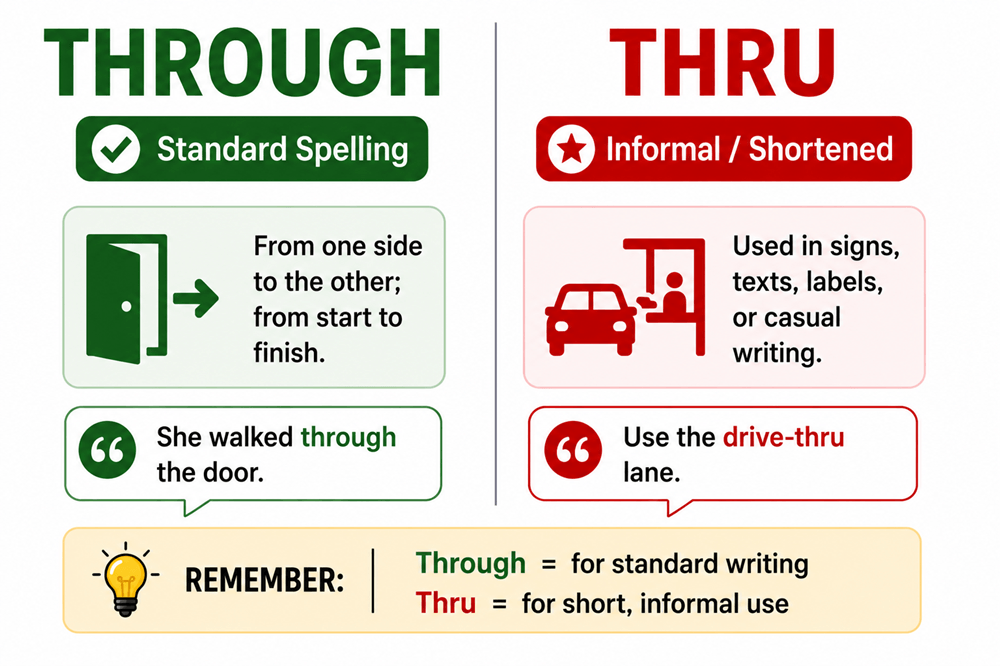
Through is the standard spelling. Thru is an informal shortened spelling. Use through in normal writing, schoolwork, business emails, articles, instructions, and formal content. Use thru only in casual notes, signs, branding, texting, or short labels like drive-thru.
Quick Answer
Use through in standard English.
- She walked through the door.
- We worked through the problem together.
- The road goes through the forest.
Use thru only in informal or space-saving contexts.
- The restaurant has a drive-thru.
- Text me when you get thru the line.
- The sign said “Thru Traffic Only.”
The simple rule is: through is correct for regular writing; thru is informal shorthand.
Through or Thru: What Is the Difference?
The difference between through and thru is not meaning. Both can point to movement from one side to another, completion, continuation, or a process. The difference is spelling style. Through is the full standard word. Thru is a shortened, informal version.
| Word | Best Use | Example |
|---|---|---|
| Through | Standard spelling | She walked through the hallway. |
| Thru | Informal shorthand | Use the drive-thru lane. |
If you are writing something polished, choose through. If you are writing a sign, brand name, casual text, or quick note, thru may be acceptable.
What Does Through Mean?
Through can be a preposition, adverb, or adjective. It often means from one side to the other, from beginning to end, by means of something, or finished with something.
Examples:
- The river runs through the city.
- She read through the whole report.
- He got the job through a friend.
- They stayed together through difficult times.
- I am finally through with the project.
In each sentence, through shows movement, connection, progress, or completion. It is one of those words that appears in many everyday sentences, so using the correct spelling matters.
What Does Thru Mean?
Thru means the same thing as through, but it is informal. It is a simplified spelling that matches the sound of the word more closely. You will often see it where space is limited or where a casual tone is expected.
Examples:
- The coffee shop has a drive-thru window.
- The sign says “No Thru Road.”
- We made it thru the long meeting.
In formal writing, thru usually looks too casual. In a school essay, business report, resume, blog article, or professional email, write through instead.
Spelling Structure: Why Through Looks So Strange
Through is tricky because its spelling does not match its simple sound. It is pronounced like “throo,” but it contains several silent or unexpected letters.
Break it into parts:
- th + rough = through
The ending -ough is the hard part. English has many -ough words, and they do not all sound the same:
- through
- though
- rough
- cough
- bough
That is why through must be memorized as a whole word. The important spelling pattern is:
- Correct: through
- Informal: thru
For standard writing, keep the full ough ending.
Spelling Structure: Why Thru Is Shorter
Thru is a phonetic spelling. That means it is spelled more like it sounds.
- through sounds like “thru”
- thru removes the silent-looking ough
This makes thru easy to read quickly, which is why it works well on signs and labels. A driver can understand drive-thru faster than a longer phrase like drive-through service.
Still, easy spelling does not always mean standard spelling. Thru is useful in limited settings, but through is the correct form for most writing.
When to Use Through
Use through when writing complete, standard sentences.
- They walked through the park.
- She looked through the window.
- We talked through the issue.
- The train passed through the tunnel.
- He worked through the weekend.
Use through in formal or polished writing:
- academic essays
- emails
- articles
- reports
- books
- business documents
If you are unsure which spelling to choose, through is always the safer option.
When to Use Thru
Use thru only when the tone is casual, shortened, branded, or sign-like.
- drive-thru
- walk-thru
- thru traffic
- no thru road
- Monday thru Friday
The most familiar use is drive-thru. While drive-through is also correct, drive-thru is common in restaurant signs, menus, advertising, and business names.
In ordinary sentences, though, thru can look careless.
Casual:
- We got thru it somehow.
Standard:
- We got through it somehow.
Through vs Threw
Through is also sometimes confused with threw. They sound the same, but they mean different things.
| Word | Meaning | Example |
|---|---|---|
| Through | From one side to another; finished; by way of | She walked through the gate. |
| Threw | Past tense of throw | He threw the ball. |
If the sentence is about tossing something, use threw. If it is about movement, progress, or completion, use through.
Common Mistakes
A common mistake is using thru in writing that should sound polished.
Too informal:
- Please read thru the instructions carefully.
Better:
- Please read through the instructions carefully.
Another mistake is thinking thru is always wrong. It is not always wrong, but it is limited. It works best in signs, texting, branding, and casual shorthand.
How to Remember the Difference
Use these memory tips:
- Through is the full word for full sentences.
- Thru is the short word for short signs.
- If the writing is formal, use through.
- If the phrase is drive-thru, thru is common and acceptable.
A simple memory sentence is: Use through when writing through a full sentence; use thru when space is short.
You can also remember: Through is long because it is standard. Thru is short because it is informal.
Final Answer
Through is the standard spelling. Use it when you mean from one side to another, from beginning to end, by means of something, or finished. Example: She walked through the door.
Thru is an informal shortened spelling. Use it mostly in signs, casual notes, texting, branding, or phrases like drive-thru. Example: The restaurant has a drive-thru.
To remember the difference, use this rule: through is for standard writing; thru is for short, casual writing.