Defense or Defence: Correct Spelling, Meaning, Regional Difference, and Examples Clearly Explained
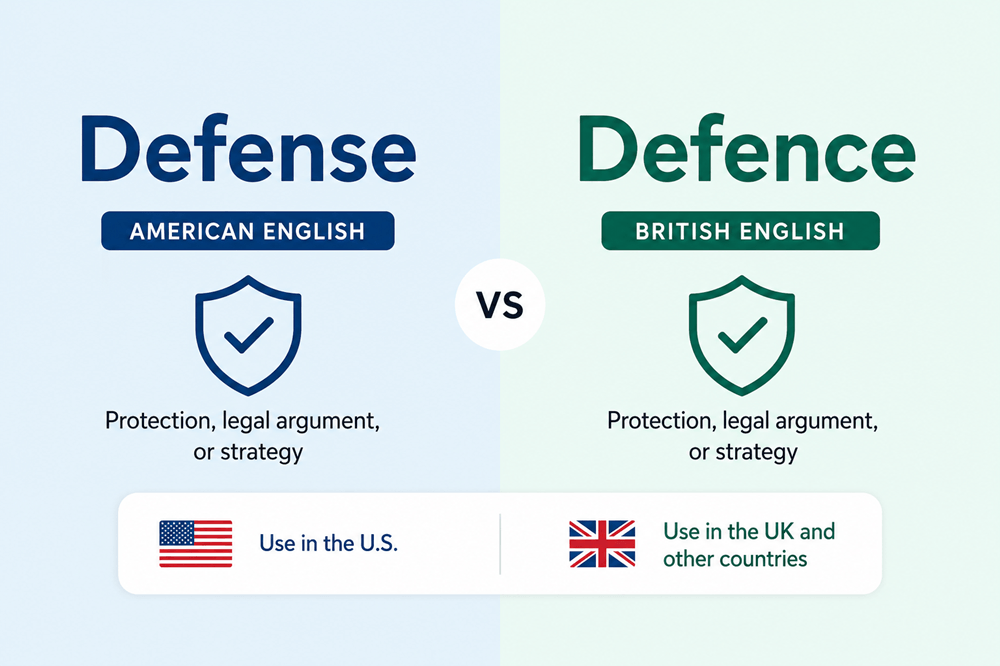
Defense and defence are both correct spellings. The difference depends on the type of English you are using. Defense is the standard spelling in American English. Defence is the standard spelling in British English.
Quick Answer
Use defense in American English.
- The team played strong defense.
- She hired a defense attorney.
- The country increased its defense budget.
Use defence in British English.
- The team played strong defence.
- She prepared her legal defence.
- The country increased its defence spending.
The simple rule is: defense is American, and defence is British.
Defense or Defence: What Is the Difference?
The difference between defense and defence is spelling, not meaning. Both words are nouns, and both refer to protection, guarding, resistance, or an argument made against criticism or accusation.
| Spelling | English Style | Example |
|---|---|---|
| Defense | American English | The lawyer built a strong defense. |
| Defence | British English | The lawyer built a strong defence. |
If you are writing for a U.S. audience, choose defense. If you are writing for a British, Australian, or other British-style audience, choose defence.
What Does Defense Mean?
Defense means the act of protecting someone or something. It can also mean a legal argument, a response to criticism, or the part of a sports team that tries to stop the other side from scoring.
Examples:
- The defense presented new evidence in court.
- The team’s defense improved in the second half.
- She spoke in defense of her decision.
- The company improved its defense against cyberattacks.
In these examples, defense is the American spelling.
What Does Defence Mean?
Defence has the same meaning as defense. It is simply the British spelling.
Examples:
- The defence presented new evidence in court.
- The team’s defence improved in the second half.
- She spoke in defence of her decision.
- The company improved its defence against cyberattacks.
Use defence when the rest of your writing follows British spelling, such as colour, favour, centre, or travelling.
When to Use Defense
Use defense in American English. This spelling is common in U.S. school writing, legal writing, sports articles, news reports, and business documents.
Examples:
- He acted in self-defense.
- The defense attorney questioned the witness.
- National defense became a major topic.
- The coach praised the team’s defense.
If your article uses American spellings like color, center, and traveled, then defense is the better choice.
When to Use Defence
Use defence in British English. This spelling is common in the UK and in many places that follow British spelling rules.
Examples:
- He acted in self-defence.
- The defence lawyer questioned the witness.
- National defence became a major topic.
- The coach praised the team’s defence.
If your article uses British spellings like colour, centre, and travelled, then defence is the better choice.
Common Phrases With Defense and Defence
The spelling changes depending on the English style you are using.
| American English | British English |
|---|---|
| self-defense | self-defence |
| defense attorney | defence lawyer |
| national defense | national defence |
| defense mechanism | defence mechanism |
| cyber defense | cyber defence |
For official names, keep the original spelling. For example, do not change the spelling in the name of a government department, legal title, book, law, or organization.
Defense, Defence, and Defensive
The adjective defensive is spelled with an s in both American and British English.
- Correct: He became defensive.
- Correct: The team used a defensive strategy.
- Incorrect: He became defencive.
However, the word meaning unable to defend oneself can change by region:
- American English: defenseless
- British English: defenceless
Common Mistake
The most common mistake is mixing both spellings in one article.
Inconsistent:
- The team’s defense was strong, but its defence weakened later.
Better American spelling:
- The team’s defense was strong, but it weakened later.
Better British spelling:
- The team’s defence was strong, but it weakened later.
Choose one spelling style and use it consistently.
How to Remember the Difference
Remember this simple rule:
- Defense = American English
- Defence = British English
You can also compare it with offense and offence. American English uses offense and defense. British English uses offence and defence.
Final Answer
Defense and defence are both correct. Use defense in American English and defence in British English. The meaning is the same, but the spelling depends on your audience.
For a U.S.-style article, defense is usually the best choice. For British-style writing, use defence.