Empathic or Empathetic: Difference, Correct Usage, Meaning, Examples, and Memory Tips Explained
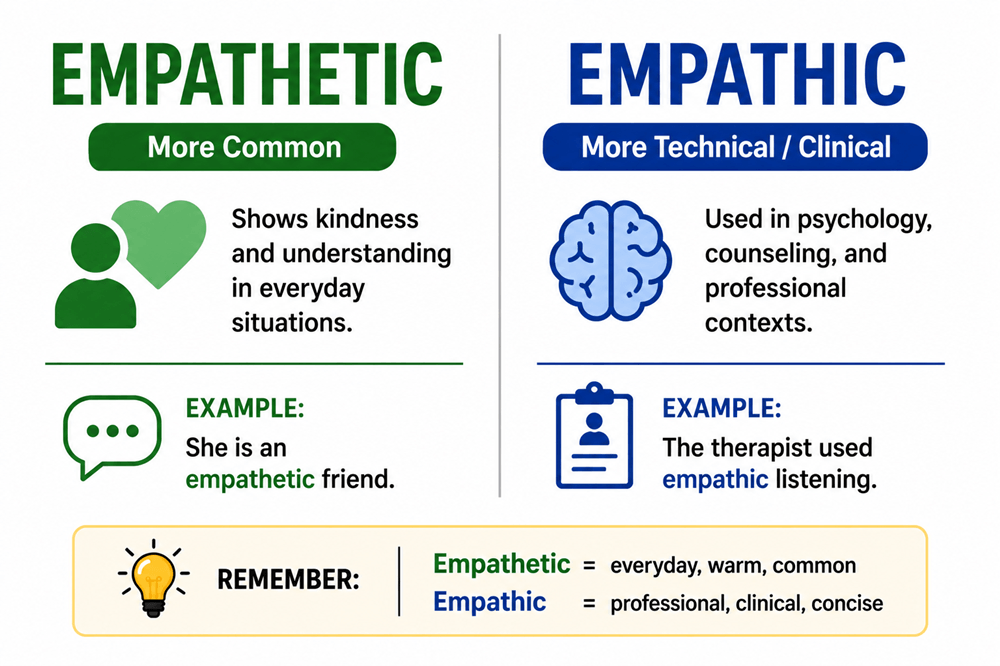
Empathic and empathetic are both correct words. They both describe someone who understands or shares another person’s feelings. The difference is mostly style and common usage. Empathetic is more common in everyday English, while empathic is shorter and often appears in psychology, counseling, and more technical writing.
Quick Answer
Use empathetic for most everyday writing.
- She is an empathetic listener.
- He gave an empathetic response.
- A good teacher is patient and empathetic.
Use empathic when you want a shorter, more clinical, or more formal-sounding word.
- The therapist used empathic communication.
- Empathic accuracy is important in counseling.
- The study measured empathic responses in children.
The simple rule is: empathetic is more common; empathic is more technical or concise.
Empathic or Empathetic: What Is the Difference?
The difference between empathic and empathetic is not basic meaning. Both words come from empathy, which means the ability to understand, feel, or recognize what another person is experiencing.
| Word | Best Use | Example |
|---|---|---|
| Empathetic | Common everyday choice | She was empathetic toward her friend. |
| Empathic | Shorter, more clinical, or technical | The counselor showed empathic understanding. |
If you are writing for a general audience, empathetic usually sounds more natural. If you are writing in psychology, therapy, research, or professional care settings, empathic may fit well.
What Does Empathetic Mean?
Empathetic means showing empathy. An empathetic person can understand another person’s feelings and respond with care, patience, and emotional awareness.
Examples:
- She was empathetic when her friend talked about the breakup.
- The nurse gave an empathetic explanation to the worried family.
- He tried to be more empathetic during difficult conversations.
- An empathetic manager listens before judging.
- The story has an empathetic view of people who feel misunderstood.
Empathetic is the word most readers expect in everyday sentences. It sounds warm, clear, and familiar. You can use it in blog posts, personal writing, workplace advice, relationship articles, parenting content, and emotional wellness topics.
What Does Empathic Mean?
Empathic also means showing or involving empathy. It is simply shorter. Because of its compact form, it often sounds more formal, academic, or psychological.
Examples:
- The therapist offered an empathic response.
- Empathic listening helps people feel understood.
- The research focused on empathic development.
- Doctors need strong empathic skills.
- The counselor maintained an empathic tone.
Empathic is not wrong in everyday writing, but it may sound slightly more specialized. If your audience includes therapists, educators, researchers, or healthcare workers, empathic can feel precise and professional.
Spelling Structure: Empathy, Empathic, and Empathetic
Both words come from the noun empathy.
- empathy → empathic
- empathy → empathetic
Empathic keeps the shorter root shape:
- empath + ic = empathic
Empathetic adds a longer middle sound:
- empath + etic = empathetic
The spelling difference is easy to see:
- empathic = shorter
- empathetic = longer
That spelling difference can help you remember the style difference. Empathic is shorter and often more technical. Empathetic is longer and more common in everyday language.
When to Use Empathetic
Use empathetic when describing a caring, understanding person or response in ordinary writing.
- She is kind, thoughtful, and empathetic.
- His empathetic reply made her feel less alone.
- Parents often need to be firm but empathetic.
- The article takes an empathetic approach to grief.
Empathetic is especially useful when the tone is emotional, personal, conversational, or supportive. It feels natural when talking about relationships, friendship, communication, leadership, teaching, and emotional growth.
When to Use Empathic
Use empathic when writing in a more professional, academic, clinical, or concise style.
- Empathic listening is a key counseling skill.
- The study examined empathic concern.
- Clinicians should use empathic communication.
- Empathic accuracy can improve relationship quality.
Empathic often appears before words like listening, communication, accuracy, concern, response, and understanding. Those pairings are common in psychology and therapy language.
Empathic vs Empathetic in Everyday Writing
In everyday writing, empathetic is usually the safer choice because it is more familiar. For example, most readers would naturally say:
- She is an empathetic friend.
- He tried to sound empathetic.
- The teacher was empathetic and fair.
Empathic works too, but it may sound slightly more formal:
- She is an empathic friend.
- He used an empathic tone.
- The teacher showed empathic understanding.
Neither version is incorrect. The better choice depends on tone. If you want warm and natural, choose empathetic. If you want concise and professional, choose empathic.
Common Mistakes
A common mistake is thinking empathic is a misspelling. It is not. Empathic is a real word.
Another mistake is thinking empathetic is less correct because it is longer. That is not true either. Empathetic is widely accepted and very common.
The real issue is not correctness. It is context.
- Everyday: She was empathetic and kind.
- Clinical: The therapist used empathic listening.
A third mistake is confusing empathetic with sympathetic. Empathetic means understanding another person’s feelings. Sympathetic means feeling concern, pity, or support for someone. Empathy is more about understanding from the inside; sympathy is more about caring from the outside.
How to Remember the Difference
Use these memory tips:
- Empathetic is longer and more common in everyday emotional writing.
- Empathic is shorter and often used in psychology or professional contexts.
- If you mean a warm, caring person, empathetic usually sounds best.
- If you mean a clinical skill or measured response, empathic may sound more precise.
A simple memory sentence is: Empathetic feels everyday; empathic feels clinical.
You can also remember it this way: empathetic has extra letters, so it often adds a softer, more conversational feeling.
Final Answer
Empathetic and empathic are both correct. They both mean showing or involving empathy.
Empathetic is more common in everyday English. Example: She is an empathetic friend.
Empathic is shorter and often used in psychology, counseling, healthcare, and academic writing. Example: The therapist used empathic listening.
To remember the difference, use this rule: empathetic is the everyday choice; empathic is the professional or technical choice.