Naive or Nieve: Correct Spelling, Meaning, Usage, Examples, and Memory Tips Explained
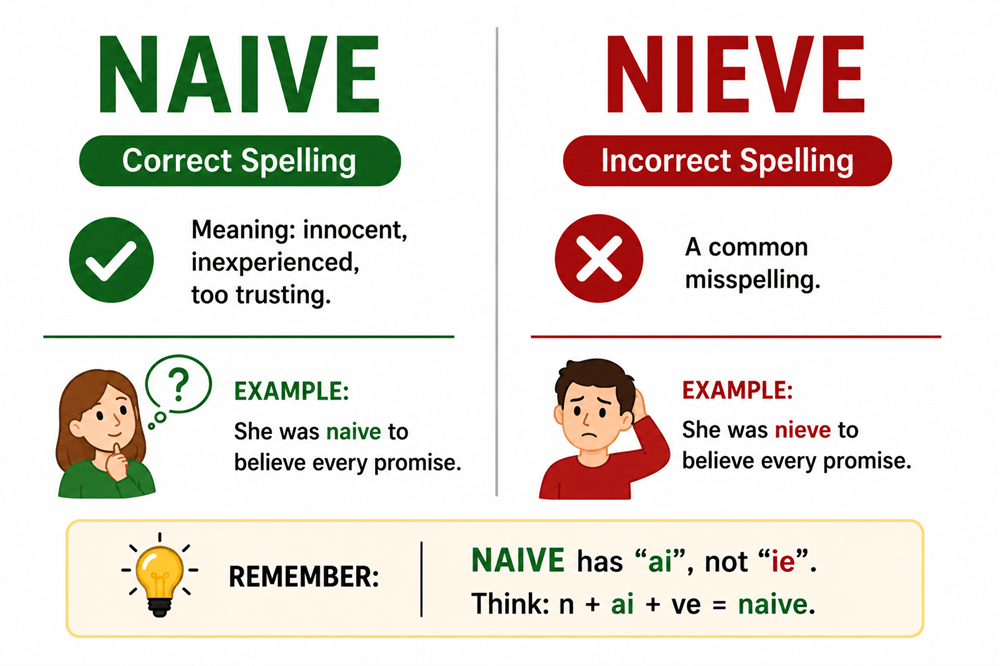
Naive is the correct spelling. Nieve is usually a misspelling when you mean innocent, inexperienced, overly trusting, or lacking worldly judgment. The word can also be written as naïve with two dots over the i, but naive without the accent is common in modern English. The key rule is simple: use naive, not nieve.
Quick Answer
Use naive when describing someone who is innocent, inexperienced, or too trusting.
- Correct: She was naive to believe every promise.
- Correct: That was a naive way to look at the problem.
- Correct: He sounded naive about how business works.
Nieve is not the standard English spelling for this meaning.
- Incorrect: She was nieve to believe every promise.
- Incorrect: That was a nieve way to look at the problem.
The simple rule is: naive means inexperienced or too trusting; nieve is a misspelling.
Naive or Nieve: What Is the Difference?
The difference between naive and nieve is spelling. Naive is the correct English adjective. Nieve is a common mistake, usually caused by confusion over the unusual vowel pattern in naive.
| Word | Status | Example |
|---|---|---|
| Naive | Correct spelling | His plan was hopeful but naive. |
| Nieve | Misspelling | His plan was hopeful but nieve. |
If you are writing for school, work, articles, emails, stories, captions, reviews, or essays, use naive. The spelling nieve will usually look incorrect to readers.
What Does Naive Mean?
Naive is an adjective. It describes someone who lacks experience, judgment, or awareness of how complicated people or situations can be. A naive person may believe things too easily, trust others too quickly, or think a situation is simpler than it really is.
Examples:
- She was naive about how competitive the industry could be.
- It was naive to assume everyone would agree.
- His naive optimism made him ignore the warning signs.
- The plan was charming but naive.
- A naive buyer might accept the first offer without asking questions.
Naive does not always mean stupid. This is important. Someone can be intelligent but naive because they lack experience in a particular area. For example, a person may be smart in school but naive about scams, relationships, business, or social pressure.
What Does Nieve Mean?
Nieve is usually a misspelling of naive. It may look believable because English has many words with ie or ieve, such as believe, relieve, and achieve. But naive does not follow that pattern.
Examples:
- Incorrect: He was too nieve to notice the lie.
- Correct: He was too naive to notice the lie.
- Incorrect: Her answer sounded nieve.
- Correct: Her answer sounded naive.
Even if the pronunciation feels close, the spelling nieve should be avoided when you mean innocent or inexperienced.
Naive or Naïve: Which Spelling Is Better?
You may see the word written two ways:
- naive
- naïve
Both forms are accepted. Naïve is the older-looking spelling with a diaeresis, the two dots over the i. Those dots show that the a and i are pronounced separately. In modern English, many writers skip the accent and simply write naive.
For most WordBriefs-style writing, naive is the easiest and most practical spelling. It is clean, searchable, familiar, and simple to type.
Spelling Structure: Why Naive Looks Unusual
The spelling naive is unusual because the vowels sit next to each other in a way many English words do not:
- n-a-i-v-e
The key spelling pattern is:
- nai + ve = naive
Do not spell it like believe or relieve. Those words contain ieve, but naive does not.
- Correct: naive
- Incorrect: nieve
The easiest part to memorize is the middle: ai. If you remember that naive has ai after the n, you can avoid the common nieve mistake.
Why People Misspell Naive as Nieve
People often write nieve because the word sounds as if it might have an ie pattern. English spelling trains you to expect words like:
- believe
- relieve
- achieve
- grieve
Because naive has a similar long vowel sound, nieve can feel natural. But the correct spelling comes from a different word history and keeps the ai pattern.
Another reason is that naive is not spelled the way it sounds to many readers. If you spell only by sound, you may choose nieve. If you spell by structure, you choose naive.
When to Use Naive
Use naive when describing a person, idea, belief, question, plan, or reaction that shows innocence or lack of experience.
- It was naive to trust a stranger with personal information.
- She gave a naive answer, but she was still learning.
- The proposal was naive because it ignored the cost.
- He had a naive belief that success would happen overnight.
- That view sounds naive after years of experience.
You can use naive in serious, critical, gentle, or reflective writing. The tone depends on the sentence. Sometimes it sounds harsh. Sometimes it simply means inexperienced.
Naive vs Innocent
Naive and innocent are related, but they are not always the same. Innocent often means pure, harmless, or not guilty. Naive usually means lacking experience or judgment.
| Word | Meaning | Example |
|---|---|---|
| Naive | Too trusting or inexperienced | He was naive about online scams. |
| Innocent | Not guilty, pure, or harmless | The child asked an innocent question. |
A person can be innocent without being naive. A person can also be naive in one area but experienced in another.
Common Mistakes
The most common mistake is spelling the word as nieve.
Incorrect:
- That was a nieve mistake.
- She is too nieve for that job.
- His view of love was sweet but nieve.
Correct:
- That was a naive mistake.
- She is too naive for that job.
- His view of love was sweet but naive.
Another mistake is using naive as a noun. In most everyday writing, naive describes someone or something. It is usually not used as the name of a person.
Less natural:
- He is a naive.
Better:
- He is naive.
- He is a naive person.
How to Remember Naive
Use these memory tips:
- Naive has ai, not ie.
- Think: n + ai + ve = naive.
- Nieve looks like believe, but naive does not follow that pattern.
- Use naive without the accent for simple modern writing.
A simple memory sentence is: A naive person may say “AI believe everything,” but naive is spelled with “ai.”
You can also remember it visually:
- naive
- The ai comes right after n.
Final Answer
Naive is the correct spelling. It means innocent, inexperienced, overly trusting, or lacking worldly judgment. Example: She was naive to trust the offer immediately.
Nieve is a common misspelling and should be avoided. You may also see naïve with two dots over the i, but naive is common and acceptable in modern English.
To remember the correct spelling, focus on the middle letters: naive has “ai,” not “ie.”