Sale or Sell: Meanings, Grammar Differences, and Easy Ways to Remember Them
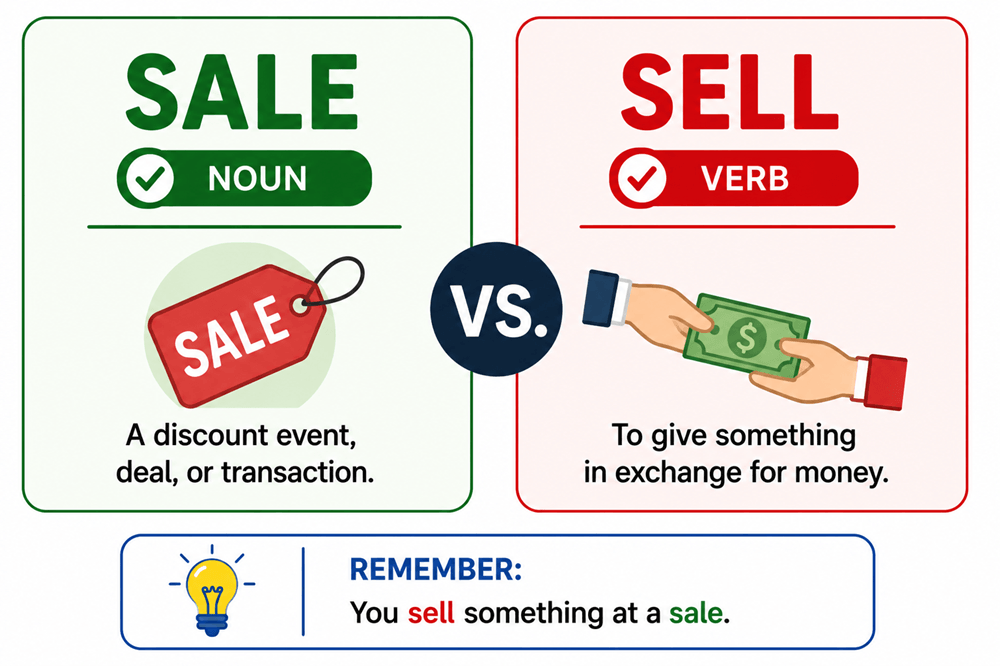
If you are choosing between sale or sell, the difference comes down to grammar. Sale is usually a noun. It refers to the act of selling something, a special discount event, or the amount sold. Sell is a verb. It means to give something to someone in exchange for money. You have a sale, but you sell something.
Sale or Sell: What Is the Difference?
The basic rule is simple:
Sale is a noun.
Sell is a verb.
A sale is a thing, event, deal, transaction, or period when items are offered at reduced prices. Sell is an action. It is what a person, store, company, or seller does when they exchange something for money.
For example:
Correct: The store is having a sale.
Incorrect: The store is having a sell.
In that sentence, you are talking about an event or discount period, so sale is correct.
Now look at this example:
Correct: You want to sell your old bike.
Incorrect: You want to sale your old bike.
Here, you are talking about the action of exchanging the bike for money, so sell is correct.
What Does Sale Mean?
Sale is a noun. It can refer to a transaction, a discount event, the process of selling, or the amount of goods sold.
For example:
The sale of the house took three months.
In this sentence, sale means the transaction or process of selling the house.
You might also write:
The jackets are on sale this weekend.
Here, sale means the jackets are being offered at a lower price.
Sale often appears in shopping, business, advertising, real estate, and everyday money-related conversations. You may see it in phrases like garage sale, holiday sale, flash sale, for sale, on sale, and final sale.
What Does Sell Mean?
Sell is a verb. It means to give, offer, or provide something in exchange for money. It can also mean to persuade someone to accept an idea, product, plan, or argument.
For example:
You sell handmade candles online.
This means you offer candles to buyers for money.
You might also write:
The company needs to sell the idea to investors.
Here, sell does not mean exchanging a physical object for cash. It means persuading investors to believe in the idea.
The verb sell changes form depending on tense:
sell
sells
sold
selling
Notice that the past tense is sold, not selled. You would write you sold the car yesterday, not you selled the car yesterday.
Why Sale and Sell Are Easy to Confuse
Sale and sell are easy to confuse because they are closely related in meaning. Both words involve buying, selling, money, stores, discounts, and transactions. They also sound somewhat similar, especially in certain accents or fast speech.
The spelling difference is small, but the grammar difference is important:
sale names the thing or event.
sell shows the action.
That is why you can say:
You sell things at a sale.
This sentence uses both words correctly. Sell is the action. Sale is the event where the selling happens.
A Simple Way to Remember Sale
The easiest way to remember sale is to connect it with a sign in a store.
Sale is the word you see on a shopping sign.
When a store lowers prices, the sign usually says:
SALE
Not:
SELL
You can also remember this phrase:
A sale is a thing.
A thing can be named. A sale can be big, small, final, seasonal, private, online, or successful. Since adjectives can describe it, you know it is acting like a noun.
For example:
The big sale starts Friday.
Here, big describes sale. That is a clue that sale is the noun you need.
A Simple Way to Remember Sell
To remember sell, connect it with action.
Sell is something you do.
You can sell a car, sell clothes, sell tickets, sell books, sell furniture, sell food, sell services, or sell an idea. If someone is doing something, you probably need the verb sell.
Use this memory trick:
You sell at a sale.
That sentence shows the difference clearly. Sell is the action. Sale is the noun.
You can also remember:
Sell has double L, like “let it leave.”
When you sell something, you let it leave in exchange for money. This little phrase can help you remember the double l in sell.
Common Phrases With Sale
Learning common phrases can make the correct word easier to choose.
For sale means available to buy.
The house is for sale.
On sale usually means available at a reduced price.
The shoes are on sale today.
Garage sale means a sale of used items, usually at someone’s home.
You found an old lamp at a garage sale.
Final sale means the item cannot usually be returned.
The dress was marked final sale.
Sales can also mean the total number or value of items sold.
Sales increased during the holiday season.
In all these phrases, sale or sales is a noun.
Common Phrases With Sell
Sell appears in phrases where someone is doing the action of selling.
Sell a car means exchange a car for money.
You plan to sell your car next month.
Sell online means offer products through a website, app, or marketplace.
She sells handmade jewelry online.
Sell out means all available items are bought.
The concert tickets sold out quickly.
Hard sell means aggressive persuasion.
The salesperson used a hard sell, and it felt uncomfortable.
Sell someone on something means persuade them to accept it.
You tried to sell your friend on the idea of taking a road trip.
In these phrases, sell is connected to action, persuasion, or exchange.
Sale vs Sell in Example Sentences
Side-by-side examples make the difference easier to see:
Correct: The couch is for sale.
Incorrect: The couch is for sell.
Correct: You want to sell the couch.
Incorrect: You want to sale the couch.
Correct: The store had a summer sale.
Incorrect: The store had a summer sell.
Correct: They sell fresh bread every morning.
Incorrect: They sale fresh bread every morning.
Correct: The sale ended at midnight.
Incorrect: The sell ended at midnight.
Correct: He sold his old guitar after the move.
Incorrect: He saled his old guitar after the move.
The pattern is clear. Use sale when naming a thing, event, or transaction. Use sell when describing an action.
What About Sold?
Sold is the past tense of sell. This is important because sell is an irregular verb. You do not add -ed to make the past tense.
You write:
Today, you sell the bike.
Yesterday, you sold the bike.
You do not write:
You selled the bike.
You also should not use sale as the past tense of sell. For example:
Correct: The store sold every jacket.
Incorrect: The store saled every jacket.
Remember the verb pattern:
sell → sold → selling
How to Check Which Word You Need
Before choosing between sale and sell, ask one simple question:
Am I naming something, or am I doing something?
If you are naming a discount event, transaction, or item available to buy, use sale.
The car is for sale.
The sale starts tomorrow.
The final sale price was lower than expected.
If you are describing the action of exchanging something for money, use sell.
You sell cars.
The store sells shoes.
They are selling their old furniture.
This quick grammar check works in almost every everyday sentence.
The Final Answer on Sale or Sell
Sale is a noun. It means a selling event, a transaction, a discount, or the act of selling. You use it in phrases like for sale, on sale, garage sale, and final sale.
Sell is a verb. It means to exchange something for money or persuade someone to accept an idea. You use it in sentences like you sell clothes, they sell food, and she wants to sell her car.
To remember the difference, use this simple line: you sell something at a sale. If the word names an event or deal, choose sale. If the word shows action, choose sell.