Patient or Patience: Correct Meaning, Spelling, Difference, and Examples for Clear Writing
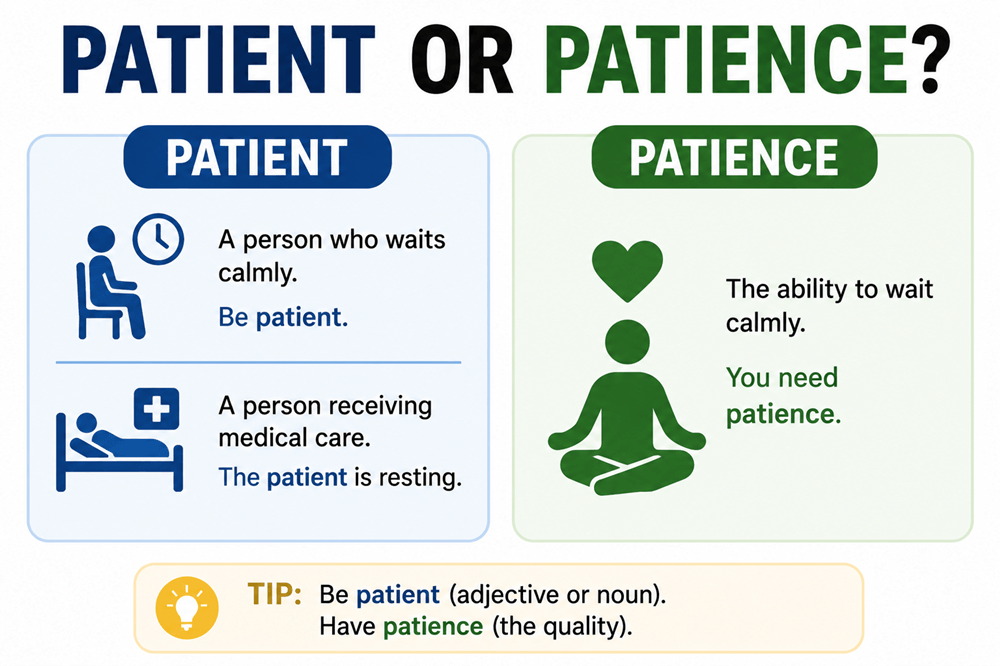
Patient and patience are closely related, but they are not the same kind of word. Patient can describe a person who waits calmly, or it can mean someone receiving medical care. Patience is the noun for the ability to wait calmly without becoming annoyed. If you mean the quality, use patience. If you mean the person or adjective, use patient.
Quick Answer
Use patient when you are describing someone who stays calm while waiting, dealing with delays, or handling difficulty.
- Correct: You need to be patient with young children.
- Correct: She was patient while waiting in line.
- Correct: A patient teacher explains things more than once.
Use patient as a noun when you mean a person receiving medical care.
- Correct: The doctor spoke with the patient.
- Correct: The hospital admitted several patients overnight.
Use patience when you mean the quality or ability to wait calmly.
- Correct: You need patience when learning a new skill.
- Correct: Her patience helped everyone stay calm.
- Correct: This project requires time and patience.
The simple rule is this: patient is a person or description. Patience is the quality.
Patient or Patience: What Is the Difference?
The difference between patient and patience is grammar and meaning. They come from the same idea of calm endurance, but they are used differently in sentences.
Patient can be an adjective. As an adjective, it describes someone who can wait calmly, handle trouble without complaining too quickly, or keep trying without losing control.
Patient can also be a noun. As a noun, it means a person who is receiving treatment from a doctor, nurse, dentist, therapist, or other medical professional.
Patience is always a noun. It names the quality of being calm, steady, and able to wait without becoming angry or frustrated.
| Word | Part of Speech | Meaning | Example |
|---|---|---|---|
| Patient | Adjective | Calm while waiting or dealing with difficulty | Be patient with the process. |
| Patient | Noun | A person receiving medical care | The patient waited for the doctor. |
| Patience | Noun | The ability to wait calmly | Learning takes patience. |
If the sentence needs a quality, use patience. If the sentence describes someone or names someone receiving care, use patient.
What Does Patient Mean?
Patient has two main meanings. The first meaning is calm, tolerant, or able to wait without becoming upset. This is the adjective form.
Examples:
- You were very patient during the delay.
- A patient parent repeats instructions without yelling.
- Try to be patient while the page loads.
- He is patient with beginners.
In these sentences, patient describes someone’s behavior or attitude. The person is not rushing, complaining, or reacting too harshly. They are staying calm even though the situation might be slow, difficult, or annoying.
The second meaning of patient is a person receiving medical care.
Examples:
- The patient described her symptoms.
- The nurse checked on every patient in the room.
- The dentist asked the patient to open his mouth.
- The clinic accepts new patients on Mondays.
In these examples, patient is a noun. It does not describe someone’s calm personality. It names a person who is being treated or examined.
What Does Patience Mean?
Patience means the ability to stay calm while waiting, facing trouble, or dealing with something that takes time. It is a noun, which means it names a quality or idea.
Examples:
- You need patience to train a puppy.
- Her patience made the long wait easier.
- This recipe takes patience because the dough rises slowly.
- Learning a language requires patience and practice.
In each sentence, patience refers to the quality of being able to wait or continue calmly. It is not the person. It is the trait the person has.
You can think of patience like other quality nouns, such as kindness, honesty, confidence, or courage. You can have patience, show patience, lose patience, test someone’s patience, or run out of patience.
When to Use Patient
Use patient as an adjective when you are describing a person, animal, or behavior that stays calm during waiting or difficulty.
- Be patient with yourself while you learn.
- The teacher was patient with every student.
- She gave him a patient smile.
- They waited in a patient silence.
In these examples, patient describes someone or something. You can usually place it before a noun or after a linking verb like be, seem, or remain.
- She is patient.
- He seems patient.
- They remained patient.
- It was a patient response.
Use patient as a noun when you mean someone receiving care from a medical professional.
- The patient filled out a form.
- The doctor reviewed the patient’s chart.
- Several patients were waiting in the lobby.
- The clinic called each patient by name.
If the sentence is about a hospital, clinic, doctor, dentist, therapist, nurse, appointment, diagnosis, or treatment, patient may be the correct noun.
When to Use Patience
Use patience when you are talking about the quality of waiting calmly or dealing with difficulty without becoming too frustrated.
- You showed great patience today.
- This situation requires patience.
- His patience was finally rewarded.
- Do not lose patience with the process.
Patience often appears with verbs like have, show, need, require, lose, and test.
- Have patience.
- Show patience.
- Need patience.
- Require patience.
- Lose patience.
- Test someone’s patience.
These phrases are common because patience is something you can have, use, build, practice, or lose. It is the inner quality, not the person showing it.
Common Mistakes With Patient and Patience
The most common mistake is using patient when the sentence needs patience.
Incorrect:
- You need more patient with your children.
- Thank you for your patient.
- This job takes a lot of patient.
Correct:
- You need more patience with your children.
- Thank you for your patience.
- This job takes a lot of patience.
In these sentences, the meaning is the quality of calm waiting, so patience is correct.
Another mistake is using patience when the sentence needs the adjective patient.
Incorrect:
- Please be patience while we fix the problem.
- She is very patience with children.
- He remained patience during the delay.
Correct:
- Please be patient while we fix the problem.
- She is very patient with children.
- He remained patient during the delay.
After be, is, are, was, were, seem, and remain, you often need the adjective patient.
Thank You for Your Patient or Patience?
The correct phrase is thank you for your patience.
Correct:
- Thank you for your patience.
- We appreciate your patience.
- Thank you for your patience while we resolve the issue.
Incorrect:
- Thank you for your patient.
- We appreciate your patient.
This phrase uses patience because you are thanking someone for the quality they showed while waiting. You are not thanking them for a medical patient.
Be Patient or Have Patience?
Both be patient and have patience are correct, but they use different grammar.
Be patient uses patient as an adjective.
- Please be patient.
- Try to be patient with the new employee.
- You have to be patient when traffic is slow.
Have patience uses patience as a noun.
- Please have patience.
- Try to have patience with the new employee.
- You have to have patience when traffic is slow.
The meaning is similar, but be patient is usually shorter and more natural in everyday speech. Have patience can sound slightly more formal, gentle, or encouraging.
Patient as a Medical Noun
One reason patient can be confusing is that it is both an adjective and a noun. In medical contexts, patient means a person who receives care.
Examples:
- The patient was waiting for test results.
- The surgeon spoke with the patient before the procedure.
- The clinic protects patient privacy.
- Each patient received clear instructions.
Notice that patient in this sense is countable. You can have one patient or many patients.
- One patient was waiting.
- Several patients were waiting.
Patience, on the other hand, is not used this way. You would not say “three patiences” when talking about people in a clinic. You would say three patients.
Examples of Patient in Sentences
Here are examples of patient as an adjective:
- You were patient when the train was late.
- A patient coach helps players improve slowly.
- She gave a patient answer to every question.
- Try to remain patient during the first few weeks.
- He is patient with mistakes because he remembers being new.
Here are examples of patient as a noun:
- The patient arrived early for the appointment.
- The doctor listened carefully to the patient.
- The nurse checked the patient’s blood pressure.
- The dentist asked the patient to sit back.
- The hospital treated more patients than usual.
In the first group, patient describes calm behavior. In the second group, patient means a person receiving care.
Examples of Patience in Sentences
Here are examples of patience used correctly:
- Patience can make a stressful situation easier.
- You need patience to solve a difficult puzzle.
- Her patience helped the child feel safe.
- The long delay tested everyone’s patience.
- He lost patience after waiting for two hours.
- Thank you for your patience during the repair.
- Building a good habit takes patience and repetition.
In each sentence, patience names the quality of staying calm or waiting without becoming too upset.
How to Remember Patient or Patience
A simple way to remember the difference is this:
- Patient can describe a person.
- Patience is the quality that person has.
You can also remember these phrases:
- Be patient.
- Have patience.
If the sentence uses be, you probably need patient.
- Be patient.
- She is patient.
- They were patient.
If the sentence uses have, need, show, lose, or thank you for your, you probably need patience.
- Have patience.
- Need patience.
- Show patience.
- Lose patience.
- Thank you for your patience.
That small pattern can help you choose the right word quickly.
Final Answer
Patient and patience are related, but they are used differently. Use patient as an adjective when someone waits calmly or handles difficulty well. Use patient as a noun when you mean a person receiving medical care. Use patience when you mean the quality of staying calm while waiting or dealing with trouble.
The easiest rule is simple: be patient, but have patience. If you remember that, you can avoid the most common mistake.