Whomever or Whoever: Correct Grammar, Meaning, Object Rule, and Examples Explained Clearly
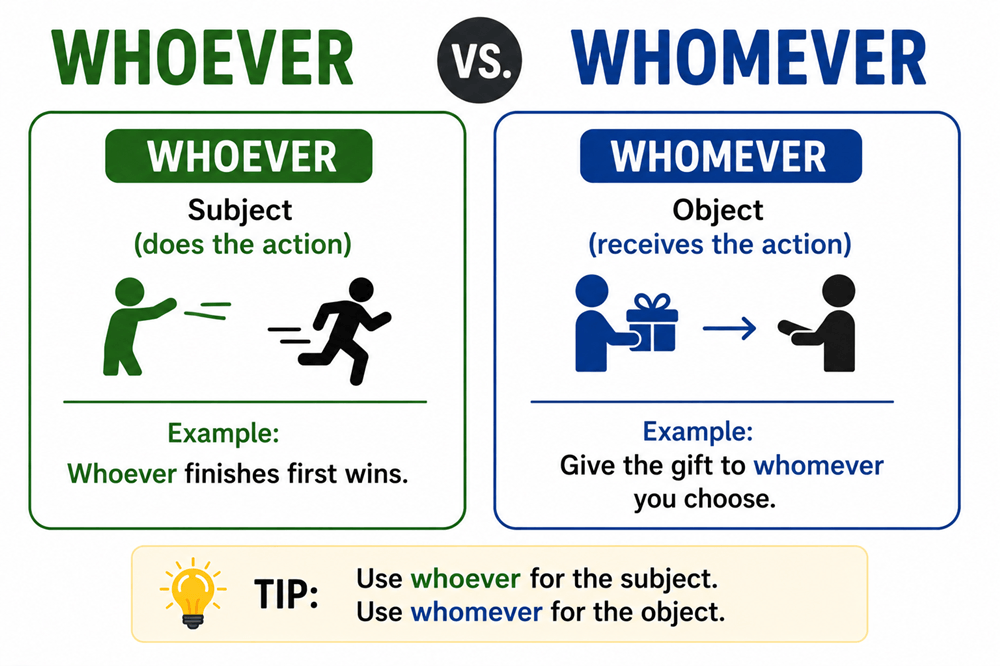
Whoever and whomever are both correct words, but they are used differently. Use whoever when the word is the subject of its own clause. Use whomever when the word is the object of a verb or preposition inside its own clause. In everyday writing, whoever is more common, while whomever sounds more formal.
Quick Answer
Use whoever when it means any person who and acts as the subject of a verb.
- Whoever arrives first should save seats.
- Give the prize to whoever wins the contest.
- Whoever called you should leave a message.
Use whomever when it means any person whom and acts as the object inside its own clause.
- Invite whomever you trust.
- Send the form to whomever the manager chooses.
- Ask whomever you saw at the desk.
The simple rule is: whoever does the action. Whomever receives the action.
Whomever or Whoever: What Is the Difference?
The difference between whoever and whomever is grammar. Both words refer to an unknown or unspecified person, but they play different roles in a clause.
Whoever is a subject pronoun. It is used when the person is doing the action in the clause.
Whomever is an object pronoun. It is used when the person is receiving the action or following a preposition inside the clause.
| Word | Grammar Role | Simple Meaning | Example |
|---|---|---|---|
| Whoever | Subject | Any person who | Whoever finishes first wins. |
| Whomever | Object | Any person whom | Choose whomever you prefer. |
The tricky part is that whoever or whomever may appear after a preposition like to, for, or with, but that does not automatically make whomever correct. You need to look at the word’s job inside its own clause.
What Does Whoever Mean?
Whoever means any person who or the person who. It is used when the person is doing the action in the clause.
Examples:
- Whoever made this cake did a great job.
- Whoever wants to join can sign up today.
- Whoever left the lights on should turn them off.
- Whoever answers first gets a point.
- Whoever needs help can ask me.
In each sentence, whoever is doing something. Someone made the cake, wants to join, left the lights on, answers first, or needs help. That makes whoever the correct choice.
What Does Whomever Mean?
Whomever means any person whom or the person whom. It is used when the person is the object of a verb or preposition inside the clause.
Examples:
- You may invite whomever you like.
- Give the extra ticket to whomever you choose.
- The teacher will help whomever she can.
- Ask whomever you trust most.
- They hired whomever the committee recommended.
In these examples, whomever receives the action. You like someone, choose someone, help someone, trust someone, or recommend someone. That makes whomever the object inside the clause.
The Most Important Rule
The most important rule is this:
Choose whoever or whomever based on its role inside its own clause, not based only on the word before it.
This is where many mistakes happen. A sentence may contain to whoever, and that can still be correct.
Example:
- Give the prize to whoever wins.
This sentence is correct because whoever is the subject of wins. The full idea is:
- Whoever wins gets the prize.
Even though whoever comes after to, it is still doing the action wins inside the clause. That is why whoever is correct.
Whoever as a Subject
Use whoever when the word is the subject of a verb. A subject performs the action or is being described.
Examples:
- Whoever calls first will get the appointment.
- Whoever broke the vase should tell the truth.
- Whoever knows the answer may raise a hand.
- Whoever wrote this note has beautiful handwriting.
- Whoever is responsible should report to the office.
A good test is to replace whoever with he, she, or they. If that sounds right, use whoever.
- He calls first.
- She broke the vase.
- They know the answer.
Because he, she, and they are subject forms, whoever is the matching choice.
Whomever as an Object
Use whomever when the word is the object of a verb or preposition inside the clause. An object receives the action.
Examples:
- Choose whomever you want.
- Call whomever the client requested.
- Support whomever you believe in.
- Thank whomever helped you.
- Bring whomever you invited.
A useful test is to replace whomever with him, her, or them. If that sounds right, use whomever.
- You want him.
- The client requested her.
- You believe in them.
Because him, her, and them are object forms, whomever is the matching choice.
Why “To Whoever” Can Be Correct
Many people assume whomever must follow to, for, or with. Sometimes it does, but not always.
Look at this sentence:
- Give the job to whoever is most qualified.
This is correct because whoever is the subject of is. The clause is whoever is most qualified. Inside that clause, the person is being described as qualified. That requires whoever, not whomever.
More examples:
- Send the invitation to whoever wants to attend.
- Give the seat to whoever arrives first.
- Offer help to whoever needs it.
In each sentence, whoever is the subject of the verb that follows: wants, arrives, or needs.
When “To Whomever” Is Correct
To whomever is correct when whomever is the object inside the clause.
Examples:
- Send the letter to whomever the board selected.
- Give the form to whomever your supervisor named.
- Pass the message to whomever she trusts.
In these examples, the board selected someone, the supervisor named someone, and she trusts someone. The person is receiving the action, so whomever is correct.
Whoever or Whomever After “Choose”?
After choose, the correct word depends on the sentence structure.
Use whomever when the person is the object of choose or another verb.
- Choose whomever you trust.
- Choose whomever the team recommends.
Use whoever when the person is the subject of the next verb.
- Choose whoever seems most prepared.
- Choose whoever has the most experience.
In whoever seems most prepared, the word whoever is the subject of seems. In whomever you trust, the word whomever is the object of trust.
Whoever or Whomever After “Invite”?
After invite, whomever is often correct because the invited person receives the action.
- Invite whomever you want.
- Invite whomever you trust.
- Invite whomever your parents approve of.
However, whoever can still be correct if the person is the subject of the following clause.
- Invite whoever wants to come.
- Invite whoever is available this weekend.
The difference is not the word invite alone. The difference is the grammar inside the clause that follows.
Examples of Whoever in Sentences
Here are natural examples of whoever used correctly:
- Whoever gets here first can start the meeting.
- Whoever wants coffee should order now.
- Give the prize to whoever answers correctly.
- The room is open to whoever needs a place to study.
- Whoever made this decision should explain it.
- Hire whoever seems best for the job.
- Whoever is ready may begin.
- Thank whoever stayed late to help.
In each example, whoever is doing the action inside its clause.
Examples of Whomever in Sentences
Here are natural examples of whomever used correctly:
- You may bring whomever you like.
- The company will hire whomever the director recommends.
- Give the file to whomever the lawyer names.
- Ask whomever you saw at the front desk.
- Support whomever you believe is honest.
- They will interview whomever the committee selects.
- Send the gift to whomever she chooses.
- The rule applies to whomever the policy covers.
In each example, whomever receives an action inside its clause.
Whoever Is More Common in Everyday English
Although whomever is grammatically correct in certain sentences, it often sounds very formal. In casual conversation, many people use whoever in places where strict grammar would prefer whomever.
Casual:
- Invite whoever you want.
More formal:
- Invite whomever you want.
For formal writing, grammar lessons, legal writing, academic writing, or polished business writing, whomever may be the better choice when the object form is required. For relaxed everyday writing, whoever often sounds more natural.
Common Mistakes to Avoid
The biggest mistake is choosing whomever just because the word follows a preposition.
Incorrect:
- Give it to whomever needs it.
Correct:
- Give it to whoever needs it.
Whoever is correct because it is the subject of needs.
Another mistake is using whoever when the object form is clearly needed in formal writing.
Less formal:
- Choose whoever you want.
More formal:
- Choose whomever you want.
In the formal version, whomever is the object of want.
How to Remember Whomever or Whoever
Here is an easy memory trick:
Whoever works like he, she, or they.
Whomever works like him, her, or them.
- Whoever = subject
- Whomever = object
You can also remember this sentence:
Whoever acts; whomever receives.
If the person is doing the action, choose whoever. If the person is receiving the action, choose whomever.
Final Answer
Whoever and whomever are both correct, but they are used differently. Use whoever when the word is the subject of its own clause, as in whoever wins or whoever needs help. Use whomever when the word is the object inside its clause, as in whomever you choose or whomever the manager recommends. In casual writing, whoever is more common, but whomever is useful in formal grammar when the object form is needed.