Smelt or Smelled: Difference, Correct Usage, Grammar, Examples, and Memory Tips Explained
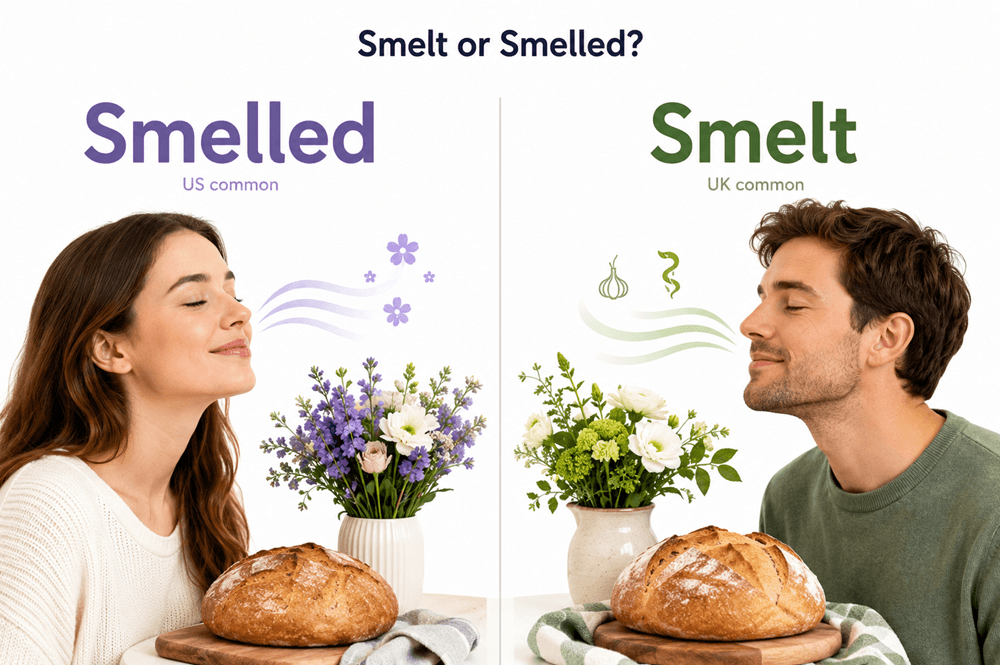
Smelled and smelt can both be correct, but they are not always used the same way. Smelled is the standard past tense of smell in American English. Smelt is more common in British English as the past tense of smell. However, smelt can also mean a small fish or the process of heating ore to extract metal.
Quick Answer
Use smelled as the safest past tense of smell, especially in American English.
- The flowers smelled sweet.
- He smelled smoke in the hallway.
- The kitchen smelled like fresh bread.
Use smelt mainly in British English when you mean smelled.
- The flowers smelt sweet.
- She smelt smoke near the door.
- The room smelt damp after the rain.
The simple rule is: smelled is the safer general choice; smelt is common in British English and has other meanings too.
Smelt or Smelled: What Is the Difference?
The main difference between smelt and smelled is regional usage. Both can work as the past tense and past participle of smell. The choice depends on your spelling style and audience.
| Word | Best Use | Example |
|---|---|---|
| Smelled | Standard in American English | The soup smelled delicious. |
| Smelt | Common in British English | The soup smelt delicious. |
If you are writing for a U.S. audience, smelled is usually the better choice. If you are writing for a British audience, smelt can sound natural. If you want the clearest option for global readers, smelled is usually safer because it is widely understood and less likely to be confused with the fish or metal-related meaning of smelt.
What Does Smelled Mean?
Smelled is the regular past tense and past participle of smell. It means noticed an odor, gave off an odor, or had a particular scent.
Examples:
- She smelled perfume in the room.
- The dog smelled the food from across the yard.
- The towels smelled clean after washing.
- Something smelled strange in the fridge.
- The air smelled fresh after the storm.
Smelled follows the regular spelling pattern:
- smell + ed = smelled
This makes it easy to remember. In American English, smelled is the standard form for most writing, including schoolwork, emails, articles, stories, and professional content.
What Does Smelt Mean?
Smelt has more than one meaning, which is why it can be confusing.
First, smelt can be the past tense of smell, especially in British English.
- The garden smelt lovely.
- He smelt burning toast.
- The old books smelt dusty.
Second, smelt can be a noun meaning a small fish.
- The fisherman caught several smelt.
- They fried smelt for dinner.
Third, smelt can be a verb meaning to heat ore in order to extract metal.
- The factory smelts iron ore.
- Workers smelted copper from the ore.
This is why smelt may cause confusion outside British-style writing. It can mean smelled, but it can also point to fish or metalworking.
Spelling Structure: Why Smelled Uses ED
Smelled is easy to build because it follows the regular past tense pattern:
- smell + ed = smelled
The base word stays the same. You simply add -ed. This is the same pattern used in many verbs:
- look → looked
- wash → washed
- help → helped
- smell → smelled
A good memory trick is: smelled is spelled like a regular past tense word. If you want the form that looks straightforward and familiar, choose smelled.
Spelling Structure: Why Smelt Ends in T
Smelt is the shorter irregular form:
- smell → smelt
It follows a pattern found in some British English past tense forms:
- learn → learnt
- dream → dreamt
- spell → spelt
- smell → smelt
These -t endings often feel more British or old-fashioned to American readers. That does not make them wrong. It only means the tone and audience matter.
When to Use Smelled
Use smelled when writing in American English or when you want the clearest general form.
- The cake smelled amazing.
- He smelled gas near the stove.
- The laundry smelled fresh.
- The room smelled like coffee.
- She smelled flowers in the garden.
Smelled works well in formal and casual writing. It is also less likely to be mistaken for the fish or metalworking word smelt.
When to Use Smelt
Use smelt as the past tense of smell if you are writing in British English or want that style.
- The kitchen smelt of garlic.
- The jumper smelt damp.
- The flowers smelt beautiful.
Use smelt when talking about the fish.
- They caught smelt in the lake.
- The restaurant served fried smelt.
Use smelt or smelted when talking about extracting metal from ore.
- The plant smelts metal.
- The ore was smelted at high heat.
Common Mistakes
A common mistake is thinking smelt is always wrong. It is not. It is a correct past tense form in British English, and it has separate meanings as a noun and verb.
Another mistake is using smelt in American writing where smelled would sound more natural.
Less common in American English:
- The house smelt like smoke.
More standard in American English:
- The house smelled like smoke.
A third mistake is forgetting that smelt can mean more than odor. If the context is unclear, smelled is often better.
How to Remember Smelt and Smelled
Use these memory tips:
- Smelled = regular form: smell + ed.
- Smelt = shorter -t form, common in British English.
- Smelt can also mean a fish or metalworking process.
- For American English, choose smelled.
- For British English, smelt is also natural.
A simple memory sentence is: In American English, you smelled a smell; in British English, you may have smelt it.
Final Answer
Smelled and smelt can both be correct as the past tense of smell. Smelled is the standard and safest choice in American English. Example: The room smelled fresh.
Smelt is common in British English for the same meaning. Example: The room smelt fresh. It can also mean a small fish or the process of extracting metal from ore.
To remember the difference, use this rule: smelled is the regular everyday form; smelt is the shorter British form with extra meanings.