Smoky or Smokey: Correct Spelling, Meaning, Common Usage, and Examples Explained Clearly
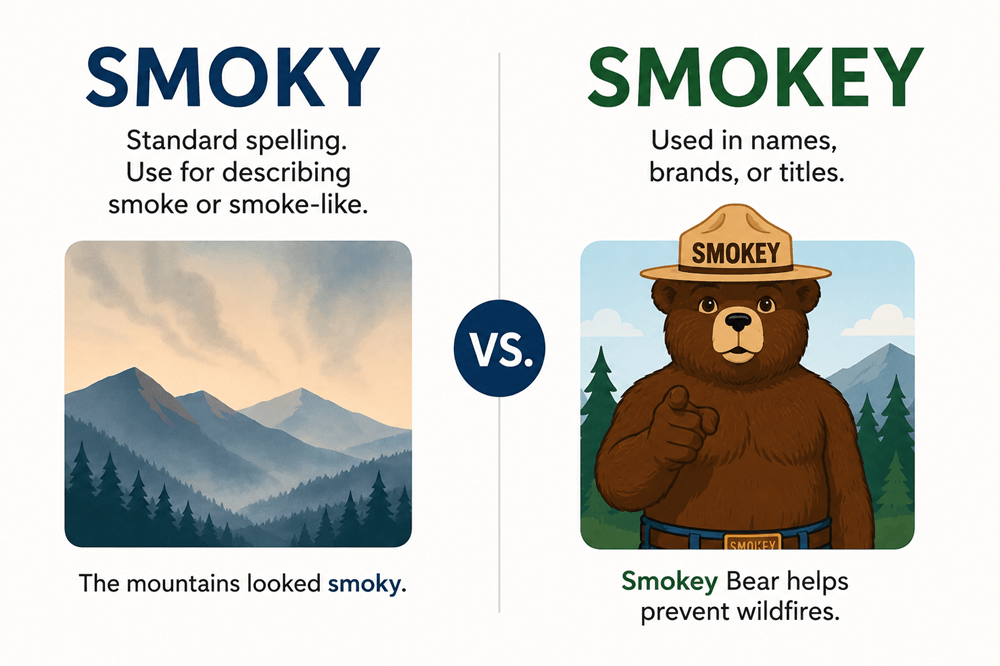
Smoky and smokey are often confused because they look similar and sound the same. The standard spelling is smoky when you mean filled with smoke, tasting like smoke, smelling like smoke, or having a hazy appearance. Smokey is usually used as a name, nickname, brand spelling, or informal variant.
Quick Answer
Use smoky as the normal adjective.
- The room was smoky after the fire.
- The soup had a smoky flavor.
- The mountains looked smoky in the distance.
Use Smokey mainly for names or official titles.
- Smokey Bear teaches wildfire safety.
- Smokey Robinson is a famous singer.
- The restaurant used Smokey as part of its brand name.
The simple rule is: smoky is the standard spelling, and Smokey is usually a name.
Smoky or Smokey: What Is the Difference?
The main difference is usage. Smoky is the correct standard spelling for the adjective related to smoke. It describes something that has smoke, looks like smoke, smells like smoke, or tastes like smoke.
Smokey is less common as a general adjective. It appears most often in proper names, nicknames, product names, business names, or creative spellings. Because of this, smokey may look casual or nonstandard when used in regular writing.
| Word | Best Use | Example |
|---|---|---|
| Smoky | Standard adjective | The air was smoky. |
| Smokey | Name or brand spelling | Smokey Bear is well known. |
What Does Smoky Mean?
Smoky means full of smoke, marked by smoke, or similar to smoke. It can describe air, rooms, skies, food, drinks, smells, colors, voices, and distant views.
Examples:
- The cabin became smoky when the chimney clogged.
- The barbecue sauce had a rich, smoky taste.
- A smoky haze covered the city.
- She wore smoky eye makeup for the evening.
- His voice had a deep, smoky quality.
In each sentence, smoky describes a quality connected to smoke. That connection may be literal, as in smoky air, or figurative, as in a smoky voice or smoky eye makeup.
What Does Smokey Mean?
Smokey is usually a proper name or a stylized spelling. The most famous example is Smokey Bear, the wildfire prevention mascot. It also appears in names such as Smokey Robinson and in business names, menu items, songs, or character names.
Examples:
- Smokey Bear is used in wildfire prevention campaigns.
- Smokey Robinson became known for his smooth voice.
- The food truck sells a sandwich called the Smokey Melt.
- The dog’s name was Smokey because of his gray fur.
These uses are correct because Smokey is being used as a name or special label. In normal descriptive writing, though, smoky is usually the better choice.
When to Use Smoky
Use smoky when you are describing something. This is the spelling you should use in school writing, articles, recipes, product descriptions, weather reports, fiction, and everyday sentences.
Examples:
- The sky looked smoky after the wildfire.
- The grilled peppers had a smoky aroma.
- The old pub was dark and smoky.
- The artist used smoky gray paint around the edges.
- The singer’s smoky voice suited the song.
If the word means “like smoke” or “filled with smoke,” choose smoky.
When to Use Smokey
Use Smokey when it is part of a specific name, title, nickname, or brand. Do not change the spelling of a proper name just because smoky is the standard adjective.
Examples:
- Correct: Smokey Bear is not spelled “Smoky Bear.”
- Correct: Smokey Robinson is a legendary musician.
- Correct: The café named its burger the Smokey Classic.
In these cases, Smokey is not just describing smoke. It is part of the official name, so the spelling should stay the same.
Smoky Flavor or Smokey Flavor?
The better spelling is smoky flavor. This phrase is common in recipes, restaurant menus, food reviews, and product descriptions.
- Correct: The cheese has a smoky flavor.
- Correct: Add paprika for a smoky flavor.
- Less standard: The cheese has a smokey flavor.
You may see smokey on packaging or menus, but that is often a branding choice. For regular writing, smoky flavor is cleaner and more standard.
Smoky Eyes or Smokey Eyes?
The standard phrase is smoky eyes or smoky eye makeup. It describes makeup that creates a soft, dark, blended look around the eyes.
- Correct: She wore smoky eye makeup.
- Correct: The tutorial explains how to create smoky eyes.
- Less standard: She wore smokey eye makeup.
Beauty brands may sometimes use smokey for style, but smoky is the standard spelling in normal text.
Common Mistake
The most common mistake is using smokey as the regular adjective.
Incorrect:
- The kitchen was smokey after dinner.
- The chili had a smokey taste.
Correct:
- The kitchen was smoky after dinner.
- The chili had a smoky taste.
Another mistake is “correcting” names that intentionally use Smokey.
Incorrect:
- Smoky Bear is a wildfire safety symbol.
Correct:
- Smokey Bear is a wildfire safety symbol.
How to Remember the Difference
Remember this simple rule:
- Smoky = smoke-related description
- Smokey = name, nickname, or brand spelling
You can also remember that smoke drops the e before adding y. That is why the standard adjective is smoky, not smokey.
Final Answer
Smoky is the standard spelling when describing something related to smoke, such as smoky air, smoky flavor, smoky skies, or smoky eye makeup. Smokey is usually used for proper names, nicknames, brands, or creative spellings.
If you are writing a normal sentence, choose smoky. If you are writing a specific name like Smokey Bear or Smokey Robinson, keep the spelling Smokey.