Busing or Bussing: Which Spelling Is Correct?
Busing and bussing are both real words, but they are often used in different ways.
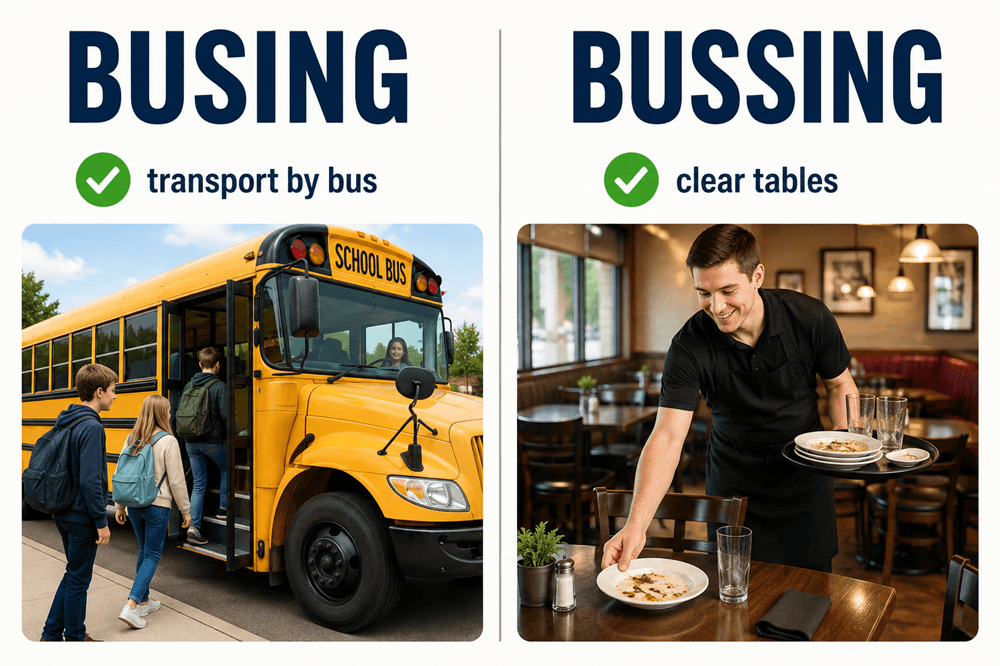
Use busing when you mean transporting people by bus.
Use bussing when you mean clearing tables in a restaurant.
Examples:
- The school district began busing students across town.
- The hotel is busing guests from the airport.
- She spent the evening bussing tables at the restaurant.
- His first job was bussing dishes after dinner service.
The main difference is meaning and common usage. Busing usually connects to buses and transportation. Bussing usually connects to restaurant work, especially removing dishes, cleaning tables, and resetting the dining area.
Quick Answer
Use busing for transportation by bus.
Use bussing for clearing restaurant tables.
Correct:
- The city is busing people to the shelter.
- He is bussing tables at a busy café.
Less clear:
- The city is bussing people to the shelter.
- He is busing tables at a café.
Some dictionaries accept overlap between the two forms, but in everyday writing, this distinction keeps your meaning clearer.
What Does Busing Mean?
Busing is the present participle of bus when the meaning is transporting people by bus.
Examples:
- The school is busing students to another campus.
- The company is busing workers to the construction site.
- The event organizers are busing visitors from the parking lot.
- Volunteers helped with busing evacuees to safety.
In American English, busing is especially common in discussions about schools, public transportation, and organized travel.
It can also refer to the historical or social policy of transporting students by bus to different schools, often for integration or district balancing.
Example:
- The debate over school busing lasted for years.
In this sense, busing is the more standard spelling.
What Does Bussing Mean?
Bussing is commonly used when talking about restaurant work.
To bus a table means to remove dirty dishes, glasses, napkins, and other items after guests leave. It can also mean preparing the table for the next customers.
Examples:
- She is bussing tables tonight.
- The restaurant hired two workers for bussing and dishwashing.
- He started in the restaurant business by bussing tables.
- The staff was busy bussing dishes after the lunch rush.
This spelling is common because restaurant workers are often called busboys, busgirls, or bussers. Because of that, many people naturally write bussing tables with double s.
Busing vs. Bussing: The Main Difference
The clearest modern distinction is:
Busing = transporting people by bus
Bussing = clearing tables in a restaurant
Examples:
- The school is busing students.
- The waiter is bussing tables.
This distinction is useful because the words look similar but create different images.
If you write:
- He is busing tables.
Some readers will still understand you, but the spelling may look less familiar for restaurant work.
If you write:
- The school is bussing students.
Some readers may understand it, but busing is usually cleaner and more standard for transportation.
Is Bussing Ever Used for Transportation?
Yes, bussing is sometimes used as a variant spelling for transporting by bus. You may see phrases like:
- bussing students
- bussing passengers
- bussing people to an event
However, busing is usually the preferred spelling for transportation, especially in edited writing.
So for clarity, write:
- The district is busing students.
Not:
- The district is bussing students.
The single s form is simpler and more closely tied to the word bus.
Is Busing Ever Used for Restaurant Tables?
Yes, busing tables can appear, and some people consider it acceptable because it comes from the verb bus.
However, bussing tables is more common and often looks more natural in restaurant contexts.
Examples:
- She is bussing tables after school.
- The job includes seating guests, bussing tables, and helping servers.
For restaurant work, bussing is usually the better choice because readers immediately understand the context.
What About “Buss” Meaning Kiss?
There is also an older word buss, meaning to kiss.
In that sense, bussing can mean kissing.
Example:
- The old poem described lovers bussing under the moonlight.
This use is rare today. Most modern readers will not use bussing this way unless they are reading old-fashioned writing, poetry, or historical fiction.
In modern everyday writing, bussing usually means clearing tables.
How to Remember the Difference
A simple memory trick:
Busing has one s, like bus.
So use busing when the meaning is transportation by bus.
Think:
bus → busing
Examples:
- busing students
- busing passengers
- busing workers
For bussing, think of the restaurant word busser.
A busser clears tables. Since busser has double s, bussing tables also has double s.
Think:
busser → bussing tables
That gives you the difference:
busing = bus transportation
bussing = restaurant tables
Spelling Structure
Busing is spelled:
b-u-s-i-n-g
It has one s.
Bussing is spelled:
b-u-s-s-i-n-g
It has double s.
The extra s is the key difference.
A good rule:
Use one s when the word clearly comes from bus as transportation.
Use double s when the word connects to busser or restaurant table-clearing.
Common Mistakes
Mistake 1: Using bussing for school transportation
Less preferred:
- The school is bussing students to another building.
Better:
- The school is busing students to another building.
Use busing for transportation.
Mistake 2: Using busing for restaurant work
Less common:
- He is busing tables at the diner.
More common:
- He is bussing tables at the diner.
Use bussing for clearing tables.
Mistake 3: Thinking one spelling is always wrong
This pair is tricky because both spellings can appear in real English. The safest approach is not to call one spelling completely wrong in every context. Instead, choose the spelling that best fits the meaning.
For transportation, choose busing.
For restaurant tables, choose bussing.
Example Sentences With Busing
- The city is busing residents to cooling centers.
- The camp is busing children to the lake.
- The airport is busing passengers between terminals.
- The school district discussed busing policies.
- The company is busing employees to the conference.
Example Sentences With Bussing
- She is bussing tables at a local restaurant.
- The server thanked him for bussing the empty plates.
- His first job was bussing dishes on weekends.
- The restaurant needs more help with hosting and bussing.
- After dinner, the staff began bussing the dining room.
Final Answer: Busing or Bussing?
Use busing when you mean transporting people by bus.
Use bussing when you mean clearing tables in a restaurant.
The easiest way to remember the difference is:
Busing = bus transportation
Bussing = busser clearing tables
So write:
- busing students
- busing passengers
- bussing tables
- bussing dishes
Both forms exist, but this distinction makes your writing clearer and more natural.