Chilli or Chili: Difference, Correct Usage, Regional Spelling, and Memory Tips Explained
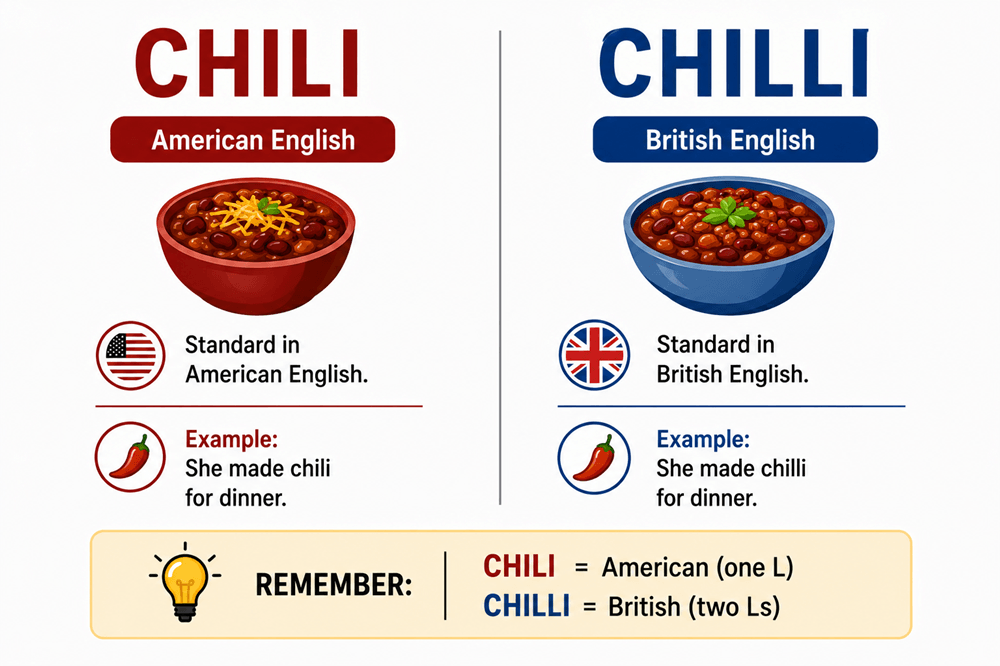
Chili and chilli are both correct, but they are used in different English styles. Chili is the standard American English spelling, especially for the spicy dish and the pepper. Chilli is common in British English and other British-influenced varieties. The easiest rule is this: use chili for American English and chilli for British English.
Quick Answer
Use chili in American English.
- She made a pot of chili for dinner.
- He added chili powder to the sauce.
- The recipe calls for one red chili pepper.
Use chilli in British English.
- She made chilli for dinner.
- He added chilli powder to the sauce.
- The recipe calls for one red chilli pepper.
The simple rule is: chili is American, while chilli is British.
Chilli or Chili: What Is the Difference?
The difference between chilli and chili is mainly spelling style. Both can refer to a spicy pepper, a spicy seasoning, or a dish made with meat, beans, tomatoes, spices, and peppers. The meaning is usually the same, but the spelling changes depending on region.
| Spelling | Best Use | Example |
|---|---|---|
| Chili | American English | The chili was spicy. |
| Chilli | British English | The chilli was spicy. |
If you are writing for readers in the United States, chili will look more natural. If you are writing for readers in the United Kingdom, Australia, New Zealand, or many other British-English audiences, chilli may look more natural.
What Does Chili Mean?
Chili is the American English spelling. It can mean a spicy pepper, a spice made from peppers, or a thick spicy dish.
Examples:
- The chili was served with cornbread.
- She sprinkled chili flakes over the pizza.
- He chopped a green chili for the salsa.
- The restaurant is famous for its beef chili.
- Add chili powder if you want more heat.
In American English, chili is especially common for the dish. When someone says they are making chili, they usually mean the warm stew-like meal made with spices, meat, beans, tomatoes, or similar ingredients.
What Does Chilli Mean?
Chilli is the British English spelling. It has the same general meaning as chili. It can refer to the pepper, the spice, or the dish.
Examples:
- The curry needs more chilli.
- She sliced a red chilli into the soup.
- They cooked vegetarian chilli for lunch.
- The sauce had a strong chilli flavour.
- He bought dried chillies from the market.
The double l is the main spelling clue. If your writing uses British spelling, chilli is usually the better choice.
Spelling Structure: Why Chili Has One L
Chili has one l. This shorter spelling is standard in American English.
- chili = American spelling
- chilli = British spelling
A simple way to remember chili is to connect it with American food culture. In the United States, chili is a very common dish name. You will often see phrases like:
- chili cook-off
- chili dog
- chili con carne
- chili powder
- chili flakes
For American writing, keep the word short: chili has one l.
Spelling Structure: Why Chilli Has Two L’s
Chilli has two l letters. This spelling is common in British English.
- chilli = ch + i + ll + i
The double l makes the word look more like other British spellings that keep extra letters or follow different spelling habits. The meaning does not change. The extra l simply marks a different regional style.
To remember it, think: British chilli has an extra letter. If your article uses British spelling such as colour, favour, and centre, then chilli fits that style better.
When to Use Chili
Use chili when writing in American English.
- I made turkey chili last night.
- The chili pepper was hotter than expected.
- She added chili powder to the beans.
- We ordered chili fries at the diner.
- The chili simmered on the stove for two hours.
Chili is the best choice for American blog posts, recipes, menus, food labels, and everyday writing.
When to Use Chilli
Use chilli when writing in British English or for audiences that prefer British spelling.
- The chilli sauce was very hot.
- He added two chopped chillies to the pan.
- The menu included beef chilli and rice.
- She prefers mild chilli powder.
- The chilli plant grew well in the garden.
The plural form is usually chillies in British English.
- one chilli
- two chillies
In American English, the plural is usually chilies or chilis, though chilies often looks more polished.
What About Chile?
Chile is another spelling you may see, especially in food writing connected to Spanish, Mexican, Southwestern, or New Mexican usage. It is often used for the pepper itself.
- green chile
- red chile sauce
- roasted chiles
- chile peppers
Do not confuse chile with Chile, the country in South America. The capital letter matters.
- chile = a pepper spelling used in some food contexts
- Chile = the country
For a general spelling comparison, though, the main choice is between chili and chilli.
Common Mistakes
A common mistake is mixing both spellings in the same article.
Inconsistent:
- The chili was made with red chillies.
Consistent American English:
- The chili was made with red chilies.
Consistent British English:
- The chilli was made with red chillies.
Another mistake is thinking one spelling is always wrong. Chili and chilli are both correct. The right choice depends on your audience and spelling style.
How to Remember Chili and Chilli
Use these memory tips:
- Chili has one l and is standard in American English.
- Chilli has double l and is common in British English.
- Use chili for U.S. recipes and American writing.
- Use chilli for British-style writing.
- Stay consistent within the same article.
A simple memory sentence is: American chili keeps it short; British chilli adds an extra l.
Final Answer
Chili is the American English spelling. Example: She made chili for dinner.
Chilli is the British English spelling. Example: She made chilli for dinner.
Both words are correct, but they should match your regional style. To remember the difference, use this rule: chili is shorter and American; chilli has an extra l and is British.