Eaten or Ate: Difference, Correct Grammar, Verb Forms, Examples, and Memory Tips Explained
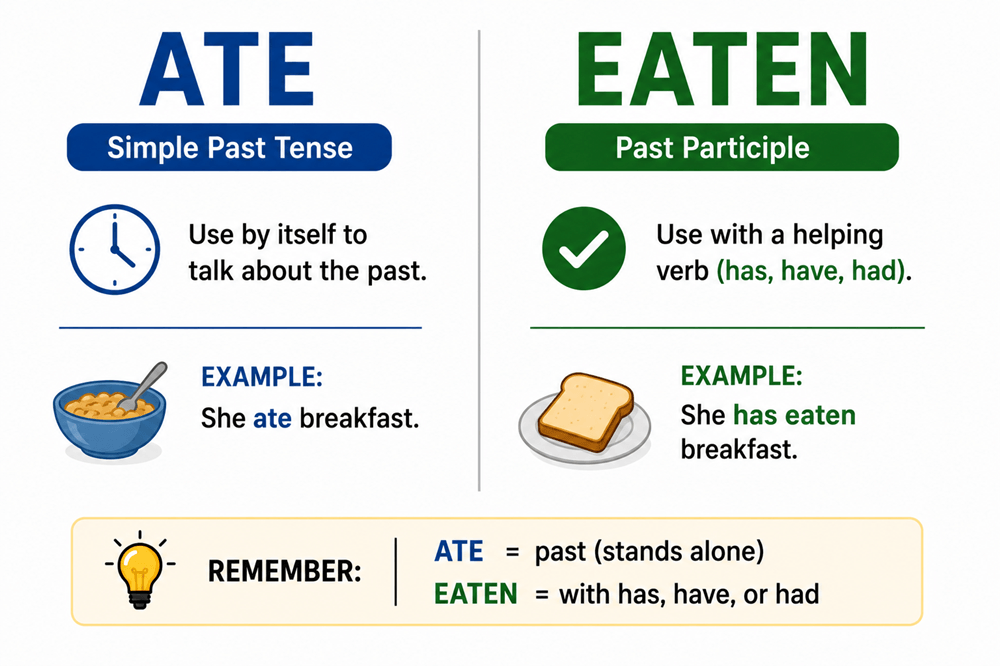
Ate and eaten are both correct forms of the verb eat, but they are used in different grammar structures. Ate is the simple past tense. Eaten is the past participle and usually needs a helping verb such as has, have, or had. The easiest rule is: use ate by itself for the past, and use eaten with a helper verb.
Quick Answer
Use ate when describing a completed action in the past.
- She ate breakfast at seven.
- They ate pizza last night.
- I ate too quickly.
Use eaten with a helping verb.
- She has eaten breakfast already.
- They had eaten before we arrived.
- I have eaten too much today.
The simple rule is: ate stands alone; eaten needs help.
Eaten or Ate: What Is the Difference?
The difference between ate and eaten is grammar. Both words come from eat, but they belong to different verb forms.
| Word | Verb Form | Example |
|---|---|---|
| Ate | Simple past tense | I ate lunch. |
| Eaten | Past participle | I have eaten lunch. |
If the sentence talks about something that happened in the past and does not use a helping verb, choose ate. If the sentence includes has, have, had, was, were, or been, you probably need eaten.
What Does Ate Mean?
Ate is the simple past tense of eat. It means someone consumed food at a specific time in the past.
Examples:
- I ate a sandwich for lunch.
- He ate the last cookie.
- We ate dinner at home.
- The children ate apples after school.
- She ate before the meeting.
Ate works by itself because it already shows past time. You do not need another helping verb with it.
Correct:
- She ate dinner.
Incorrect:
- She has ate dinner.
When you see has before the verb, switch from ate to eaten.
What Does Eaten Mean?
Eaten is the past participle of eat. A past participle is a verb form used with helping verbs. The most common helpers are has, have, and had.
Examples:
- I have eaten breakfast.
- She has eaten lunch already.
- They had eaten before the movie started.
- He has never eaten sushi.
- We have eaten here before.
Eaten often connects the past to the present. For example, I have eaten means the eating happened before now, but the result still matters now.
Spelling and Verb Structure
The verb eat is irregular. That means it does not follow the simple pattern of adding -ed.
| Base Verb | Simple Past | Past Participle |
|---|---|---|
| eat | ate | eaten |
You do not say eated. The correct forms are:
- Today I eat.
- Yesterday I ate.
- I have eaten.
This three-part pattern is the key to using the words correctly.
When to Use Ate
Use ate when the action happened at a finished time in the past.
- I ate breakfast this morning.
- She ate a salad yesterday.
- They ate at the new restaurant last week.
- He ate the soup while it was still hot.
Words like yesterday, last night, last week, this morning, and an hour ago often pair naturally with ate.
A quick test is to ask: Can the sentence work without has, have, or had? If yes, ate is probably correct.
- I ate lunch.
- She ate lunch.
- They ate lunch.
When to Use Eaten
Use eaten after helping verbs such as has, have, or had.
- I have eaten lunch.
- She has eaten already.
- They had eaten before leaving.
- We have eaten too much.
You also use eaten in passive sentences, where the food receives the action.
- The cake was eaten quickly.
- The sandwiches were eaten by the children.
- All the cookies had been eaten.
In these examples, the focus is on the food, not the person who ate it.
Common Mistakes
The most common mistake is using ate after has, have, or had.
Incorrect:
- I have ate already.
- She has ate breakfast.
- They had ate before we arrived.
Correct:
- I have eaten already.
- She has eaten breakfast.
- They had eaten before we arrived.
Another mistake is using eaten by itself when the sentence needs simple past tense.
Incorrect:
- I eaten breakfast.
- She eaten the cake.
Correct:
- I ate breakfast.
- She ate the cake.
How to Remember Eaten and Ate
Use these memory tips:
- Ate is short and stands alone.
- Eaten is longer and needs a helping verb.
- Think: I ate, but I have eaten.
- If you see has, have, or had, use eaten.
A simple memory sentence is: Ate is alone; eaten needs a helper.
You can also memorize the full pattern:
- eat = now
- ate = past
- eaten = with has, have, or had
Final Answer
Ate is the simple past tense of eat. Example: I ate dinner.
Eaten is the past participle and is used with helping verbs. Example: I have eaten dinner.
To remember the difference, use this rule: ate stands alone, but eaten needs help. If the sentence has has, have, or had, choose eaten.