Leafs or Leaves: Correct Plural, Verb Meaning, and Simple Examples Explained Clearly
Leaves is the correct plural of leaf in standard English. If you are talking about more than one leaf on a tree, plant, flower, or table, use leaves. Leafs is usually not the plural form, but it can be correct as a verb, as in she leafs through a book. It can also appear in proper names, such as Toronto Maple Leafs.
Quick Answer
Use leaves when you mean more than one leaf.
- The tree has bright green leaves.
- Autumn leaves covered the sidewalk.
- She pressed dried leaves inside a book.
Use leafs only when it is a verb meaning turns pages or grows leaves, or when it is part of a proper name.
- He leafs through the magazine before breakfast.
- The plant leafs out in spring.
- The Toronto Maple Leafs are a hockey team.
The simple rule is: leaves is the plural noun. Leafs is usually a verb or a name.
Leafs or Leaves: What Is the Difference?
The difference between leafs and leaves depends on grammar. Both forms can appear in English, but they are not used the same way.
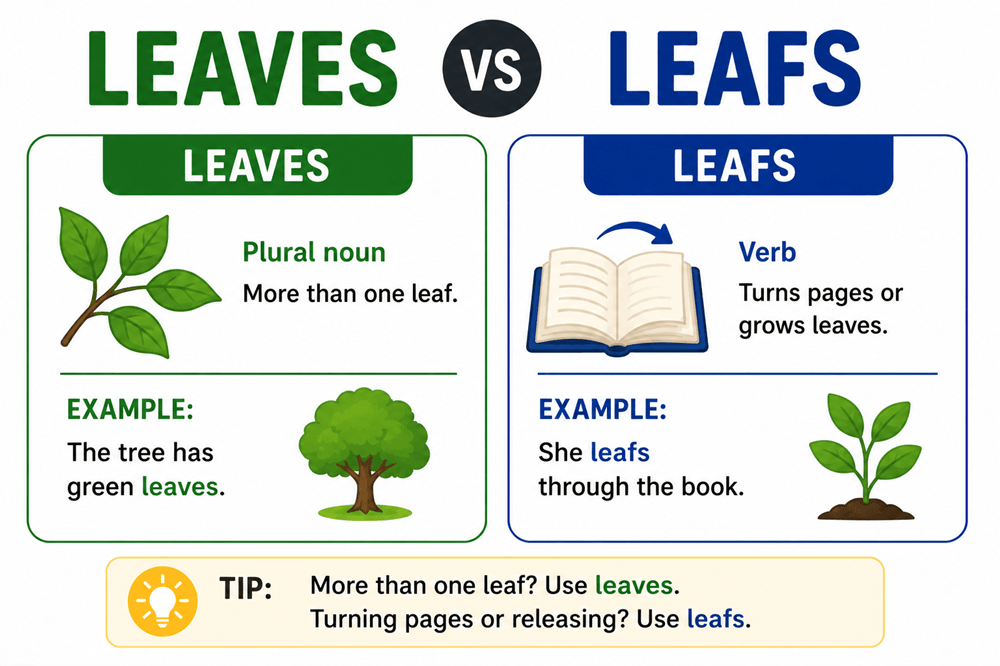
Leaves is the plural noun form of leaf. A leaf is the flat green part of a plant or tree. When there is more than one, the word changes from leaf to leaves.
Leafs is usually a verb form. It comes from the verb leaf, which can mean to turn pages or to produce leaves. You might say someone leafs through a book, or a tree leafs out in spring.
| Word | Grammar | Meaning | Example |
|---|---|---|---|
| Leaves | Plural noun | More than one leaf | The leaves turned yellow. |
| Leafs | Verb | Turns pages or grows leaves | She leafs through the book. |
If you are talking about tree leaves, plant leaves, autumn leaves, tea leaves, or salad leaves, use leaves.
What Does Leaves Mean?
Leaves is the plural of leaf. It means more than one leaf.
Examples:
- The leaves are falling from the trees.
- Green leaves covered the branches.
- The gardener removed the dead leaves.
- She collected colorful leaves in the park.
- The recipe uses fresh basil leaves.
In all of these examples, leaves refers to more than one leaf. This is the form most people need when writing about plants, trees, gardens, seasons, food, or nature.
Why Leaf Becomes Leaves
Leaf has an irregular plural. Instead of simply adding -s, the f changes to v, and the word becomes leaves.
This pattern appears in several English words:
- leaf → leaves
- wolf → wolves
- knife → knives
- life → lives
- shelf → shelves
That is why leafs looks tempting but is not the usual plural noun. The standard plural is leaves.
What Does Leafs Mean?
Leafs is usually a verb. It is the third-person singular form of the verb leaf. That means it is used with subjects like he, she, it, the plant, or the reader.
Examples:
- She leafs through the catalog every morning.
- He leafs through old photo albums when he feels nostalgic.
- The plant leafs out after the weather warms.
- The tree leafs early in spring.
In these sentences, leafs does not mean more than one leaf. It describes an action. Someone is turning pages, or a plant is producing leaves.
Leafs Through or Leaves Through?
The correct phrase is usually leafs through when the subject is singular.
To leaf through means to quickly turn the pages of a book, magazine, notebook, or stack of papers.
Correct:
- She leafs through the magazine.
- He leafs through the file before the meeting.
- The student leafs through her notes.
Do not use leaves through for this meaning.
Incorrect:
- She leaves through the magazine.
Leaves can be a verb too, but it comes from leave, not leaf. It means goes away or departs.
- She leaves the house at eight.
- The train leaves soon.
That is a completely different word from leafs.
Leaves as a Verb
Leaves can also be a verb, but it does not mean the same thing as the plural noun leaves. As a verb, leaves comes from leave.
Examples:
- She leaves for work at seven.
- The bus leaves in ten minutes.
- He leaves his shoes by the door.
- The decision leaves us with fewer options.
This can make the word confusing because leaves has two main jobs. It can be the plural of leaf, or it can be a verb from leave. Context tells you which meaning is intended.
Examples of Leaves as a Plural Noun
Here are natural examples of leaves used correctly as the plural of leaf:
- The maple leaves turned red in October.
- Rainwater collected on the broad leaves.
- The caterpillar ate holes in the leaves.
- She swept dry leaves from the porch.
- The tea leaves floated at the bottom of the cup.
- The salad was made with spinach leaves.
- Large leaves shaded the garden path.
- The wind carried the leaves across the street.
Whenever you mean more than one plant leaf, leaves is the correct choice.
Examples of Leafs as a Verb
Here are examples of leafs used correctly as a verb:
- She leafs through the cookbook for dinner ideas.
- He leafs through the newspaper before work.
- The editor leafs through the pages carefully.
- The tree leafs out earlier than usual.
- The vine leafs quickly in warm weather.
These examples are less common than the plural noun leaves, but they are still correct. The key is that leafs describes an action.
What About Toronto Maple Leafs?
Leafs is also correct in certain proper names. The most famous example is Toronto Maple Leafs, the name of a professional hockey team.
Because this is an official name, you should write it exactly as the name is spelled:
- The Toronto Maple Leafs played last night.
- He bought a Maple Leafs jersey.
- She is a lifelong Maple Leafs fan.
Do not change a proper name to match normal grammar. Even though the usual plural of leaf is leaves, the team name uses Leafs.
Common Mistakes to Avoid
The most common mistake is using leafs as the regular plural of leaf.
Incorrect:
- The tree has many leafs.
- The leafs are changing color.
- She picked up the fallen leafs.
Correct:
- The tree has many leaves.
- The leaves are changing color.
- She picked up the fallen leaves.
Another mistake is using leaves when the sentence needs the verb leafs.
Incorrect:
- He leaves through the book.
Correct:
- He leafs through the book.
Remember that leaves through is not the standard phrase. The phrase is leafs through when the subject is singular.
How to Remember Leafs or Leaves
Here is an easy way to remember the difference:
Leaves is the plural of leaf.
Leafs is usually an action.
- Leaves = more than one leaf
- Leafs = turns pages or grows leaves
You can also remember this sentence:
A tree has leaves, but a reader leafs through pages.
If your sentence is about more than one leaf, use leaves. If your sentence is about turning pages, use leafs.
Final Answer
Leaves is the correct plural of leaf. Use it when talking about more than one leaf on a tree, plant, flower, or food ingredient. Leafs is usually a verb meaning turns pages or grows leaves, as in she leafs through a book. It can also appear in proper names like Toronto Maple Leafs. For the regular plural noun, use leaves.