Flutist or Flautist: Which Word Should You Use for a Flute Player?
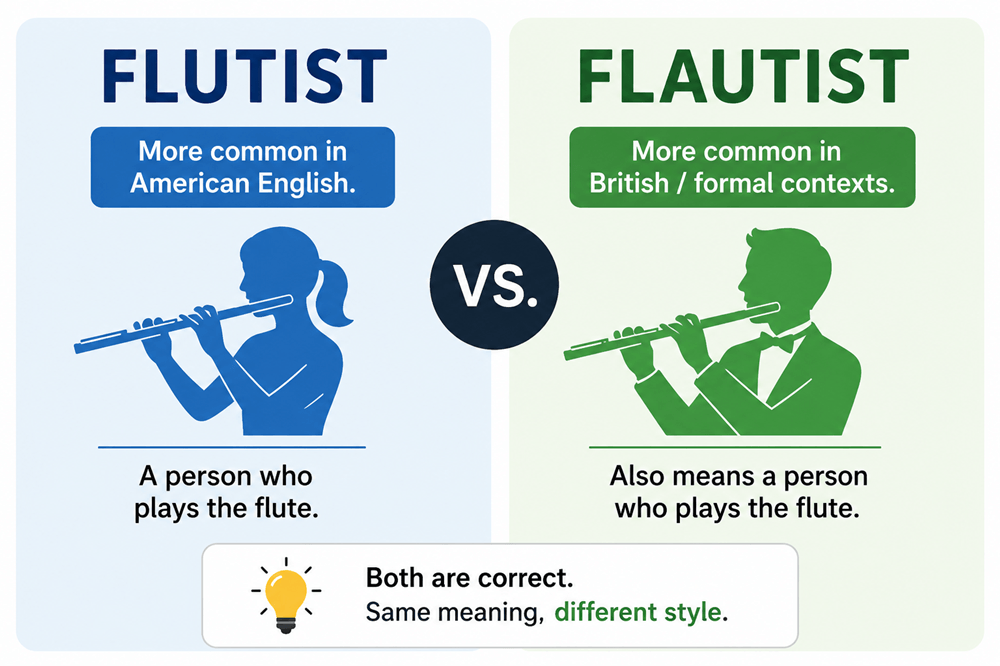
If you are choosing between flutist or flautist, the good news is that both words are correct. A flutist and a flautist both mean a person who plays the flute. The difference is mostly about style, region, and preference. In American English, flutist is more common. In British English and some formal music contexts, flautist may feel more familiar or refined.
Flutist or Flautist: What Is the Difference?
Flutist and flautist mean the same basic thing: a person who plays the flute. Neither word is wrong, and neither word refers to a different kind of musician.
The difference is not like violinist versus cellist, where the instrument changes. It is more like two accepted labels for the same role. You can call someone a flutist, a flautist, or simply a flute player.
Still, the words do not feel exactly the same. Flutist sounds more direct because it is built from the English word flute. Flautist sounds a little more classical or European because it is connected to older musical language and the Italian word flauto, meaning flute.
So if you are writing in everyday American English, flutist is usually the safer and more natural choice. If you are writing in a British, classical, or more formal musical context, flautist may also work well.
What Does Flutist Mean?
A flutist is a person who plays the flute. The word is simple: flute becomes flutist, just as piano becomes pianist and violin becomes violinist.
For example:
The flutist performed a gentle solo during the concert.
This means the person playing the flute had a featured musical part.
You might also write:
She is a talented flutist with years of orchestral experience.
Here, flutist clearly identifies her as a flute player.
Flutist is especially common in American English. It sounds straightforward, modern, and easy to understand. If your reader is in the United States, flutist will usually look natural in school writing, music bios, concert programs, resumes, articles, and casual descriptions.
What Does Flautist Mean?
A flautist is also a person who plays the flute. The meaning is the same as flutist, but the word has a slightly different flavor.
For example:
The flautist joined the chamber group for the final piece.
This means the flute player performed with the small musical ensemble.
You may see flautist in classical music writing, British English, older concert notes, or more formal descriptions of musicians. It can sound elegant, but it may also sound a little unusual to some American readers.
The spelling may confuse you at first because flautist has fla- instead of flu-. That is because it is not formed as directly from the English word flute. It has a stronger connection to the musical term flauto, which appears in Italian musical vocabulary.
Which Word Should You Use?
In most everyday writing, choose flutist. It is clear, simple, and widely understood, especially in American English.
Use flautist when you want a more formal, classical, or British feel. It is not incorrect, but it may stand out more depending on your audience.
If you are unsure, you can always use flute player. That phrase is plain, natural, and impossible to misunderstand. It may be especially helpful when writing for young readers, general audiences, or people who may not know either term well.
For example, all three of these sentences are correct:
He is a skilled flutist.
He is a skilled flautist.
He is a skilled flute player.
The first sounds direct and common. The second sounds slightly more formal or traditional. The third sounds simple and conversational.
Why These Two Words Cause Confusion
Flutist and flautist confuse people because English usually gives one main name to a musician. A person who plays the violin is a violinist. A person who plays the guitar is a guitarist. A person who plays the piano is a pianist. So when you see two words for a flute player, it can feel like one must be wrong.
But in this case, both survived. Flutist stayed close to the English word flute. Flautist developed from a more classical musical path. Because music vocabulary often borrows from Italian, French, German, and Latin, English sometimes keeps more than one form.
The spelling also causes trouble. Flutist looks easy because it contains flute, though it drops the final e. Flautist looks less obvious because the middle changes to au. If you are trying to spell the word from sound alone, you may hesitate.
How to Remember Flutist
The easiest way to remember flutist is to connect it directly to flute.
A flutist plays the flute.
That sentence gives you the spelling clue. The word flutist keeps the beginning of flute: flut-. You only remove the silent e and add -ist.
You can think of it this way:
flute → flutist
This is the most practical memory trick because it follows a familiar pattern. A piano player is a pianist. A violin player is a violinist. A flute player is a flutist.
If you want the plainest word for most modern writing, remember this phrase:
Flutist is the flute-based spelling.
How to Remember Flautist
To remember flautist, connect it with a more formal or classical music setting. The word has an au in the middle, which makes it look different from flute.
You can remember it this way:
Flautist feels fancy.
That does not mean the word is better. It simply helps you remember that flautist is the more formal-looking option. The au spelling can remind you of older, European, or classical music vocabulary.
Another memory clue is:
Flautist has “au” for an artistic sound.
This trick is not a grammar rule, but it gives your mind a useful hook. If the sentence has a formal concert tone, flautist may fit. If the sentence is simple and direct, flutist may feel better.
Examples of Flutist in Sentences
The flutist practiced the solo every morning before school.
A professional flutist must control breath, tone, timing, and expression.
The orchestra’s principal flutist played with a bright, clear sound.
She became the youngest flutist in the regional youth ensemble.
The flutist stood near the front of the stage for the opening melody.
In these examples, flutist sounds natural, especially if you are writing for a general American audience.
Examples of Flautist in Sentences
The flautist performed a delicate passage in the chamber recital.
A renowned flautist appeared as the evening’s guest soloist.
The critic praised the flautist’s graceful phrasing and warm tone.
The festival featured a flautist from a famous European orchestra.
The flautist lifted the melody above the strings with remarkable control.
In these examples, flautist gives the writing a slightly more formal or classical mood.
Flutist vs Flautist in Side-by-Side Examples
Correct: The flutist played beautifully.
Correct: The flautist played beautifully.
Correct: She is a jazz flutist.
Correct: She is a jazz flautist.
Correct: The flutist joined the orchestra last year.
Correct: The flautist joined the orchestra last year.
Correct: He wants to become a professional flutist.
Correct: He wants to become a professional flautist.
These pairs show the key point: both words are acceptable. Your choice depends on tone and audience, not on basic correctness.
The Final Answer on Flutist or Flautist
Flutist and flautist are both correct words for a person who plays the flute. Flutist is usually more common and direct in American English. Flautist often sounds more British, formal, or classical.
To remember the difference, think of flutist as the simple flute-based spelling: a flutist plays the flute. Think of flautist as the more formal-looking spelling, with au giving it a classical feel.
When in doubt, use flutist for everyday writing and flautist when the tone calls for something more traditional. If you want the clearest option of all, flute player works every time.