Psychiatrist or Psychologist: What’s the Difference?
Psychiatrist and psychologist are often confused because both work in mental health. They may treat some of the same conditions, and they may even work together. But they are not the same profession.
The main difference is this:
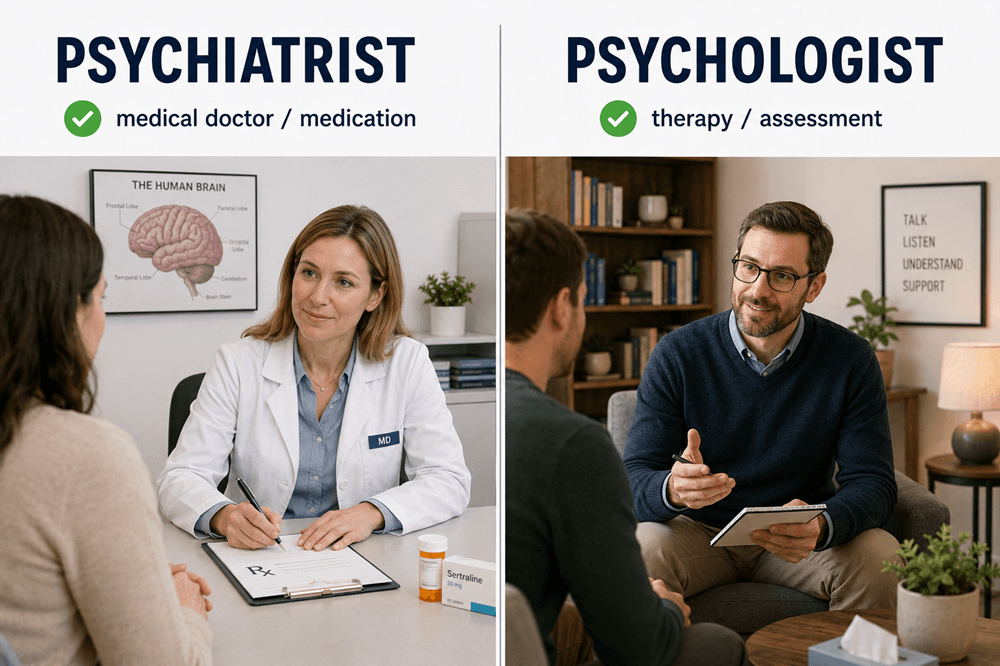
A psychiatrist is a medical doctor who specializes in mental health and can usually prescribe medication.
A psychologist is a mental health professional trained in psychology, therapy, behavior, emotions, testing, and mental processes.
In simple terms:
Psychiatrist = medical doctor for mental health
Psychologist = therapy, assessment, and behavior specialist
Both can be important. The right one depends on what kind of help a person needs.
Quick Answer
Use psychiatrist when talking about a medical doctor who diagnoses and treats mental health conditions, often with medication.
Use psychologist when talking about a professional who provides therapy, psychological testing, emotional support, behavior strategies, or mental health assessment.
Examples:
- The psychiatrist adjusted her medication.
- The psychologist helped him manage anxiety through therapy.
- A psychiatrist can treat depression with medication when needed.
- A psychologist can help a patient understand patterns in thoughts and behavior.
The two roles can overlap, but their training and main tools are different.
What Is a Psychiatrist?
A psychiatrist is a medical doctor who specializes in mental health.
Because psychiatrists are doctors, they are trained to understand the medical side of mental illness. They can evaluate symptoms, diagnose mental health conditions, prescribe medication, and consider how physical health may affect mood, thinking, sleep, energy, or behavior.
A psychiatrist may help with conditions such as:
- depression
- anxiety disorders
- bipolar disorder
- schizophrenia
- ADHD
- PTSD
- substance use disorders
- severe sleep or mood problems
A psychiatrist may recommend medication, therapy, lifestyle changes, hospital care, or other treatments depending on the person’s condition.
Some psychiatrists also provide psychotherapy, but many focus mainly on diagnosis, medication management, and medical treatment planning.
What Is a Psychologist?
A psychologist is a professional trained in psychology, which is the study of the mind, behavior, emotions, and mental processes.
Psychologists often help people understand and change patterns in thoughts, feelings, relationships, habits, and behavior.
A psychologist may provide:
- talk therapy
- psychological testing
- behavioral treatment
- emotional support
- coping strategies
- mental health assessment
- learning or personality evaluations
Psychologists often work with people dealing with anxiety, depression, stress, trauma, grief, relationship problems, school challenges, behavioral issues, or life transitions.
Many clinical psychologists have doctoral training, such as a PhD or PsyD. Their work usually focuses on therapy, assessment, and psychological treatment rather than medical prescribing.
Psychiatrist vs Psychologist: The Main Difference
The simplest difference is:
A psychiatrist can usually prescribe medication.
A psychologist usually provides therapy and psychological assessment.
A psychiatrist looks at mental health partly through a medical lens. They may ask about symptoms, family history, medications, sleep, appetite, physical health, and risk factors. They can prescribe antidepressants, mood stabilizers, ADHD medication, antipsychotic medication, or other treatments when appropriate.
A psychologist looks at mental health through a psychological and behavioral lens. They may help a person understand thought patterns, emotional reactions, coping skills, childhood experiences, relationships, habits, and behavior.
For example:
- If someone needs medication for severe depression, they may see a psychiatrist.
- If someone wants weekly therapy for anxiety, they may see a psychologist.
- If someone needs both medication and therapy, they may see both.
These roles often work best together.
Can a Psychologist Prescribe Medication?
Usually, psychologists do not prescribe medication.
However, there are exceptions. In some places, specially trained psychologists may have prescribing authority. This depends on local laws, extra training, and professional rules.
For everyday writing, the safest general explanation is:
Psychiatrists usually prescribe medication. Psychologists usually do not.
That wording is accurate without ignoring exceptions.
Can a Psychiatrist Provide Therapy?
Yes, a psychiatrist can provide therapy, but not all psychiatrists do.
Some psychiatrists offer psychotherapy as part of treatment. Others focus mostly on diagnosis, medication, and medical management. A patient might see a psychiatrist for medication and a psychologist or therapist for regular therapy sessions.
Example:
- Her psychiatrist manages her medication.
- Her psychologist provides weekly therapy.
This combination is common when both medical treatment and talk therapy are helpful.
When Should Someone See a Psychiatrist?
A person may be referred to a psychiatrist when symptoms may need medical evaluation or medication.
A psychiatrist may be especially helpful when someone has:
- severe depression
- suicidal thoughts
- hallucinations or delusions
- bipolar symptoms
- panic attacks that interfere with life
- complex medication needs
- symptoms that are not improving with therapy alone
- mental health symptoms connected to physical health or substance use
This does not mean every mental health issue requires a psychiatrist. It simply means psychiatrists are often involved when the medical side of care matters.
When Should Someone See a Psychologist?
A person may see a psychologist when they want therapy, coping tools, assessment, or help understanding emotional and behavioral patterns.
A psychologist may be helpful for:
- anxiety
- depression
- grief
- trauma
- stress
- relationship problems
- parenting challenges
- behavior concerns
- learning or attention evaluations
- emotional regulation
- life transitions
Psychologists can help people build skills, change patterns, process experiences, and understand themselves more clearly.
Psychiatrist, Psychologist, Therapist, and Counselor
These words can be confusing because they all relate to mental health.
A psychiatrist is a medical doctor.
A psychologist is trained in psychology and may provide therapy and testing.
A therapist is a broader word. It can refer to psychologists, counselors, social workers, marriage and family therapists, and other professionals who provide therapy.
A counselor often helps people with emotional, personal, family, school, or life challenges, depending on their training and license.
So:
All psychiatrists are medical doctors.
Some psychologists provide therapy.
Therapist is a broader category.
Counselor is another mental health support role.
The exact rules can vary by country, state, or licensing system.
How to Remember the Difference
A simple memory trick:
Psychiatrist has “iatrist,” like a medical specialist.
A psychiatrist is a doctor.
Think:
psychiatrist = physician + mental health
Another trick:
Psychologist has “psychology” inside it.
A psychologist studies the mind, behavior, emotions, and thought patterns.
Think:
psychologist = psychology + therapy/testing
So the memory shortcut is:
Psychiatrist = medication and medical care
Psychologist = therapy, testing, and behavior
Spelling Tips
Both words are long, so they can be hard to spell.
Psychiatrist is spelled:
p-s-y-c-h-i-a-t-r-i-s-t
It has psychiatry inside it.
Psychologist is spelled:
p-s-y-c-h-o-l-o-g-i-s-t
It has psychology inside it.
The beginning is the same:
psych-
The difference comes after that:
psychiatrist connects to psychiatry.
psychologist connects to psychology.
Common Mistakes
Mistake 1: Thinking they are the same job
They both work in mental health, but they are trained differently.
A psychiatrist is a medical doctor.
A psychologist is trained in psychology.
Mistake 2: Thinking only psychiatrists diagnose
Both psychiatrists and psychologists may be involved in diagnosis, depending on setting and licensing rules.
However, psychiatrists often focus on medical diagnosis and treatment, while psychologists often focus on psychological assessment and therapy.
Mistake 3: Thinking psychologists always prescribe medication
Most psychologists do not prescribe medication. Psychiatrists usually can.
There are some exceptions in certain places, but as a general rule, medication is more strongly associated with psychiatrists.
Mistake 4: Choosing based only on the title
The best choice depends on the need.
For medication or complex medical symptoms, a psychiatrist may be needed.
For therapy, coping skills, emotional patterns, or psychological testing, a psychologist may be a good fit.
Example Sentences
- The psychiatrist prescribed medication for her anxiety.
- The psychologist taught him breathing and thinking strategies.
- He sees a psychiatrist once a month for medication management.
- She sees a psychologist every week for therapy.
- The psychologist completed an evaluation for ADHD.
- The psychiatrist reviewed his symptoms and medical history.
- Some patients benefit from seeing both a psychiatrist and a psychologist.
Final Answer: Psychiatrist or Psychologist?
A psychiatrist is a medical doctor who specializes in mental health and can usually prescribe medication.
A psychologist is trained in psychology and usually focuses on therapy, assessment, behavior, emotions, and mental processes.
The easiest way to remember the difference is:
Psychiatrist = medical doctor, medication, mental health treatment
Psychologist = therapy, testing, behavior, emotional patterns
Both can help with mental health, but they do not have the same training or main role.