Another Word for New: Best Synonyms and Examples
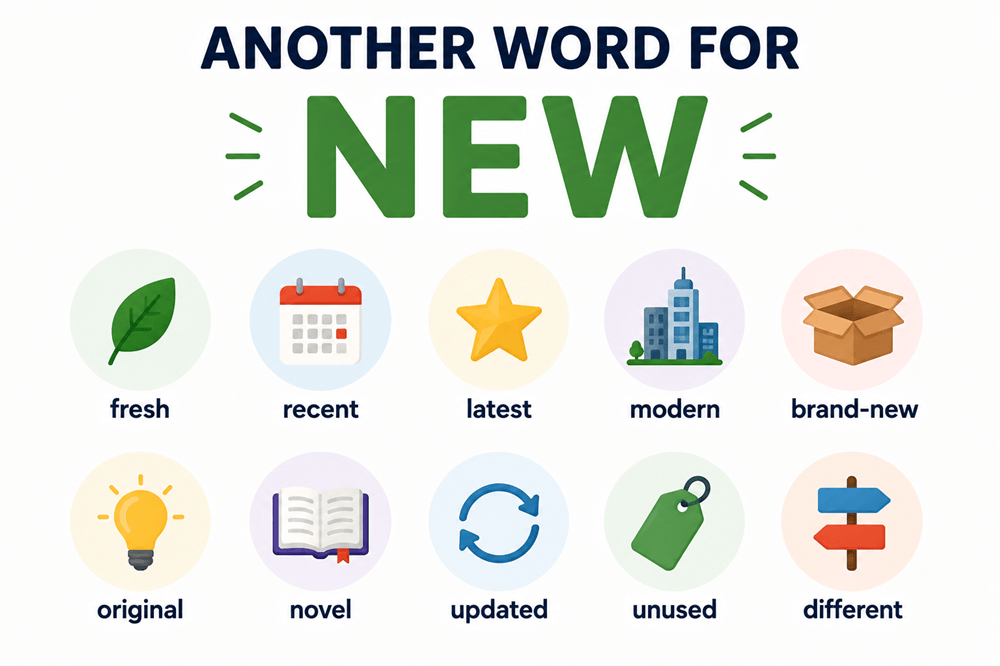
Another word for new is fresh. You can also use recent, latest, modern, brand-new, original, novel, updated, unused, different, or unfamiliar, depending on the sentence.
New usually means something was made, found, started, introduced, or experienced recently. It can also mean something is not used before, not familiar, or different from what came before.
Examples:
She bought a new dress.
She bought a brand-new dress.
We need a new idea.
We need a fresh idea.
The company released a new phone.
The company released the latest phone.
The best synonym depends on whether you mean recently made, recently discovered, unused, modern, original, or different.
Best Synonyms for New
Here are some common synonyms for new:
| Synonym | Best For |
|---|---|
| fresh | New, clean, original, or recently made |
| recent | Happened or appeared not long ago |
| latest | Most recent version or update |
| modern | New in style, design, or technology |
| brand-new | Completely new and unused |
| original | New and not copied |
| novel | New, unusual, or inventive |
| updated | Improved or changed recently |
| unused | Not used before |
| unfamiliar | New to someone’s experience |
Each word has a slightly different meaning, so choose the one that fits your sentence.
Fresh
Fresh is one of the closest synonyms for new. It can mean recently made, recently started, clean, original, or different in a good way.
Examples:
We need a new idea.
We need a fresh idea.
She wanted a new start.
She wanted a fresh start.
The bakery sells fresh bread every morning.
Use fresh for ideas, starts, food, designs, air, energy, and perspectives.
A quick note: fresh often sounds positive. It suggests something feels clean, lively, or renewed.
Recent
Recent means something happened or appeared not long ago.
Examples:
The article discusses a new study.
The article discusses a recent study.
There have been recent changes to the schedule.
His most recent message was short.
Use recent for events, studies, news, changes, messages, research, and updates.
Recent is more about time than quality. Something can be recent but not necessarily better.
Latest
Latest means the newest or most recent version.
Examples:
She bought the new model.
She bought the latest model.
Have you seen the latest update?
The magazine covers the latest fashion trends.
Use latest when talking about versions, updates, technology, fashion, news, products, or releases.
A simple rule:
Use new for general meaning.
Use latest when comparing versions or time order.
Modern
Modern means new in style, design, method, or technology. It often means something fits the present time.
Examples:
They built a new kitchen.
They built a modern kitchen.
The office has a modern design.
The school uses modern teaching methods.
Use modern for buildings, design, technology, style, systems, methods, and ideas.
Modern does not always mean just created. Something can be modern in style even if it is not brand-new.
Brand-New
Brand-new means completely new and not used before.
Examples:
He bought a new car.
He bought a brand-new car.
She opened a brand-new notebook.
The shoes looked brand-new.
Use brand-new for objects, products, clothes, cars, phones, books, tools, and anything unused.
A quick note: brand-new is stronger than new. It emphasizes that something has not been used.
Original
Original means new in the sense of not copied. It can describe ideas, art, writing, designs, and inventions.
Examples:
That is a new idea.
That is an original idea.
The artist created an original design.
Her story had an original ending.
Use original when the focus is creativity, invention, or uniqueness.
Novel
Novel means new, unusual, or different in an interesting way. It is more formal than new.
Examples:
The scientist tested a new method.
The scientist tested a novel method.
The company tried a novel solution.
The book offers a novel approach to the topic.
Use novel in formal writing, science, business, technology, academic writing, and analysis.
A quick note: novel can also mean a long fictional book. Context tells the meaning.
Updated
Updated means changed, improved, or made current.
Examples:
Please send the new version.
Please send the updated version.
The website has an updated design.
We need updated information before deciding.
Use updated for documents, apps, websites, plans, rules, lists, schedules, and information.
Updated does not always mean completely new. It means a previous thing has been changed or improved.
Unused
Unused means not used before.
Examples:
She found a new notebook in the drawer.
She found an unused notebook in the drawer.
The ticket was unused.
He returned the unused supplies.
Use unused when the focus is that something has not been used, touched, opened, or spent.
Different
Different can replace new when the meaning is “not the same as before.”
Examples:
Let’s try a new method.
Let’s try a different method.
She moved to a new school.
She moved to a different school.
We need a different approach.
Use different when comparing something to what already exists.
Unfamiliar
Unfamiliar means new to someone’s knowledge or experience.
Examples:
The city felt new to me.
The city felt unfamiliar to me.
This word is new to many students.
This word is unfamiliar to many students.
Use unfamiliar when something is not known, recognized, or experienced before.
Formal Synonyms for New
For essays, reports, business writing, and professional documents, these are good formal alternatives:
- recent
- latest
- modern
- updated
- original
- novel
- current
- newly developed
- unfamiliar
Examples:
The report includes recent data.
The company introduced a modern system.
The study presents a novel approach.
The document contains updated information.
These words sound more specific than repeating new too often.
Casual Synonyms for New
For everyday speech, messages, blog posts, and simple writing, these alternatives sound natural:
- fresh
- brand-new
- latest
- different
- unused
- new-looking
- just released
Examples:
I need a fresh start.
She bought a brand-new phone.
Let’s try something different.
This jacket looks new.
Use casual synonyms when you want your writing to sound simple and natural.
New vs Fresh
New is general. It can describe anything recently made, found, started, or introduced.
Fresh often adds a positive feeling. It can mean clean, lively, original, or recently made.
Examples:
We need a new plan.
We need a fresh plan.
The first sentence simply means another plan is needed. The second suggests the plan should feel creative or different.
New vs Recent
New can mean recently made, unused, unfamiliar, or different.
Recent only focuses on time.
Examples:
This is a new phone.
This is a recent phone.
The first sentence may mean the phone is unused or newly bought. The second means it came out or appeared not long ago.
Use recent when time matters most.
New vs Modern
New means recently made or introduced.
Modern means current in style, design, technology, or thinking.
Examples:
They bought a new house.
They bought a modern house.
A new house may simply be newly bought or newly built. A modern house has a current style or design.
Common Mistakes
One common mistake is using modern when you mean unused.
Awkward:
I bought a modern notebook yesterday.
Better:
I bought a new notebook yesterday.
Better:
I bought a brand-new notebook yesterday.
Another mistake is using recent when you mean original.
Awkward:
That is a recent idea.
Better:
That is a new idea.
Better:
That is an original idea.
Choose the synonym that matches the exact meaning.
Final Answer
Another word for new is fresh.
Other good synonyms include recent, latest, modern, brand-new, original, novel, updated, unused, different, and unfamiliar.
Use fresh for a new idea, start, or perspective.
Use recent for something that happened not long ago.
Use latest for the newest version.
Use brand-new for something completely unused.
Use modern for current style or technology.
Use original or novel for something creative or unusual.
The best synonym for new depends on whether you mean recent, unused, modern, original, updated, or different.