Another Word for Problem: Best Synonyms and Examples
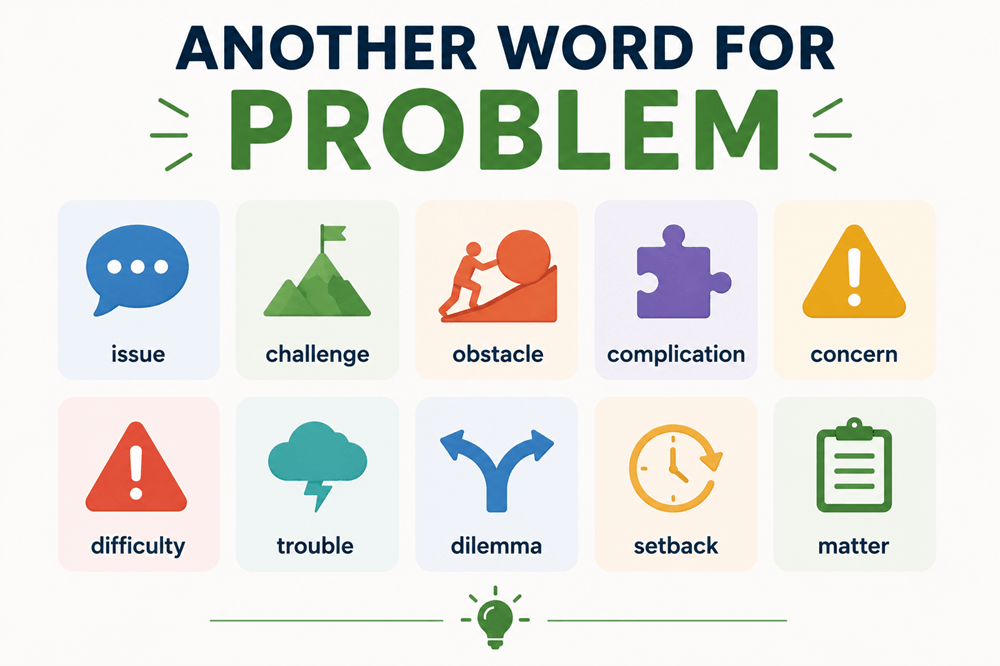
Another word for problem is issue. You can also use difficulty, challenge, trouble, complication, concern, obstacle, dilemma, setback, or matter, depending on the sentence.
A problem is something difficult, confusing, unwanted, or needing a solution.
Examples:
We need to fix this problem.
We need to fix this issue.
The biggest problem is the cost.
The biggest challenge is the cost.
She had a problem with the instructions.
She had trouble with the instructions.
The best synonym depends on whether the problem is small, serious, technical, emotional, or difficult to solve.
Best Synonyms for Problem
Here are some common synonyms for problem:
| Synonym | Best For |
|---|---|
| issue | General problem or topic |
| difficulty | Something hard to do |
| challenge | A difficult task or situation |
| trouble | Casual everyday problem |
| complication | Something that makes a situation harder |
| concern | A worry or serious issue |
| obstacle | Something blocking progress |
| dilemma | A difficult choice |
| setback | A problem that delays progress |
| matter | A situation or subject needing attention |
Each word has a slightly different meaning, so choose the one that fits your sentence.
Issue
Issue is one of the most common replacements for problem. It sounds slightly softer and more professional.
Examples:
There is a problem with the app.
There is an issue with the app.
We discussed the main problem.
We discussed the main issue.
The company is working on the issue.
Use issue for technical problems, work situations, customer service, health topics, social topics, or general concerns.
Difficulty
Difficulty means something is hard to do, understand, or complete.
Examples:
She had a problem reading the map.
She had difficulty reading the map.
Many students have difficulty with grammar.
He had difficulty finding the address.
Use difficulty when the focus is on struggle or effort.
A quick note: difficulty is usually more formal than trouble.
Challenge
Challenge means a difficult situation that may require effort, skill, or patience. It often sounds more positive than problem.
Examples:
The biggest problem is time.
The biggest challenge is time.
Starting a new job can be a challenge.
The project was a serious challenge for the team.
Use challenge when you want the problem to sound like something that can be worked through or overcome.
Trouble
Trouble is a casual synonym for problem. It is common in everyday speech.
Examples:
I am having a problem with my computer.
I am having trouble with my computer.
She had trouble sleeping last night.
We had trouble finding a parking spot.
Use trouble for common everyday problems, especially when someone is struggling with something.
Complication
Complication means an extra problem that makes a situation more difficult.
Examples:
The plan was simple, but one problem came up.
The plan was simple, but one complication came up.
Bad weather created a new complication.
The delay was an unexpected complication.
Use complication when something adds difficulty to an already existing situation.
Concern
Concern means a worry, issue, or serious point that needs attention.
Examples:
Safety is our biggest problem.
Safety is our biggest concern.
The teacher raised a concern about attendance.
Parents expressed concerns about the new rule.
Use concern when the problem involves worry, risk, safety, health, feelings, or responsibility.
Obstacle
Obstacle means something that blocks progress or makes success harder.
Examples:
Money was the main problem.
Money was the main obstacle.
Fear can be an obstacle to change.
The team faced several obstacles during the project.
Use obstacle when talking about goals, progress, success, plans, or personal growth.
Dilemma
Dilemma means a difficult choice between two or more options.
Examples:
Her problem was whether to stay or leave.
Her dilemma was whether to stay or leave.
The manager faced a difficult dilemma.
Choosing between comfort and cost was a real dilemma.
Use dilemma only when the problem involves a hard decision.
Setback
Setback means a problem that delays progress or makes a situation worse for a while.
Examples:
The injury was a major problem.
The injury was a major setback.
Losing funding was a serious setback.
The project had a small setback, but it continued.
Use setback when something slows down progress but does not necessarily end it.
Matter
Matter can mean a problem, issue, or subject that needs attention.
Examples:
We need to discuss this problem.
We need to discuss this matter.
This is a serious matter.
The manager handled the matter privately.
Use matter in formal or polite writing when you want to avoid sounding too direct.
Formal Synonyms for Problem
For essays, reports, business writing, and professional emails, these are good formal alternatives:
- issue
- concern
- difficulty
- complication
- obstacle
- dilemma
- matter
- challenge
Examples:
The report identifies a major issue.
The team faced several obstacles.
Cost remains a serious concern.
The delay created a new complication.
These words can make your writing sound more precise and polished.
Casual Synonyms for Problem
For everyday speech, messages, and simple writing, these alternatives sound natural:
- trouble
- issue
- difficulty
- challenge
- snag
- headache
- mess
Examples:
I’m having trouble with my phone.
There is a small issue with the order.
This schedule is a real headache.
We hit a small snag.
A quick note: headache, snag, and mess are informal. They work in casual writing, but they may not be best for formal writing.
Problem vs Issue
Problem and issue are very close, but they do not always feel the same.
Problem can sound more direct or negative.
Issue can sound softer, more professional, or more neutral.
Examples:
There is a problem with the payment.
There is an issue with the payment.
Both are correct. In customer service or business writing, issue often sounds more polite.
Problem vs Challenge
Problem usually sounds negative. Challenge can sound more positive or motivating.
Examples:
The new system is a problem.
The new system is a challenge.
The first sentence sounds more critical. The second sentence suggests that the situation is difficult but manageable.
Use challenge when you want a more constructive tone.
Common Mistakes
One common mistake is using dilemma for any problem.
Incorrect: My phone battery died. That was a dilemma.
Better: My phone battery died. That was a problem.
Better: My phone battery died. That caused trouble.
Use dilemma only when there is a difficult choice.
Another mistake is using concern when the problem is only technical.
Awkward: The printer has a concern.
Better: The printer has a problem.
Better: The printer has an issue.
Use concern for worries, risks, or serious points.
Final Answer
Another word for problem is issue.
Other good synonyms include difficulty, challenge, trouble, complication, concern, obstacle, dilemma, setback, and matter.
Use issue for a general or professional problem.
Use trouble for casual everyday problems.
Use challenge for a difficult situation that can be overcome.
Use concern for a worry or serious issue.
Use obstacle when something blocks progress.
Use dilemma when the problem involves a difficult choice.
The best synonym for problem depends on the type of difficulty and the tone you want.