Breath or Breathe: Correct Meaning, Spelling, Difference, and Examples for Clear Writing
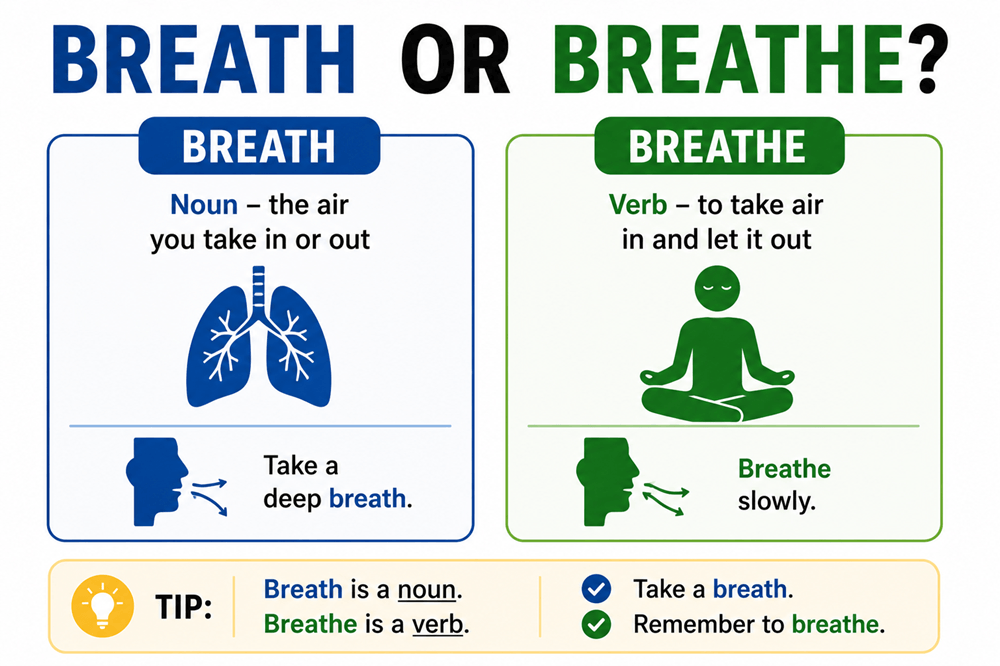
Breath and breathe are closely related, but they are not used the same way. Breath is a noun. It means the air you take into or push out of your lungs. Breathe is a verb. It means to take air in and let it out. The easiest rule is this: you take a breath, but you breathe.
Quick Answer
Use breath when you mean the air taken into or released from the lungs. It is a noun.
- Correct: Take a deep breath before you speak.
- Correct: His breath was visible in the cold air.
- Correct: She held her breath during the scary scene.
Use breathe when you mean the action of taking air in and letting it out. It is a verb.
- Correct: Try to breathe slowly.
- Correct: It was hard to breathe in the smoky room.
- Correct: Plants need air to breathe in their own way.
The simple rule is this: breath is a thing. Breathe is an action.
Breath or Breathe: What Is the Difference?
The difference between breath and breathe is grammar. Breath is a noun, which means it names something. Breathe is a verb, which means it describes an action.
A breath is one instance of air moving in or out of the body. You can take a breath, hold your breath, catch your breath, lose your breath, or feel someone’s breath.
Breathe is what you do when you inhale and exhale. You breathe deeply, breathe quietly, breathe through your nose, or breathe after running.
| Word | Part of Speech | Meaning | Example |
|---|---|---|---|
| Breath | Noun | Air taken in or let out | Take a breath. |
| Breathe | Verb | To take air in and let it out | Breathe slowly. |
If the sentence needs a noun, use breath. If the sentence needs an action, use breathe.
What Does Breath Mean?
Breath means the air that moves in or out of your lungs. It can refer to one inhale, one exhale, or the general air you release when you breathe.
Examples:
- Take a breath before answering.
- Her breath smelled like mint.
- The cold morning air made his breath visible.
- He paused to catch his breath after running upstairs.
In each sentence, breath is a thing. You can take it, hold it, smell it, see it in cold air, or lose it when something surprises you.
Breath also appears in many common expressions. These phrases are useful because they show how the noun works in everyday English.
- Take a breath.
- Hold your breath.
- Catch your breath.
- Out of breath.
- A breath of fresh air.
In all of these phrases, breath is the noun form. It does not describe the action itself. It names the air or the moment of breathing.
What Does Breathe Mean?
Breathe means to take air into the lungs and release it again. It is the action connected to breath.
Examples:
- Try to breathe through your nose.
- She could finally breathe after the test ended.
- The room was so crowded that it felt hard to breathe.
- He told himself to breathe slowly and stay calm.
In each sentence, breathe is something someone does. It is not a thing you can hold. It is an action.
Breathe can also be used in a less literal way. Sometimes it means to relax, pause, or have space.
- You need a quiet place to breathe.
- The design needs more white space so it can breathe.
- After a busy week, she wanted time to breathe.
In these sentences, breathe does not only mean the physical act of taking in air. It suggests room, calm, relief, or freedom from pressure.
Why Breath and Breathe Are Easy to Confuse
Breath and breathe are easy to confuse because they look almost the same. The only spelling difference is the final e. That small letter changes the word from a noun into a verb.
They are also pronounced differently. Breath has a shorter sound and rhymes with death. Breathe has a longer sound and rhymes with seethe. The final e helps signal the longer vowel sound.
- Breath sounds like “breth.”
- Breathe sounds like “breeth.”
The spelling and pronunciation difference matters because the two words play different roles in a sentence. If you write “take a breathe,” the sentence looks wrong because breathe is not the noun. If you write “I cannot breath,” the sentence also looks wrong because breath is not the verb.
When to Use Breath
Use breath when the sentence is talking about the air itself, a single inhale or exhale, or a breathing-related noun.
Examples:
- Take a deep breath.
- She held her breath underwater.
- He was out of breath after the race.
- The dog’s breath smelled terrible.
- A breath of cold air came through the window.
You can often spot breath because it appears after words like a, the, your, his, her, or their.
- a breath
- the breath
- your breath
- his breath
- her breath
If one of those words comes before the blank, you probably need breath.
When to Use Breathe
Use breathe when the sentence is talking about the action of inhaling and exhaling.
Examples:
- Please breathe normally.
- It hurts to breathe deeply.
- She stepped outside so she could breathe.
- He learned to breathe slowly when he felt nervous.
- The doctor asked him to breathe in and breathe out.
You can often spot breathe because it follows words like to, can, could, will, should, must, or cannot.
- to breathe
- can breathe
- could breathe
- will breathe
- should breathe
- cannot breathe
If the sentence needs an action after one of these words, breathe is usually correct.
Take a Breath or Take a Breathe?
The correct phrase is take a breath.
Correct:
- Take a breath before you answer.
- Take a deep breath and relax.
- She took a breath before walking on stage.
Incorrect:
- Take a breathe before you answer.
- Take a deep breathe and relax.
- She took a breathe before walking on stage.
This phrase needs a noun after a, so breath is correct. You take a thing, and that thing is a breath.
Cannot Breath or Cannot Breathe?
The correct phrase is cannot breathe.
Correct:
- I cannot breathe in this tight mask.
- She felt like she could not breathe.
- The room was so smoky that it was hard to breathe.
Incorrect:
- I cannot breath in this tight mask.
- She felt like she could not breath.
- The room was so smoky that it was hard to breath.
After can, cannot, could, or to, you need the verb form. That means breathe is correct.
Deep Breath or Deep Breathe?
The correct phrase is deep breath when you are talking about one full inhale or exhale.
Correct:
- Take a deep breath.
- He let out a deep breath.
- A deep breath helped her calm down.
Incorrect:
- Take a deep breathe.
- He let out a deep breathe.
- A deep breathe helped her calm down.
Deep describes the noun breath. If you want the verb, you would write breathe deeply.
- Correct: Take a deep breath.
- Correct: Breathe deeply.
These two phrases mean similar things, but they use different grammar.
Common Mistakes With Breath and Breathe
The most common mistake is using breath when the sentence needs the verb breathe.
Incorrect:
- Remember to breath slowly.
- It is hard to breath after running.
- She could finally breath again.
Correct:
- Remember to breathe slowly.
- It is hard to breathe after running.
- She could finally breathe again.
Another common mistake is using breathe when the sentence needs the noun breath.
Incorrect:
- Hold your breathe.
- He took a long breathe.
- Her breathe smelled like coffee.
Correct:
- Hold your breath.
- He took a long breath.
- Her breath smelled like coffee.
If you can put a, the, or your before the word, choose breath. If you can put to, can, or will before it, choose breathe.
Breath in Example Sentences
Here are examples of breath used correctly:
- Take a breath and start again.
- His breath fogged the glass.
- She held her breath as the door opened.
- The climb left everyone out of breath.
- A breath of fresh air came through the window.
- He spoke in a low voice, almost under his breath.
- The news took her breath away.
- Brush your teeth if your breath smells bad.
In each sentence, breath is a noun. It names the air, the act as a single thing, or a related idea.
Breathe in Example Sentences
Here are examples of breathe used correctly:
- Breathe in slowly and breathe out gently.
- He could barely breathe after the race.
- She opened the window so the room could breathe.
- Try to breathe through your nose.
- The doctor told him to breathe deeply.
- You need space to breathe and think.
- The fabric lets your skin breathe.
- She reminded herself to breathe before answering.
In each sentence, breathe is a verb. It describes an action or a sense of having room and relief.
Breathless and Breathing
Related forms can help you remember the difference. Breathless comes from breath. It describes someone who has little or no breath, usually because of exercise, excitement, fear, or surprise.
- The long run left him breathless.
- She was breathless with excitement.
- The view was so beautiful it felt breathless.
Breathing comes from breathe. It refers to the action or process of taking air in and letting it out.
- His breathing slowed after a few minutes.
- Deep breathing can help you feel calmer.
- The doctor listened to her breathing.
The related words follow the same pattern. Breath gives you noun-based words like breathless. Breathe gives you verb-based forms like breathing.
How to Remember Breath or Breathe
A simple way to remember the difference is this:
- Breath is a noun.
- Breathe is a verb.
You can also remember the common phrases:
- Take a breath.
- Hold your breath.
- Remember to breathe.
- Try to breathe slowly.
The final e in breathe can remind you of action. You need that extra letter when someone is doing something.
Another quick test is to replace the word with air or inhale. If air fits, use breath. If inhale or exhale fits, use breathe.
- Take a breath. Take air. That works, so use breath.
- Try to breathe. Try to inhale. That works, so use breathe.
Final Answer
Breath and breathe are both correct words, but they are used differently. Breath is a noun that means the air you take in or let out. Breathe is a verb that means to take air in and let it out.
The easiest rule is simple: take a breath, but breathe slowly. If you need a thing, use breath. If you need an action, use breathe.