Burned or Burnt: Difference, Correct Usage, Grammar, Examples, and Memory Tips Explained
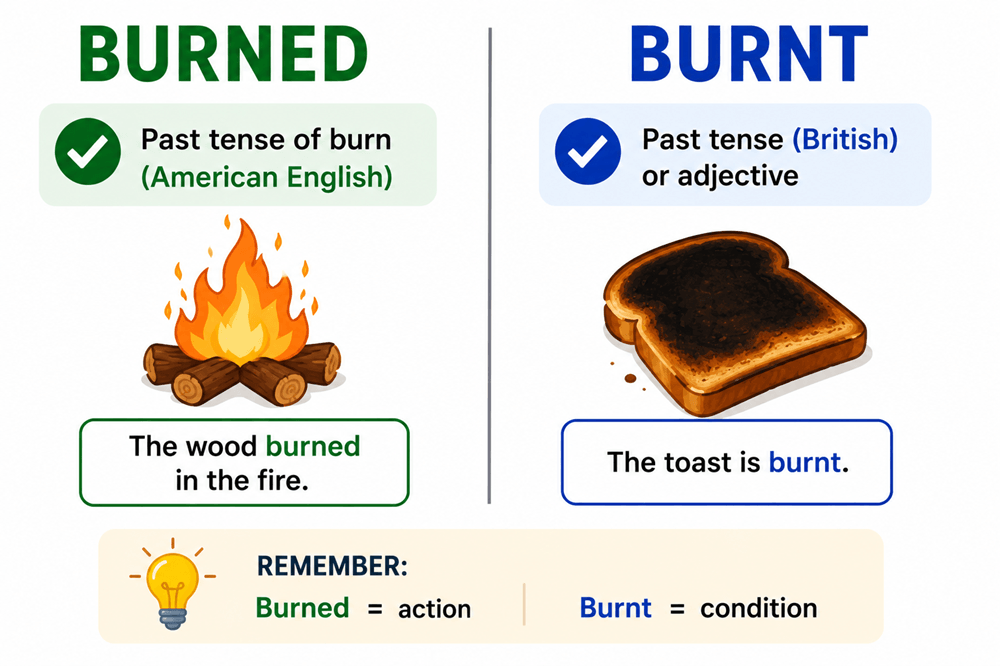
Burned and burnt are both correct, but they are not always used the same way. Burned is the standard past tense and past participle in American English. Burnt is more common in British English and is often used as an adjective before a noun, as in burnt toast or burnt sugar.
Quick Answer
Use burned as the safest past tense of burn.
- The candle burned for three hours.
- She burned her hand on the pan.
- The fire burned through the dry grass.
Use burnt mainly in British English or as an adjective meaning damaged, darkened, or changed by burning.
- The toast was burnt.
- The kitchen smelled like burnt sugar.
- He threw away the burnt paper.
The simple rule is: burned is the safest verb form, while burnt is common as an adjective.
Burned or Burnt: What Is the Difference?
The difference between burned and burnt is mostly style and usage. Both can describe something affected by fire, heat, acid, sunlight, or friction. Both can also work as past tense forms of burn.
However, burned is more common in American English for the verb. Burnt is more common in British English and often sounds more natural when describing the condition of something.
| Word | Best Use | Example |
|---|---|---|
| Burned | Standard verb form, especially American English | She burned the letter. |
| Burnt | British verb form or adjective | The burnt toast smelled bitter. |
If you are unsure, choose burned for the verb and burnt for a descriptive adjective.
What Does Burned Mean?
Burned is the regular past tense and past participle of burn. It means something was damaged, consumed, heated, marked, or affected by fire or heat.
Examples:
- The logs burned all night.
- He burned the old documents.
- She burned her finger on the stove.
- The sun burned his shoulders.
- The sauce burned because the heat was too high.
Burned can also be used in non-fire meanings. For example, someone can burn energy, burn calories, burn a bridge in a relationship, or burn a file onto a disc.
- The workout burned a lot of calories.
- He burned his bridges with the company.
- She burned the music onto a disc.
In American English, burned is usually the cleanest choice for these verb uses.
What Does Burnt Mean?
Burnt can also be the past tense or past participle of burn, especially in British English. It has the same basic meaning as burned when used as a verb.
Examples:
- The fire burnt for hours.
- She burnt the toast.
- The sun burnt his skin.
In American English, these sentences would usually use burned. However, burnt is very common as an adjective in both American and British English.
- burnt toast
- burnt sugar
- burnt wood
- burnt edges
- burnt orange
As an adjective, burnt often describes the result or condition after burning. It can suggest something is charred, darkened, smoky, bitter, or overcooked.
Spelling Structure: Burned Is Regular
Burned follows the regular English past tense pattern:
- burn + ed = burned
This is the same pattern used in many simple verbs:
- turn → turned
- learn → learned
- warm → warmed
- burn → burned
This spelling is easy to remember because the full word burn stays the same. You simply add -ed. If you want the most standard and predictable form, especially in American English, use burned.
Spelling Structure: Burnt Is Shorter and Irregular
Burnt is the shorter irregular form:
- burn + t = burnt
It follows the same kind of pattern as words like:
- learn → learnt
- dream → dreamt
- spell → spelt
- burn → burnt
These shorter -t forms are more common in British English. That makes burnt easier to remember as the British-style or adjective-friendly form.
When to Use Burned
Use burned when you are writing in American English or when you want the safest past tense verb.
- The fire burned quickly.
- She burned the cookies by accident.
- The lamp burned through the night.
- He burned his arm on the grill.
- The wildfire burned thousands of acres.
Burned works well in formal, casual, academic, and professional writing. It is also the better choice for most nonliteral uses.
- She burned through her savings.
- The team burned too much time on small details.
- He felt burned out after the long project.
When to Use Burnt
Use burnt when writing in British English, or when the word functions as an adjective before a noun.
- The burnt toast tasted bitter.
- The room smelled of burnt wood.
- The recipe calls for burnt sugar.
- She wore a burnt orange scarf.
In these examples, burnt describes the noun. It tells you what kind of toast, wood, sugar, or orange color is meant.
In American English, burned toast is also correct, but burnt toast often sounds more natural as a fixed descriptive phrase.
Burned Out or Burnt Out?
Both burned out and burnt out can be correct. In American English, burned out is more common. In British English, burnt out is common.
- American: She felt burned out after months of stress.
- British: She felt burnt out after months of stress.
If you are writing for a U.S. audience, choose burned out. If you are writing in British English, burnt out is also natural.
Common Mistakes
A common mistake is thinking one form is always wrong. Both burned and burnt are real words. The better choice depends on region and sentence role.
Another mistake is using burnt in American writing where burned would sound more standard as a verb.
Less common in American English:
- The fire burnt for hours.
More standard in American English:
- The fire burned for hours.
For adjectives, though, burnt often works well:
- The burnt toast set off the smoke alarm.
How to Remember Burned or Burnt
Use these memory tips:
- Burned = regular form: burn + ed.
- Burnt = shorter -t form, common in British English.
- Use burned for most verbs, especially in American English.
- Use burnt when describing something charred, overcooked, or changed by burning.
A simple memory sentence is: The fire burned, but the toast is burnt.
This helps because burned describes the action, while burnt often describes the result.
Final Answer
Burned and burnt are both correct. Burned is the safest past tense verb, especially in American English. Example: The candle burned for hours.
Burnt is more common in British English and is often used as an adjective. Example: The burnt toast smelled smoky.
To remember the difference, use this pattern: burn + ed = burned for the regular verb, and burn + t = burnt for the shorter adjective-like form.