Combatting or Combating: Correct Spelling, Usage, Grammar, Examples, and Memory Tips Explained
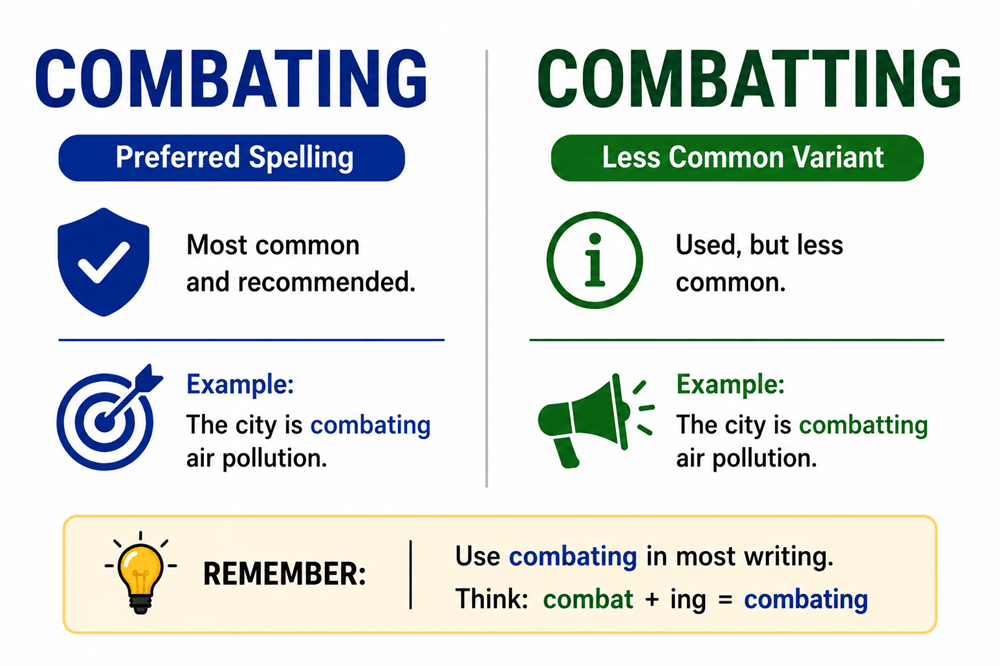
Combating is the more common and usually preferred spelling. Combatting is also used, but it is less common. Both words mean fighting against, resisting, or working to reduce something harmful. For most everyday, academic, business, and article writing, combating is the safer choice.
Quick Answer
Use combating as the standard spelling in most writing.
- The city is combating air pollution.
- The program focuses on combating loneliness.
- Doctors are combating the spread of disease.
Combatting is a less common variant, but it is not always wrong.
- The group is combatting online fraud.
- The campaign is combatting food waste.
The simple rule is: combating is preferred; combatting is a less common variant.
Combatting or Combating: What Is the Difference?
The difference between combatting and combating is spelling, not meaning. Both come from the verb combat, which means to fight, oppose, resist, or work against something.
| Word | Status | Example |
|---|---|---|
| Combating | Preferred spelling | The policy is aimed at combating poverty. |
| Combatting | Less common variant | The policy is aimed at combatting poverty. |
If you want the spelling that looks most natural to most readers, choose combating with one t.
What Does Combating Mean?
Combating means fighting against something or taking action to reduce, prevent, or stop it. It is often used for serious problems, harmful conditions, social issues, health risks, crime, misinformation, or emotional struggles.
Examples:
- The organization is combating hunger in rural areas.
- Schools are combating bullying with stronger support systems.
- The company is combating fraud with better security tools.
- Exercise can help in combating stress.
- Scientists are combating the effects of climate change.
In each sentence, combating means actively working against a problem. It does not always mean physical fighting. Most of the time, it means resisting or reducing something negative.
What Does Combatting Mean?
Combatting has the same meaning as combating. It is a spelling variant with double t. Some writers use it because the base word combat ends in t, and they assume the final consonant should be doubled before adding -ing.
Examples:
- The nonprofit is combatting homelessness.
- The article discusses combatting misinformation.
- The team is combatting low morale after layoffs.
These sentences are understandable. Still, combating is usually the cleaner and more expected spelling. If you are writing for a broad audience, combatting may look unusual even though it appears in real usage.
Spelling Structure: Why Combating Has One T
The preferred spelling combating is formed by adding -ing to combat without doubling the final t:
- combat + ing = combating
The reason is stress. In many English spelling patterns, the final consonant is doubled when the final syllable is stressed. For example:
- begin → beginning
- admit → admitting
- refer → referring
In combat, many speakers stress the first syllable more strongly:
- COM-bat
Because the final syllable is not usually the main stressed syllable, the final t is often not doubled. That gives the preferred form:
- combating
Why Combatting Looks Tempting
Combatting looks tempting because some words do double the final consonant before -ing. If you know forms like stopping, running, getting, and beginning, you may expect combat to become combatting.
But not every final consonant doubles. Compare these words:
- visit → visiting
- target → targeting
- limit → limiting
- combat → combating
These words do not usually double the final consonant because the final syllable is not strongly stressed. That pattern helps explain why combating is preferred.
When to Use Combating
Use combating in most normal writing. It is the best choice for articles, essays, reports, emails, professional writing, and general explanations.
- The campaign is combating drug abuse.
- Better education is important for combating misinformation.
- The new law is aimed at combating identity theft.
- Community programs can help with combating isolation.
- The software is useful for combating spam.
Combating sounds polished and familiar. It is especially useful when discussing serious efforts to solve a problem.
When to Use Combatting
Use combatting only if you are following a style guide, publication, organization, or source that prefers that spelling. You may also keep it if it appears in a direct quote, title, or official name.
- The report titled “Combatting Fraud in Digital Banking” was released last month.
- The organization uses the phrase “combatting hunger” in its campaign name.
If you are choosing freely, though, combating is usually better.
Common Mistakes
A common mistake is assuming combatting must be the only correct spelling because combat ends in t. English spelling is not that simple. The stress pattern matters.
Less preferred:
- The school is combatting bullying.
Preferred:
- The school is combating bullying.
Another mistake is switching between both spellings in the same article.
Inconsistent:
- The city is combating crime and combatting vandalism.
Consistent:
- The city is combating crime and combating vandalism.
Choose one form and stay consistent. For most writing, choose combating.
Combating vs Fighting
Combating and fighting are similar, but they do not always feel the same. Fighting is more general and can sound physical or emotional. Combating often sounds more formal, organized, or strategic.
| Word | Best Use | Example |
|---|---|---|
| Fighting | General opposition | They are fighting the disease. |
| Combating | Organized effort against a problem | They are combating the disease with research. |
Use combating when you want a more formal or serious tone.
How to Remember Combating
Use these memory tips:
- Combating is the preferred spelling.
- Think: combat + ing = combating.
- Do not double the t in normal writing.
- Connect it with similar forms: visit → visiting, target → targeting, combat → combating.
A simple memory sentence is: When combating a problem, keep the spelling simple: one t.
You can also remember it visually:
- combat + ing = combating
- one t in combat, one t in combating
Final Answer
Combating is the preferred spelling. It means fighting against, resisting, or working to reduce something harmful. Example: The city is combating pollution.
Combatting is a less common variant with the same meaning. It is not always wrong, but it may look less standard.
To remember the difference, use this rule: combat + ing = combating. For most WordBriefs-style writing, choose combating with one t.