Dreamt or Dreamed: Correct Past Tense, Meaning, Usage, and Examples Explained Clearly
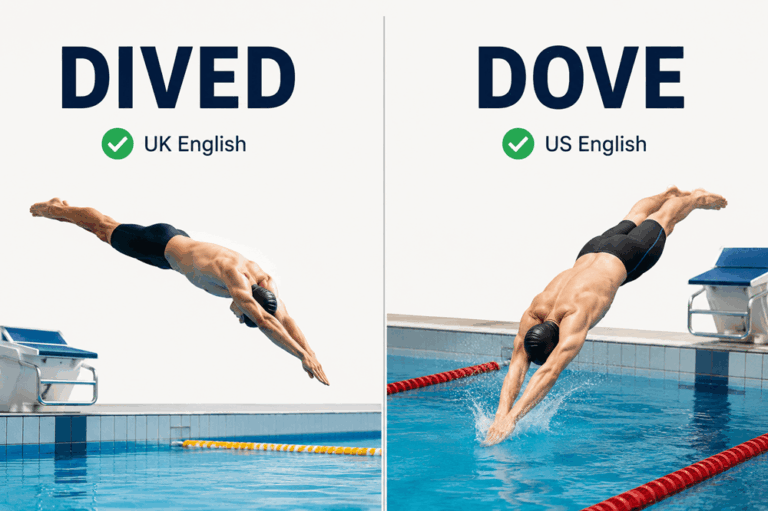
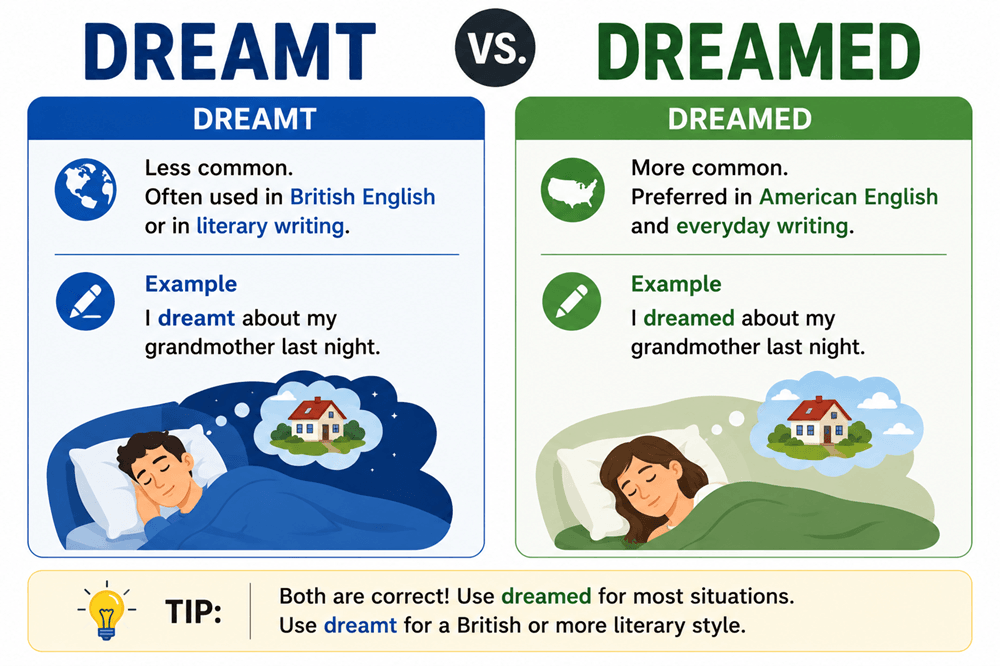
Dreamed and dreamt are both correct past-tense forms of the verb dream. Use dreamed if you want the most common and straightforward spelling, especially in American English. Use dreamt if you prefer a more British, literary, or traditional sound. Both words can mean had a dream while sleeping or imagined something while awake.
Quick Answer
Use dreamed in most everyday writing, especially in American English.
- I dreamed about the ocean last night.
- She always dreamed of becoming a doctor.
- They had dreamed about this moment for years.
Use dreamt when you want a British, poetic, or slightly more old-fashioned style.
- I dreamt about the ocean last night.
- She always dreamt of becoming a doctor.
- They had dreamt about this moment for years.
The simple rule is: dreamed is more common, while dreamt is also correct but often feels more British or literary.
Dreamt or Dreamed: What Is the Difference?
The difference between dreamt and dreamed is not meaning. Both words are past-tense and past-participle forms of dream. The difference is mainly spelling style, regional preference, and tone.
Dreamed is the regular form. It follows the normal English pattern of adding -ed to a verb:
- walk → walked
- talk → talked
- dream → dreamed
Dreamt is the irregular form. It is shorter and ends in -t, like some older English verb forms:
- learn → learnt
- spell → spelt
- dream → dreamt
| Word | Use | Example |
|---|---|---|
| Dreamed | Common in American English and general writing | She dreamed of a better future. |
| Dreamt | Common in British English and literary writing | She dreamt of a better future. |
If you are unsure which one to use, choose dreamed. It is widely accepted, easy to understand, and natural in most modern writing.
What Does Dreamed Mean?
Dreamed means had a dream during sleep, imagined something, hoped for something, or thought about a possibility. It is the most common past-tense form in American English.
Examples:
- I dreamed about flying over the city.
- He dreamed of owning a small cabin in the woods.
- She dreamed that she was late for school.
- They dreamed of building a peaceful life together.
- The child dreamed about dragons and castles.
Dreamed works well in casual writing, formal writing, school assignments, blog posts, emails, stories, and everyday speech. It is the safest spelling for a wide audience.
What Does Dreamt Mean?
Dreamt means the same thing as dreamed. It can also mean had a dream, imagined something, hoped for something, or pictured something in the mind.
Examples:
- I dreamt about flying over the city.
- He dreamt of owning a small cabin in the woods.
- She dreamt that she was late for school.
- They dreamt of building a peaceful life together.
- The child dreamt about dragons and castles.
Dreamt often sounds a little softer, older, or more poetic than dreamed. It is common in British English and also appears in creative writing, song-like phrasing, and reflective prose.
Is Dreamed Correct?
Yes, dreamed is correct. It is the regular past tense and past participle of dream.
Use dreamed in sentences like these:
- She dreamed about her childhood home.
- I have dreamed of visiting Italy for years.
- He dreamed up a clever solution.
- They had dreamed of this day since they were young.
For American English, dreamed is usually the better choice. It looks natural and does not draw attention to itself.
Is Dreamt Correct?
Yes, dreamt is also correct. It is an irregular past-tense and past-participle form of dream.
Use dreamt in sentences like these:
- She dreamt about her childhood home.
- I have dreamt of visiting Italy for years.
- He dreamt up a clever solution.
- They had dreamt of this day since they were young.
Dreamt is especially common in British English. It can also be a good choice when you want a more literary or old-fashioned tone.
Dreamed in American English
In American English, dreamed is the usual form. Most American readers expect it in everyday writing.
American English examples:
- I dreamed about snow last night.
- She dreamed of becoming a writer.
- He had dreamed about that house for years.
- The idea was bigger than anything they had dreamed.
If your writing uses American spellings such as color, center, traveled, and labeled, then dreamed will usually fit your style best.
Dreamt in British English
In British English, both forms can appear, but dreamt is more common than it is in American English. British readers are more likely to see dreamt as natural rather than unusual.
British English examples:
- I dreamt about snow last night.
- She dreamt of becoming a writer.
- He had dreamt about that house for years.
- The idea was bigger than anything they had dreamt.
If your writing uses British spellings such as colour, centre, travelled, and labelled, then dreamt may fit naturally.
Dreamed and Dreamt as Past Participles
Both dreamed and dreamt can also be past participles. That means they can appear after helping verbs such as has, have, and had.
Examples with dreamed:
- I have dreamed about this before.
- She has dreamed of opening a bakery.
- They had dreamed of moving to the coast.
Examples with dreamt:
- I have dreamt about this before.
- She has dreamt of opening a bakery.
- They had dreamt of moving to the coast.
Both sets are grammatically correct. The choice depends on the style of English you are using.
Dreamed About or Dreamed Of?
Both dreamed about and dreamed of are correct, but they can feel slightly different.
Dreamed about often refers to something that appeared in a dream during sleep.
- I dreamed about my old school last night.
- She dreamed about a strange house.
Dreamed of often refers to hopes, wishes, or imagined futures.
- He dreamed of becoming a musician.
- They dreamed of a quiet life by the sea.
The same pattern works with dreamt:
- I dreamt about my old school last night.
- He dreamt of becoming a musician.
Dreamed Up or Dreamt Up?
The phrasal verb dream up means to invent, imagine, or create an idea. Both past forms can be used.
Examples:
- She dreamed up a new design.
- She dreamt up a new design.
- The team dreamed up a clever marketing plan.
- The team dreamt up a clever marketing plan.
In American English, dreamed up will usually look more natural. In British English or creative writing, dreamt up can also sound natural.
Examples of Dreamed in Sentences
Here are natural examples of dreamed used correctly:
- I dreamed about my grandmother last night.
- She dreamed of living near the ocean.
- He dreamed that he could fly.
- The children dreamed about a magical forest.
- They dreamed of starting their own business.
- We had dreamed about that trip for months.
- The inventor dreamed up a strange new machine.
- She never dreamed the small idea would become so successful.
These examples sound especially natural in American English and general modern writing.
Examples of Dreamt in Sentences
Here are natural examples of dreamt used correctly:
- I dreamt about my grandmother last night.
- She dreamt of living near the ocean.
- He dreamt that he could fly.
- The children dreamt about a magical forest.
- They dreamt of starting their own business.
- We had dreamt about that trip for months.
- The inventor dreamt up a strange new machine.
- She never dreamt the small idea would become so successful.
These examples may sound more British, literary, or reflective depending on the reader.
Common Mistakes to Avoid
The biggest mistake is assuming one form is always wrong. Dreamed and dreamt are both correct.
Correct:
- I dreamed about you last night.
- I dreamt about you last night.
Another mistake is mixing forms randomly in the same piece of writing.
Inconsistent:
- She dreamed of success, but she had dreamt of failure the night before.
Better:
- She dreamed of success, but she had dreamed of failure the night before.
Or:
- She dreamt of success, but she had dreamt of failure the night before.
Both versions are correct. The key is consistency unless you have a stylistic reason to switch.
How to Remember Dreamt or Dreamed
Here is an easy way to remember the difference:
Dreamed is regular and common.
Dreamt is shorter and often sounds more British or poetic.
- Dreamed = common, regular, American English
- Dreamt = also correct, British or literary style
You can also remember this sentence:
If you want the safest modern spelling, use dreamed.
Final Answer
Dreamed and dreamt are both correct past-tense and past-participle forms of dream. Use dreamed for the most common modern spelling, especially in American English. Use dreamt if you are writing in British English or want a more literary, traditional, or poetic tone. Both words can mean had a dream while sleeping, imagined something, or hoped for something.