Greatful or Grateful: Correct Spelling, Meaning, Usage, and Easy Examples Explained Clearly
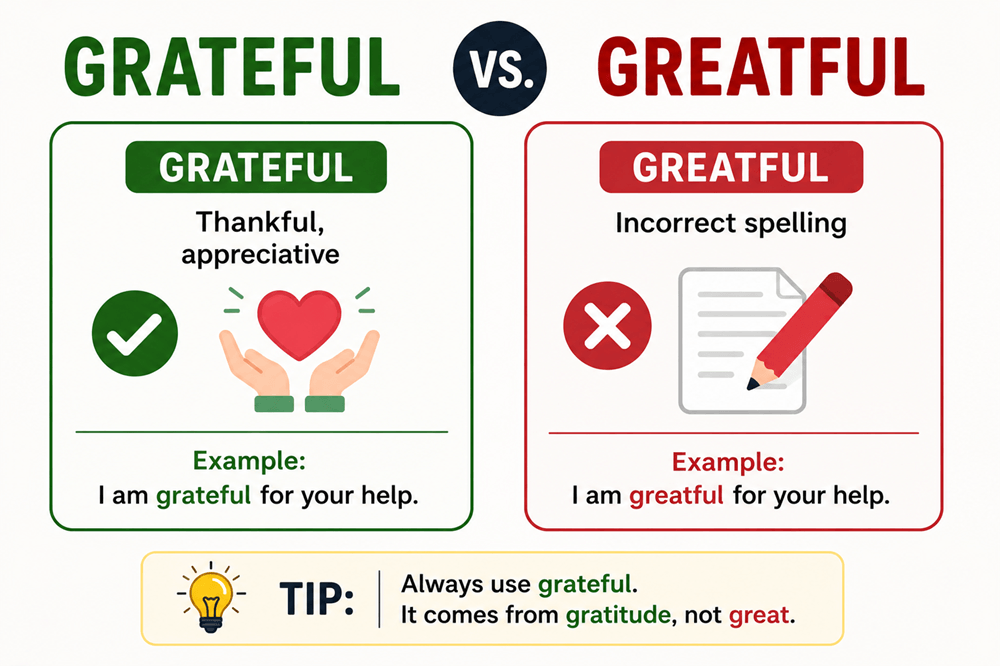
The correct spelling is grateful. Greatful is a common misspelling and should not be used in standard English. Even though grateful sounds a little like it could come from great, it is spelled with grat, not great. Use grateful when you mean thankful, appreciative, or pleased because someone helped you or something good happened.
Quick Answer
Use grateful, not greatful.
- Correct: I am grateful for your help.
- Incorrect: I am greatful for your help.
Grateful means thankful or appreciative. Greatful is not the correct spelling.
Greatful or Grateful: Which One Is Correct?
Grateful is correct. Greatful is incorrect.
This mistake is easy to understand because the word sounds positive, and great is also a positive word. Since being grateful can feel great, many writers accidentally spell it as greatful. However, the correct spelling has nothing to do with the word great. The correct form is grateful.
| Word | Correct? | Meaning |
|---|---|---|
| Grateful | Yes | Thankful or appreciative |
| Greatful | No | A common misspelling of grateful |
If you are writing a thank-you note, email, card, speech, message, caption, essay, or formal letter, the word you need is grateful.
What Does Grateful Mean?
Grateful is an adjective. It describes someone who feels thankful or appreciative. You can feel grateful for a person, a gift, an opportunity, a kind action, a memory, a lesson, or a good result.
Examples:
- I am grateful for your support.
- She felt grateful for the second chance.
- They were grateful to be safe.
- He is grateful that his friends helped him.
- We are grateful for everything you did.
In each example, grateful shows appreciation. It does not mean something is large, excellent, or impressive. That is the job of great, not grateful.
Why Greatful Is Incorrect
Greatful is incorrect because the word is not formed from great plus -ful. The correct spelling is grateful, without the e after gr.
Many English words ending in -ful are formed from familiar base words:
- hope → hopeful
- care → careful
- help → helpful
- thank → thankful
Because of this pattern, greatful may look natural. But English does not spell the word that way. The standard spelling is always grateful.
Grateful vs Great
Grateful and great are different words.
Great can mean excellent, large, important, or impressive.
- That was a great idea.
- She did a great job.
- They had a great time.
Grateful means thankful or appreciative.
- I am grateful for your kindness.
- She is grateful for the opportunity.
- They were grateful to everyone who helped.
You can use both words in the same sentence if they serve different meanings.
- I am grateful for such a great opportunity.
- She felt grateful after a great conversation.
In those examples, grateful shows thankfulness, while great describes the quality of something.
Grateful vs Thankful
Grateful and thankful are very close in meaning. Both words can mean appreciative or glad because of something good.
Examples:
- I am grateful for your help.
- I am thankful for your help.
Both sentences are correct. However, grateful often feels a little more personal, emotional, or reflective. Thankful can sound simpler and more direct.
Examples:
- She felt deeply grateful for her family’s support.
- He was thankful the storm passed quickly.
The difference is small, and the words often overlap. The important spelling point is that grateful is not spelled greatful.
Examples of Grateful in Sentences
Here are natural examples of grateful used correctly:
- I am grateful for your patience.
- She was grateful for the warm welcome.
- They felt grateful after receiving so much support.
- He is grateful that the problem was solved.
- We are grateful to everyone who donated.
- The students were grateful for the extra time.
- I will always be grateful for that advice.
- She gave him a grateful smile.
In every sentence, grateful expresses thankfulness or appreciation.
Grateful For or Grateful To?
Both grateful for and grateful to are correct, but they are used slightly differently.
Use grateful for when naming the thing, action, event, or situation you appreciate.
- I am grateful for your help.
- She is grateful for the opportunity.
- They were grateful for the good news.
Use grateful to when naming the person or group you appreciate.
- I am grateful to my teacher.
- We are grateful to the volunteers.
- She was grateful to her parents.
You can also use both together:
- I am grateful to you for your kindness.
- We are grateful to the staff for their hard work.
Grateful That
You can use grateful that before a full clause. This structure is helpful when you want to explain a situation you appreciate.
Examples:
- I am grateful that you told me the truth.
- She was grateful that the meeting ended early.
- They are grateful that everyone arrived safely.
- He felt grateful that he had another chance.
In these sentences, grateful that introduces the reason for the feeling of appreciation.
Common Phrases With Grateful
Grateful appears in many common phrases. These are useful in everyday writing, personal messages, and formal communication.
- grateful for your help
- grateful for your support
- grateful for the opportunity
- deeply grateful
- truly grateful
- forever grateful
- grateful to everyone
- grateful beyond words
Examples:
- We are deeply grateful for your kindness.
- I am truly grateful for the chance to speak today.
- She will be forever grateful for their support.
These phrases can sound warm, sincere, and respectful when used carefully.
Common Mistakes to Avoid
The biggest mistake is spelling grateful as greatful.
Incorrect:
- I am greatful for your time.
- She felt greatful for the help.
- We are greatful to the team.
Correct:
- I am grateful for your time.
- She felt grateful for the help.
- We are grateful to the team.
Another mistake is confusing grateful with great.
Incorrect:
- I am great for your help.
Correct:
- I am grateful for your help.
Great describes quality. Grateful describes thankfulness.
How to Remember Grateful
Here is an easy way to remember the spelling:
Grateful is about gratitude, not greatness.
The word gratitude begins with grat, and so does grateful.
- gratitude
- grateful
You can also remember this sentence:
If you feel gratitude, you are grateful.
That memory trick can help you avoid writing greatful.
Final Answer
Grateful is the correct spelling. Greatful is a common misspelling and should be avoided. Use grateful when you mean thankful, appreciative, or pleased because of help, kindness, support, or a good situation. Remember: grateful comes from the idea of gratitude, not the word great.