Verbiage or Verbage: Correct Spelling, Meaning, Usage, Examples, and Memory Tips Explained
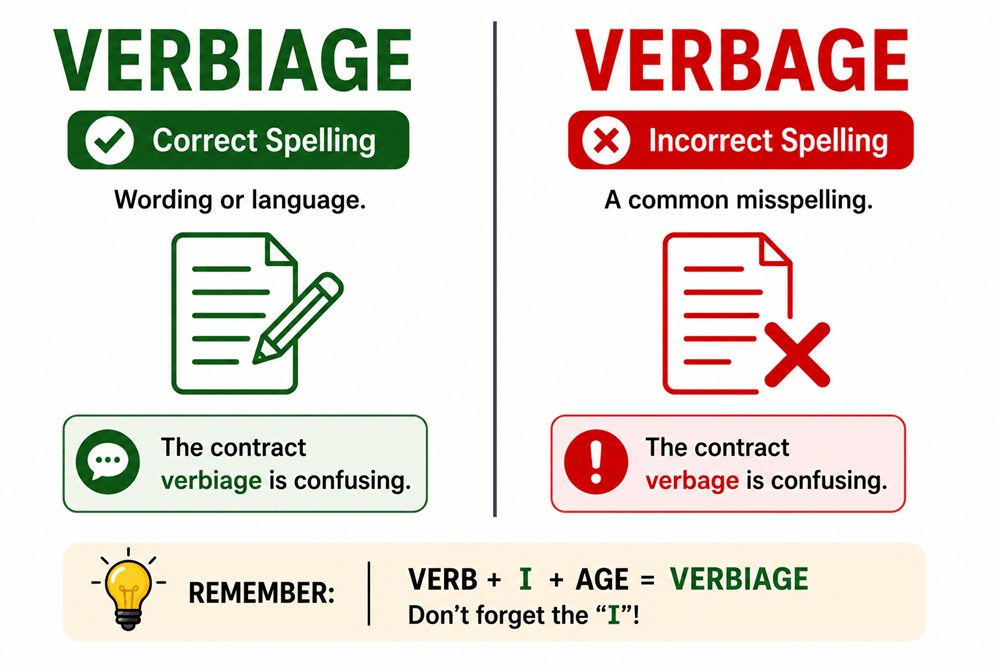
Verbiage is the correct spelling. Verbage is a common misspelling. Use verbiage when you mean wording, phrasing, language, or an overly wordy way of saying something. The key spelling clue is simple: verbiage has “bi” in the middle, not just “ba.”
Quick Answer
Use verbiage, not verbage.
- Correct: The contract verbiage is confusing.
- Correct: Please revise the verbiage in this paragraph.
- Correct: The website uses too much technical verbiage.
Verbage is not the standard spelling.
- Incorrect: The contract verbage is confusing.
- Incorrect: Please revise the verbage in this paragraph.
The simple rule is: verbiage is correct, and verbage is a misspelling.
Verbiage or Verbage: What Is the Difference?
The difference between verbiage and verbage is spelling. Verbiage is the correct noun. Verbage is a spelling error that happens because people connect the word with verb and assume the spelling should be shorter.
| Word | Status | Example |
|---|---|---|
| Verbiage | Correct spelling | The legal verbiage was hard to understand. |
| Verbage | Incorrect spelling | The legal verbage was hard to understand. |
If you are writing for school, work, contracts, editing notes, marketing copy, emails, or website content, always use verbiage.
What Does Verbiage Mean?
Verbiage means wording or language. It often refers to the exact words used in a sentence, document, speech, policy, contract, advertisement, or message.
Examples:
- The verbiage in the policy needs to be clearer.
- She changed the verbiage to sound more professional.
- The email’s verbiage felt too formal.
- The proposal used vague verbiage.
- The lawyer reviewed the contract verbiage carefully.
Verbiage can be neutral, meaning simply “wording.” However, it can also have a negative meaning. Sometimes it refers to language that is too wordy, complicated, inflated, or unnecessary.
- The report was buried under too much verbiage.
- Cut the extra verbiage and make the point clearer.
- The instructions are simple, but the verbiage makes them seem difficult.
So verbiage can mean either wording in general or excessive wording, depending on the sentence.
What Does Verbage Mean?
Verbage is a misspelling of verbiage. It is understandable because the word sounds as if it might be connected directly to verb. Since verb is a familiar grammar word, many writers accidentally remove the i.
Examples:
- Incorrect: The brochure verbage should be shorter.
- Correct: The brochure verbiage should be shorter.
- Incorrect: I do not like the verbage in that sentence.
- Correct: I do not like the verbiage in that sentence.
Even though readers may understand verbage, it looks incorrect in polished writing. The correct spelling is always verbiage.
Spelling Structure: Why Verbiage Has an I
The spelling of verbiage can feel odd because people expect the word to look like verb plus age:
- verb + age = verbage
That looks logical, but it is not correct. The standard spelling includes an extra i:
- verb + i + age = verbiage
The correct structure is:
- ver + bi + age = verbiage
The middle part is the clue:
- Correct: verbiage
- Incorrect: verbage
To spell it correctly, remember that verbiage needs the little “i” before “age.”
Why People Misspell Verbiage as Verbage
People often misspell verbiage because the word looks as if it should be built from verb. Since verb already means an action word, and verbiage is related to words and language, the shorter spelling feels natural.
The problem is that verbiage is not spelled the way many people expect. The pronunciation may also hide the middle i. When spoken quickly, verbiage can sound close to verbage, so the missing letter is easy to overlook.
The best fix is to memorize the center of the word:
- verbiage = verb + i + age
If the word has no i, it is missing an important spelling piece.
When to Use Verbiage
Use verbiage when talking about the words used in a piece of writing or speech.
- The verbiage in the announcement sounds too stiff.
- We need friendlier verbiage for the landing page.
- The teacher asked him to simplify the verbiage.
- The terms include specific legal verbiage.
- The editor improved the verbiage without changing the meaning.
Use verbiage carefully. In some contexts, it can sound slightly critical because it may suggest too many words. If you only mean “wording,” wording may be simpler and clearer.
- Simple: Please change the wording.
- More formal: Please change the verbiage.
Verbiage vs Wording
Verbiage and wording are similar, but they do not always feel the same. Wording is simple and neutral. Verbiage sounds more formal and can sometimes suggest wordiness.
| Word | Best Use | Example |
|---|---|---|
| Wording | Clear, everyday choice | The wording is easy to understand. |
| Verbiage | Formal wording or excessive language | The document contains confusing verbiage. |
If you want a plain word, choose wording. If you are discussing formal language, legal text, editing, or wordy writing, verbiage can work well.
Common Mistakes
The most common mistake is leaving out the i.
Incorrect:
- The contract verbage is unclear.
- That sentence has awkward verbage.
- The ad verbage should be more direct.
Correct:
- The contract verbiage is unclear.
- That sentence has awkward verbiage.
- The ad verbiage should be more direct.
Another mistake is overusing verbiage when a simpler word would do. For a general audience, words, language, or wording may sound more natural.
How to Remember Verbiage
Use these memory tips:
- Verbiage has i before age.
- Think: verb + i + age = verbiage.
- Verbage is missing the i.
- The word is about language, so imagine the i standing for information or ideas.
A simple memory sentence is: Verbiage needs “I” in the middle of the words.
You can also remember it visually:
- verbiage
- The correct word has bi, not just b.
Final Answer
Verbiage is the correct spelling. It means wording, language, phrasing, or sometimes excessive wordiness. Example: The contract verbiage is confusing.
Verbage is a misspelling and should be avoided. To remember the correct spelling, use the structure verb + i + age = verbiage. The small i in the middle is the key.