Chose or Choose: Correct Tense Difference, Meaning, Usage, and Examples Explained Clearly
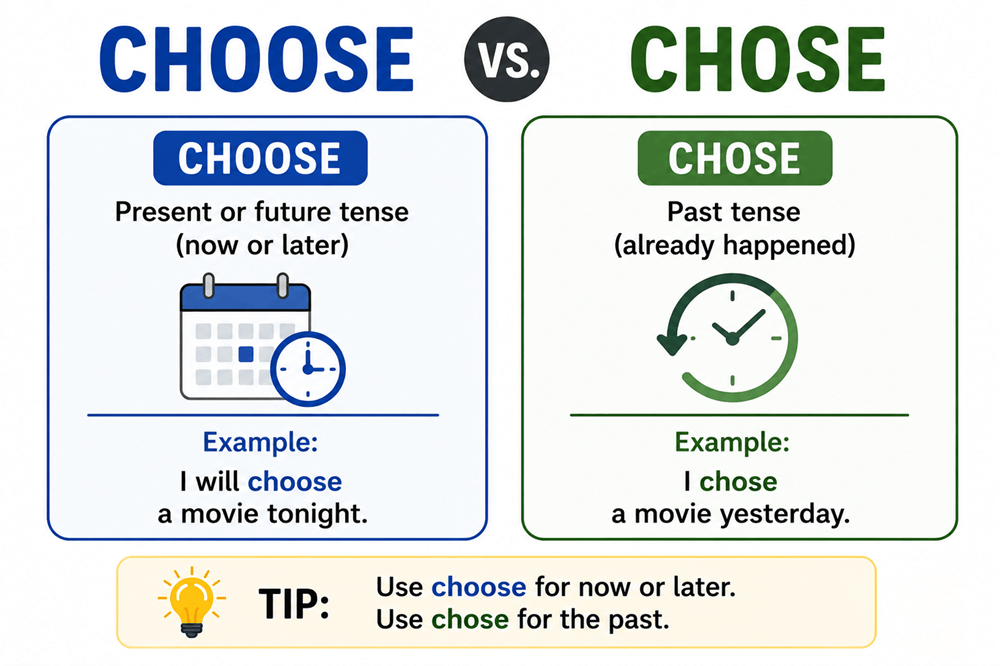
Choose and chose are both correct words, but they are used in different tenses. Use choose for the present tense, future tense, or base form of the verb. Use chose for the simple past tense. The easiest rule is: you choose now, but you chose before.
Quick Answer
Use choose when the action is happening now, will happen later, or follows words like to, will, can, should, or must.
- I choose the blue shirt.
- You can choose any seat.
- She will choose a topic tomorrow.
Use chose when the action already happened in the past.
- I chose the blue shirt yesterday.
- They chose a new team leader last week.
- She chose the safest option.
The simple rule is: choose is present or base form. Chose is past tense.
Chose or Choose: What Is the Difference?
The difference between chose and choose is tense. Both words come from the same verb, but they tell the reader when the action happens.
Choose is the present tense and base form of the verb. It means to pick, select, decide between options, or make a choice.
Chose is the simple past tense of choose. It means someone picked, selected, or decided something before now.
| Word | Tense | Meaning | Example |
|---|---|---|---|
| Choose | Present/base form | Pick or select now, later, or generally | I choose this one. |
| Chose | Simple past tense | Picked or selected before now | I chose this one yesterday. |
If the decision is happening now or has not happened yet, use choose. If the decision already happened, use chose.
What Does Choose Mean?
Choose means to pick one thing, person, action, or option from two or more possibilities. It is the present tense form and the base form of the verb.
Examples:
- I choose kindness whenever I can.
- You may choose your own topic.
- They choose fresh ingredients every morning.
- We need to choose a date for the meeting.
- She will choose a dress for the party.
In these sentences, choose refers to a present, future, repeated, or general decision. The action is not simply finished in the past.
What Does Chose Mean?
Chose means picked, selected, or decided. It is the simple past tense of choose.
Examples:
- I chose the red notebook.
- She chose to stay home.
- They chose the cheaper plan.
- We chose a quiet restaurant.
- He chose his words carefully.
In these examples, the choosing already happened. The decision is complete, so chose is the correct word.
Why Choose and Chose Are Confusing
Choose and chose are confusing because they are spelled almost the same. The only difference is one extra o in choose. They also sound different, but the spelling difference can still trip people up when writing quickly.
Choose rhymes with news, shoes, and lose.
Chose rhymes with rose, goes, and knows.
The spelling can be remembered this way: choose has two os because you may have two options in front of you. Chose has one o because the choice is already done.
Choose in the Present Tense
Use choose when the subject is I, you, we, or they in the present tense.
- I choose simple words when I write.
- You choose the music.
- We choose our own seats.
- They choose quality over speed.
When the subject is he, she, or it, use chooses.
- He chooses his clothes carefully.
- She chooses the best answer.
- The company chooses local suppliers.
Do not use chose for present-tense action.
Incorrect:
- She chose her outfit every morning.
Correct:
- She chooses her outfit every morning.
Choose With Future Tense
Use choose after will, can, may, should, must, and similar helping verbs.
- We will choose a winner tomorrow.
- You can choose any dessert.
- She may choose a different path.
- They should choose carefully.
- He must choose between the two offers.
After these helping verbs, use the base form choose, not chose.
Incorrect:
- You can chose any dessert.
- We will chose a winner tomorrow.
Correct:
- You can choose any dessert.
- We will choose a winner tomorrow.
Choose After “To”
Use choose after to when forming an infinitive.
- She wants to choose her own classes.
- They decided to choose a new name.
- He needs to choose a password.
- We hope to choose the final design soon.
The phrase is always to choose, not to chose.
Incorrect:
- She wants to chose her own classes.
Correct:
- She wants to choose her own classes.
Chose in the Past Tense
Use chose when the action happened before now. Words like yesterday, last week, last year, earlier, before, and already often signal past tense.
- She chose the topic yesterday.
- They chose a new office last month.
- We chose the movie before dinner.
- He chose the wrong road earlier.
- I already chose my seat.
In these sentences, the decision is finished. That is why chose is correct.
Chosen vs Chose
Chosen is another form of the same verb. It is the past participle of choose. Use chosen with helping verbs such as has, have, had, is, was, or were.
- She has chosen a topic.
- They have chosen a new leader.
- We had chosen the first option.
- The winner was chosen by the judges.
Do not use chose after has, have, or had.
Incorrect:
- She has chose a topic.
- They have chose a new leader.
Correct:
- She has chosen a topic.
- They have chosen a new leader.
The basic verb forms are:
- choose = present/base form
- chose = simple past
- chosen = past participle
Examples of Choose in Sentences
Here are natural examples of choose used correctly:
- I choose the option that feels most practical.
- You can choose your own seat.
- We need to choose a better time.
- They often choose comfort over style.
- She will choose a college next spring.
- Please choose one answer from the list.
- He may choose to wait.
- Good writers choose words carefully.
These examples use choose for present action, future action, general habits, commands, and base-form grammar.
Examples of Chose in Sentences
Here are natural examples of chose used correctly:
- She chose the blue dress.
- They chose a quiet table near the window.
- He chose to forgive them.
- I chose the first answer by mistake.
- We chose this house because of the garden.
- The students chose their partners yesterday.
- The manager chose the safest plan.
- She chose her words carefully during the interview.
Each example refers to a completed decision in the past.
Common Phrases With Choose
Choose appears in many common phrases about decisions and options.
- choose wisely
- choose carefully
- choose between
- choose from
- choose to stay
- choose your words
- choose a side
- choose one
Examples:
- Please choose carefully.
- You must choose between the two plans.
- She tries to choose her words kindly.
Common Phrases With Chose
Chose appears when those choices already happened.
- chose wisely
- chose carefully
- chose between
- chose from
- chose to stay
- chose his words
- chose a side
- chose one
Examples:
- She chose wisely.
- They chose between the two plans.
- He chose his words carefully.
The phrase changes only because the tense changes.
Common Mistakes to Avoid
The most common mistake is using chose when the sentence needs choose.
Incorrect:
- You can chose your own seat.
- She wants to chose a new topic.
- We will chose a winner soon.
Correct:
- You can choose your own seat.
- She wants to choose a new topic.
- We will choose a winner soon.
Another mistake is using choose when the sentence needs past tense.
Incorrect:
- She choose the red bag yesterday.
- They choose the winner last night.
Correct:
- She chose the red bag yesterday.
- They chose the winner last night.
If the action already happened, use chose. If the sentence uses can, will, should, must, or to, use choose.
How to Remember Chose or Choose
Here is an easy way to remember the difference:
Choose has two o’s because you still have options.
Chose has one o because the choice is already over.
- Choose = present, future, or base form
- Chose = past tense
- Chosen = used with has, have, or had
You can also remember this sentence:
Today I choose; yesterday I chose.
Final Answer
Choose and chose are both correct, but they belong to different tenses. Use choose for the present tense, future tense, commands, and base form after words like to, will, can, and should. Use chose for the simple past tense. Remember: you choose now, but you chose before.