Sown or Sewn: What’s the Difference?
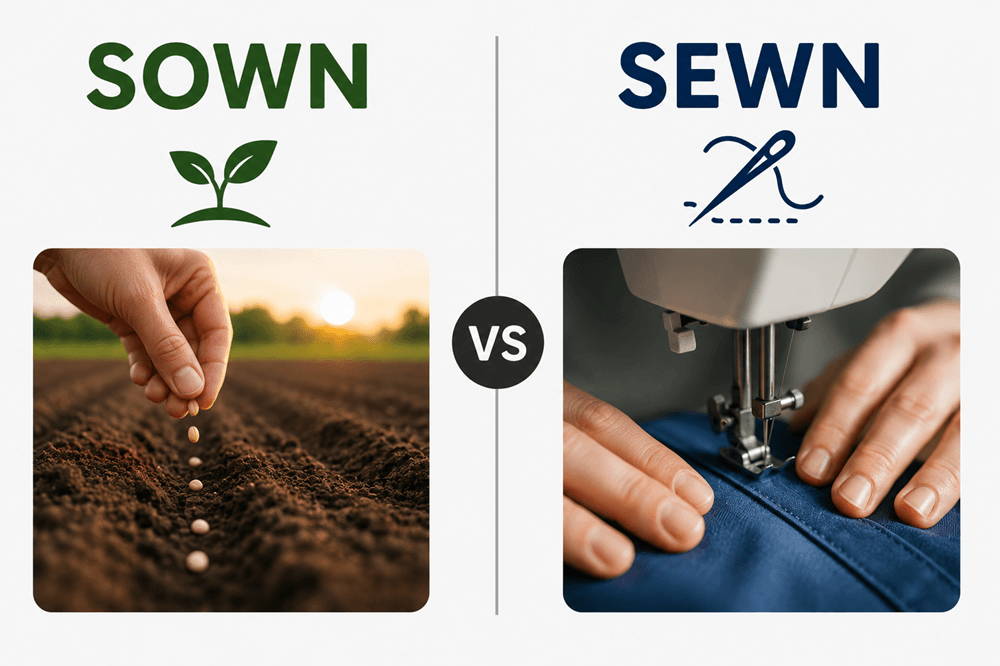
Sown and sewn are both correct words, but they mean different things.
Sown comes from sow, which means to plant seeds.
Sewn comes from sew, which means to stitch fabric with a needle and thread.
Examples:
Correct: The farmer had sown seeds in the field.
Correct: She had sewn a button onto her shirt.
Correct: Wildflowers were sown along the path.
Correct: The dress was hand-sewn.
The words sound the same, but the spelling tells you the meaning. If you mean planting, use sown. If you mean stitching, use sewn.
What Does Sown Mean?
Sown is the past participle of sow. It usually means seeds have been planted or scattered.
Examples:
The field was sown with wheat.
The grass seed was sown in early spring.
The garden had been sown before the rain.
The farmer has sown corn in the lower field.
In these sentences, sown is about planting seeds.
Sown can also be used in a figurative way. It can mean that an idea, feeling, problem, or result has been started.
Examples:
The speech sown doubt among voters.
Better: The speech sowed doubt among voters.
Seeds of fear had been sown by the rumor.
The company’s early choices had sown confusion.
In figurative use, sown often appears in phrases like seeds of doubt, seeds of fear, or seeds of change.
What Does Sewn Mean?
Sewn is the past participle of sew. It means stitched or joined with thread.
Examples:
The shirt was sewn by hand.
She had sewn the patch onto her jacket.
The curtains were carefully sewn.
The costume was homemade and hand-sewn.
In these sentences, sewn is about fabric, thread, and stitching.
Use sewn for clothes, buttons, curtains, blankets, quilts, costumes, patches, seams, and fabric repairs.
Sown vs Sewn: The Main Difference
The main difference is meaning.
Sown = planted seeds
Sewn = stitched fabric
Examples:
Correct: The field was sown with barley.
Correct: The sleeve was sewn back onto the coat.
Correct: Seeds were sown in the garden.
Correct: The quilt was sewn by her grandmother.
If the sentence is about farming, gardening, seeds, or planting, use sown.
If the sentence is about clothes, fabric, needles, thread, or stitching, use sewn.
Why Are Sown and Sewn Confusing?
Sown and sewn are confusing because they are homophones. That means they sound alike but have different spellings and meanings.
They are also both past participles, so they often appear after helping verbs like has, have, had, is, was, or were.
Examples:
The seeds have been sown.
The buttons have been sewn.
The field was sown yesterday.
The dress was sewn by hand.
The sound is the same, but the context is different.
How to Remember Sown
Use sown when you mean sow seeds.
A helpful memory trick:
Sown has own in it.
A farmer can own a field where seeds are sown.
You can also connect the spelling to the base word:
sow → sown
The word sow means to plant seeds. Add n, and you get sown.
Examples:
sow seeds
sown seeds
a sown field
freshly sown grass
If you see seeds, soil, crops, grass, gardens, or fields, think sown.
How to Remember Sewn
Use sewn when you mean sew fabric.
A helpful memory trick:
Sewn starts with sew.
That makes the meaning easier to see:
sew → sewn
Examples:
sew a button
sewn button
sewn dress
hand-sewn quilt
If you see thread, fabric, clothing, buttons, seams, or needles, think sewn.
Sown Examples
Use sown for planting or spreading seeds.
Examples:
The field was sown before the storm.
The farmer had sown wheat across the land.
Grass seed was sown in the backyard.
The flower seeds were sown in neat rows.
The land had been freshly sown.
You can also use sown for ideas or consequences.
Examples:
The decision had sown confusion.
Seeds of doubt had been sown early.
The movement sown hope in the community.
Better: The movement sowed hope in the community.
A quick note: in simple past tense, sowed is usually more natural than sown.
Sewn Examples
Use sewn for stitching or fabric work.
Examples:
The dress was sewn from blue cotton.
The patch was sewn onto the backpack.
The torn pocket had been sewn closed.
She wore a hand-sewn costume.
The curtains were neatly sewn.
In all of these sentences, sewn means stitched with thread.
Sowed vs Sown
Sowed is usually the simple past tense of sow.
Sown is usually the past participle.
Examples:
Correct: The farmer sowed seeds yesterday.
Correct: The farmer has sown seeds every spring.
Correct: The field was sown with wheat.
You may sometimes see sowed used as a past participle too.
Example:
The farmer has sowed seeds before.
This is understandable, but sown is often the more polished past participle.
A simple pattern:
Yesterday, he sowed seeds.
He has sown seeds.
The field was sown.
Sewed vs Sewn
Sewed is the simple past tense of sew.
Sewn is the past participle.
Examples:
Correct: She sewed a button yesterday.
Correct: She has sewn many dresses.
Correct: The button was sewn tightly.
You may also see sewed used as a past participle.
Example:
She has sewed many dresses.
This is also accepted in many cases, but sewn often sounds smoother when something has been stitched or made.
A simple pattern:
Yesterday, she sewed the dress.
She has sewn the dress.
The dress was sewn by hand.
Common Mistakes
A common mistake is using sewn when talking about seeds.
Incorrect: The farmer sewn wheat in the field.
Correct: The farmer sowed wheat in the field.
Correct: The wheat had been sown in the field.
Another mistake is using sown when talking about fabric.
Incorrect: She sown the button onto her coat.
Correct: She sewed the button onto her coat.
Correct: The button was sewn onto her coat.
The easiest way to avoid the mistake is to look at the object.
Seeds are sown.
Fabric is sewn.
Quick Test
Choose the correct word:
The garden was ___ with flower seeds.
Answer: sown
The dress was ___ by hand.
Answer: sewn
The farmer had ___ corn before the rain.
Answer: sown
The patch was ___ onto the jacket.
Answer: sewn
Seeds of doubt had been ___.
Answer: sown
Final Answer
Sown and sewn are both correct, but they are not interchangeable.
Use sown when talking about planting seeds or spreading something that grows.
Correct: The field was sown with wheat.
Use sewn when talking about stitching fabric with thread.
Correct: The shirt was sewn by hand.
The easiest memory trick is: sown comes from sow, and sewn comes from sew. Seeds are sown. Fabric is sewn.