Shined or Shone: What’s the Difference?
Shined and shone are both correct past-tense forms of shine, but they are not always used the same way.
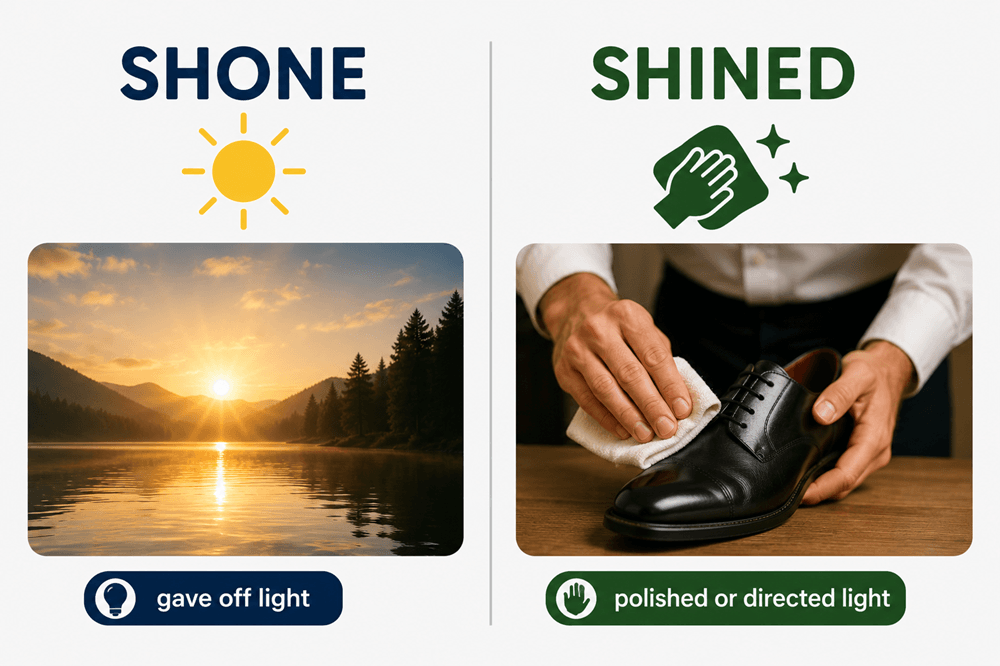
Use shone when something gave off light.
Use shined when someone polished something or directed light onto something.
Examples:
Correct: The sun shone through the window.
Correct: He shined his shoes before the interview.
Correct: The flashlight shone in the dark.
Correct: She shined the flashlight into the room.
In everyday English, especially American English, shined is sometimes used for light too. But if you want the safest traditional choice, use shone for light and shined for polishing.
What Does Shone Mean?
Shone is the past tense of shine when something produced or gave off light.
Examples:
The moon shone brightly.
The stars shone in the sky.
The lamp shone over the desk.
Sunlight shone through the curtains.
In these sentences, the subject is producing or giving off light. The moon, stars, lamp, and sunlight are shining by themselves.
Shone is also used when someone or something stood out in a good way.
Examples:
She shone in the final performance.
His talent shone during the competition.
The team’s confidence shone in the second half.
Here, shone means stood out, impressed others, or performed well.
What Does Shined Mean?
Shined is the past tense of shine when someone polished something or made it bright.
Examples:
He shined his shoes.
She shined the silver necklace.
They shined the car before the show.
I shined the table until it looked new.
In these sentences, someone is doing an action to an object. The person is making something clean, glossy, or bright.
Shined can also mean directed light somewhere.
Examples:
He shined the flashlight under the bed.
She shined the lamp toward the door.
The guard shined a light into the alley.
This use is common because someone is actively pointing or directing the light.
Shined vs Shone: The Main Difference
The easiest difference is this:
Shone = gave off light
Shined = polished or directed light
Examples:
The sun shone all afternoon.
He shined his boots.
The stars shone above the lake.
She shined the flashlight at the wall.
The diamond shone in the light.
He shined the diamond with a soft cloth.
If the thing is glowing, use shone. If someone is polishing or pointing a light, use shined.
Is Shined Correct?
Yes, shined is correct. It is especially correct when the meaning is polished.
Examples:
He shined his shoes.
She shined the silverware.
They shined the old car.
The word shined is also common in American English for light.
Examples:
The sun shined all day.
The flashlight shined in my eyes.
These sentences are common and understandable, especially in casual American English. However, many style guides and careful writers still prefer shone when the subject gives off light.
More traditional:
The sun shone all day.
The flashlight shone in my eyes.
Is Shone Correct?
Yes, shone is correct. It is the traditional past tense when something gives off light or appears bright.
Examples:
The moon shone over the water.
The candle shone in the window.
Her eyes shone with excitement.
The word shone often sounds a little more polished, literary, or formal than shined.
Compare:
The stars shone above us.
The stars shined above us.
Both may be understood, but shone is the more traditional and elegant choice.
American English vs British English
In American English, both shined and shone are used. Shined is common in casual speech, especially for light.
Example:
The sun shined all morning.
In British English, shone is more common when talking about light.
Example:
The sun shone all morning.
Both forms exist, but the preference can depend on region, style, and meaning.
For a simple rule that works well everywhere:
Use shone for light.
Use shined for polishing.
Shined or Shone for a Flashlight?
This one can be tricky because both can appear.
If the flashlight is giving off light by itself, shone often works well.
Example:
The flashlight shone in the dark.
If a person points the flashlight somewhere, shined is usually better.
Example:
He shined the flashlight into the closet.
You can remember it this way:
The flashlight shone.
He shined the flashlight.
The first sentence focuses on the light. The second focuses on the person using the flashlight.
Shined or Shone for Shoes?
Use shined for shoes.
Correct:
He shined his shoes.
She shined her boots.
The soldier shined his shoes before inspection.
Do not use shone for polishing shoes in normal modern English.
Incorrect:
He shone his shoes.
Better:
He shined his shoes.
This is one of the clearest cases. Polishing something is shined, not shone.
Shined or Shone for Talent?
Both can be used, but shone is often the smoother choice when talking about talent, success, or standing out.
Examples:
Her talent shone on stage.
He shone during the interview.
The singer shone in the final song.
In American English, you may also hear:
She really shined in the performance.
This is common and natural. Still, shone often sounds more polished or literary.
A simple recommendation:
Use shone for formal writing.
Use shined if you want a more casual American tone.
Common Mistakes
One common mistake is using shone when you mean polished.
Incorrect:
He shone his shoes.
Correct:
He shined his shoes.
Another mistake is using shined in formal writing where shone would sound better.
Less polished:
The moon shined over the lake.
Better:
The moon shone over the lake.
Another common issue is mixing the forms inconsistently.
Awkward:
The stars shined, and the moon shone.
Better:
The stars shone, and the moon shone.
Try to keep your style consistent when writing about light.
Memory Trick
Here is an easy way to remember the difference:
Shined has -ed, like many action verbs.
A person shined something.
Examples:
shined shoes
shined silver
shined a flashlight
Shone sounds more like a natural glow.
Something shone by itself.
Examples:
the sun shone
the moon shone
the stars shone
So remember:
People shine things → shined
Lights shine by themselves → shone
Quick Test
Choose the correct word:
The sun ___ through the clouds.
Answer: shone
He ___ his shoes before the wedding.
Answer: shined
The flashlight ___ in the dark.
Answer: shone
She ___ the flashlight under the table.
Answer: shined
Her talent ___ during the audition.
Answer: shone
Final Answer
Shined and shone are both correct past-tense forms of shine, but they are used differently.
Use shone when something gave off light or stood out.
Correct: The stars shone brightly.
Correct: Her talent shone on stage.
Use shined when someone polished something or directed light.
Correct: He shined his shoes.
Correct: She shined the flashlight into the room.
The easiest rule is: shone for glowing light, shined for polishing or pointing light.