Verbage or Verbiage: Correct Spelling, Meaning, Common Usage, and Examples Explained Clearly
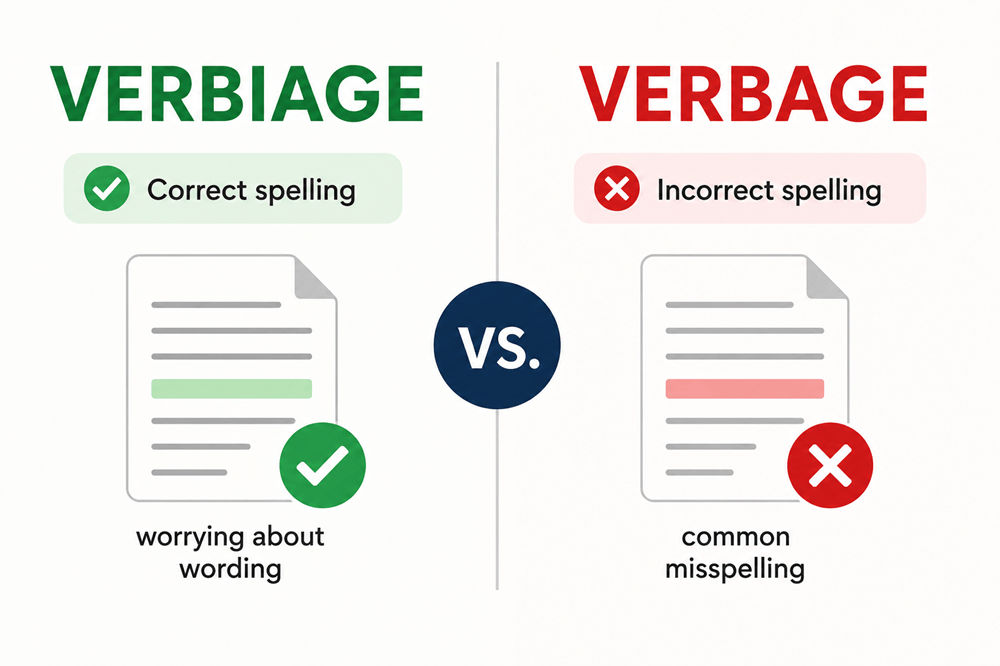
Verbiage is the correct spelling. Verbage is a common misspelling and should usually be avoided. Use verbiage when you mean wording, language, phrasing, or too many unnecessary words. In everyday writing, though, simpler words like wording or language are often clearer.
Quick Answer
Use verbiage, not verbage.
- Correct: The contract contains confusing verbiage.
- Correct: Please simplify the verbiage in this paragraph.
- Correct: The ad’s verbiage sounds too formal.
Verbage is not the standard spelling.
- Incorrect: The contract contains confusing verbage.
- Incorrect: Please simplify the verbage in this paragraph.
The simple rule is: verbiage is correct, and verbage is a misspelling.
Verbage or Verbiage: What Is the Difference?
The difference between verbage and verbiage is that only verbiage is considered standard English. Verbage may appear in casual notes, business messages, or online comments, but it is widely treated as a mistake.
| Word | Status | Example |
|---|---|---|
| Verbiage | Correct spelling | The verbiage needs to be clearer. |
| Verbage | Common misspelling | The verbage needs to be clearer. |
If you are writing for school, work, a website, a legal document, or a professional audience, use verbiage.
What Does Verbiage Mean?
Verbiage is a noun. It can mean the words used to express something, but it often has a negative meaning. When people criticize verbiage, they usually mean the writing has too many words, unclear wording, or unnecessary language.
Examples:
- The proposal has too much verbiage and not enough detail.
- The legal verbiage was difficult to understand.
- Can you rewrite this verbiage in plain English?
- The email’s verbiage sounded cold and impersonal.
- The instructions are useful, but the verbiage is too complicated.
In these examples, verbiage refers to wording or language. It may describe the exact words used, or it may suggest that the wording is too long, too formal, or too unclear.
What Does Verbage Mean?
Verbage is usually a misspelling of verbiage. Some people write it because they connect the word with verb or because they hear the word spoken and guess the spelling. However, verbage is not the spelling most dictionaries, editors, teachers, or professional readers expect.
Examples:
- Incorrect: The website verbage needs work.
- Correct: The website verbiage needs work.
- Better: The website wording needs work.
Even when the intended meaning is clear, verbage can make polished writing look careless. For that reason, it is best to avoid it.
When to Use Verbiage
Use verbiage when discussing wording, phrasing, or the language used in a document, message, speech, contract, article, ad, or policy.
Examples:
- The company changed the verbiage in its privacy policy.
- The brochure’s verbiage should be shorter and friendlier.
- The attorney reviewed the verbiage before the contract was signed.
- The headline is fine, but the verbiage under it feels awkward.
- The warning label uses technical verbiage that may confuse readers.
Verbiage is common in business, legal, marketing, and editing contexts. It is useful when you are talking about wording as a whole, not just one word.
Is Verbiage Always Negative?
Verbiage is not always negative, but it often carries a slightly critical tone. It can simply mean wording, but many people use it to suggest that the wording is excessive, unclear, or inflated.
Neutral use:
- Please use the approved verbiage in the announcement.
- The final verbiage will be added after legal review.
Negative use:
- The report is buried under unnecessary verbiage.
- The verbiage makes a simple idea sound complicated.
Because of this, be careful when using verbiage in feedback. If you say, “Your verbiage needs work,” it may sound more critical than “Your wording could be clearer.”
Better Alternatives to Verbiage
Although verbiage is correct, it is not always the best word. In many sentences, a simpler word is clearer.
| Instead of This | Try This |
|---|---|
| Confusing verbiage | Confusing wording |
| Marketing verbiage | Marketing language |
| Legal verbiage | Legal wording |
| Too much verbiage | Too many words |
For clear writing, wording, language, phrasing, or text often works better than verbiage.
Common Mistake
The most common mistake is spelling verbiage as verbage.
Incorrect:
- The landing page needs better verbage.
- This policy has too much verbage.
- The sales email’s verbage feels pushy.
Correct:
- The landing page needs better verbiage.
- This policy has too much verbiage.
- The sales email’s verbiage feels pushy.
Even better in many cases:
- The landing page needs better wording.
- This policy has too many words.
- The sales email sounds pushy.
Verbiage in Business Writing
Verbiage appears often in offices, marketing teams, legal reviews, and content discussions. People may say things like “approved verbiage,” “final verbiage,” or “update the verbiage.” These phrases are understandable, but they can sound stiff.
Examples:
- Formal: Please update the verbiage in the client email.
- Clearer: Please update the wording in the client email.
- Formal: Legal approved the final verbiage.
- Clearer: Legal approved the final wording.
Use verbiage when it fits the tone, but do not use it just to sound more professional. Simple wording is usually stronger.
How to Remember the Difference
Remember that verbiage contains bi, not just b. The correct spelling is:
- verbiage
Not:
- verbage
A helpful memory trick is this: verbiage has extra letters, just like verbiage can mean extra words.
Final Answer
Verbiage is the correct spelling. It means wording, language, phrasing, or excessive wordiness. Verbage is a common misspelling and should be avoided in standard writing.
Use verbiage if you specifically mean wording or wordiness. For everyday clarity, consider using simpler alternatives such as wording, language, phrasing, or text.