Tear or Tare: Meaning, Difference, Correct Usage, Pronunciation, and Examples Explained Clearly
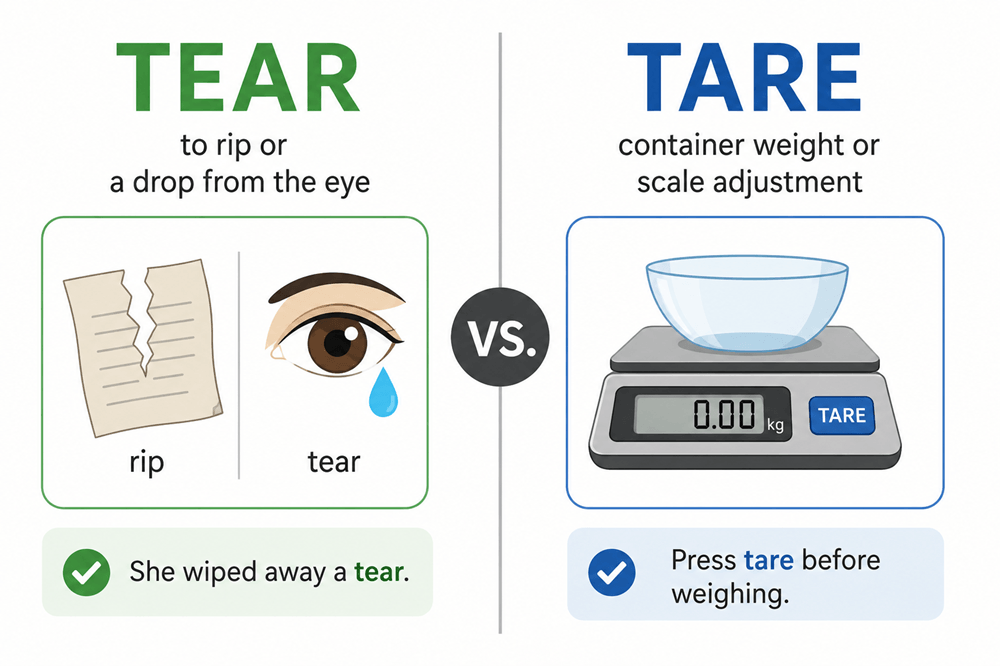
Tear and tare can sound the same, but they mean different things. Tear usually means to rip something, or it can mean a drop of liquid from the eye. Tare is a more specific word used for the weight of packaging or for setting a scale back to zero.
Quick Answer
Use tear when you mean to rip, damage, or pull something apart.
- Do not tear the paper.
- There is a tear in my jacket.
- She tried not to tear the envelope.
Use tear also for liquid from the eye.
- A tear rolled down his cheek.
- She wiped away her tears.
Use tare when talking about weight, packaging, or scales.
- Press the tare button before adding the flour.
- The tare weight is listed on the label.
- The scale tares the container weight.
The simple rule is: tear is for ripping or crying, while tare is for weighing.
Tear or Tare: What Is the Difference?
The difference between tear and tare is meaning. Tear is a common English word with two main uses. It can mean to rip something, and it can also mean a drop from the eye. Tare is mostly used in weighing, shipping, cooking, science, and product labeling.
| Word | Meaning | Example |
|---|---|---|
| Tear | To rip or a rip | There is a tear in the fabric. |
| Tear | A drop from the eye | A tear fell from her eye. |
| Tare | Container weight or scale adjustment | Press tare before weighing the rice. |
If the sentence is about fabric, paper, damage, or crying, you probably need tear. If the sentence is about a scale or container weight, use tare.
What Does Tear Mean?
Tear has two common meanings. First, it can mean to rip, split, or pull something apart. In this use, it can be a verb or a noun.
Examples:
- Please do not tear the page.
- The dog tried to tear the toy apart.
- There was a small tear in the curtain.
- His sleeve had a tear near the elbow.
Second, tear can mean a drop of liquid from the eye. This kind of tear appears when someone cries, laughs hard, feels strong emotion, or has irritated eyes.
Examples:
- A tear ran down her face.
- He had tears in his eyes.
- The movie brought her to tears.
- Smoke made my eyes fill with tears.
The spelling is the same, but the meaning and pronunciation can change.
How Do You Pronounce Tear?
Tear has two pronunciations.
| Meaning | Pronunciation | Example |
|---|---|---|
| To rip, or a rip | Sounds like “tair” | Do not tear the paper. |
| A drop from the eye | Sounds like “teer” | A tear fell from her eye. |
This is why tear can be confusing. The word is spelled the same way, but context tells you how to say it.
What Does Tare Mean?
Tare is mainly used when measuring weight. It often means the weight of an empty container, wrapper, box, bag, or packaging. This weight is subtracted so you can measure only the contents.
Examples:
- The tare weight of the box is 2 pounds.
- The label shows the gross weight and tare weight.
- The worker subtracted the tare from the total weight.
Tare can also be a verb. To tare a scale means to reset it to zero after placing a container on it. This lets you weigh only what you add next.
Examples:
- Place the bowl on the scale and press tare.
- Tare the scale before adding the sugar.
- The digital scale tares automatically.
This word is common in kitchens, shipping, labs, grocery stores, and warehouses.
Tare Weight Meaning
Tare weight means the weight of the container or packaging without the product inside. It is different from net weight and gross weight.
| Term | Meaning |
|---|---|
| Tare weight | Weight of the empty container |
| Net weight | Weight of the product only |
| Gross weight | Total weight of product plus container |
For example, if a jar of honey weighs 18 ounces total and the empty jar weighs 3 ounces, the tare weight is 3 ounces. The net weight of the honey is 15 ounces.
When to Use Tear
Use tear when the sentence is about ripping, splitting, damaging, or pulling something apart.
- Be careful not to tear the ticket.
- The sharp edge may tear the fabric.
- There is a tear in the screen.
- The child started to tear the wrapping paper.
Use tear also when the sentence is about crying or liquid from the eyes.
- She brushed away a tear.
- His eyes filled with tears.
- The speech moved many people to tears.
When to Use Tare
Use tare when the sentence is about weighing something accurately by removing the container’s weight.
- Press tare after placing the bowl on the scale.
- The tare weight must be deducted from the gross weight.
- The shipping form includes the tare of the container.
- A good kitchen scale should have a tare function.
If you are not talking about a scale, container weight, or measurement, tare is probably not the word you need.
Common Mistakes
A common mistake is using tare when the sentence means a rip.
Incorrect:
- There is a tare in my shirt.
Correct:
- There is a tear in my shirt.
Another mistake is using tear when talking about a scale setting.
Incorrect:
- Press the tear button before weighing the flour.
Correct:
- Press the tare button before weighing the flour.
A third mistake is forgetting that tear can have two pronunciations. The sentence tells you which meaning is intended.
How to Remember the Difference
Use these simple memory clues:
- Tear can mean a rip or a drop from the eye.
- Tare belongs with scales, containers, and weight.
- Tare and scale both relate to measuring.
You can also remember this sentence: A tear can be in paper or in your eye, but tare belongs on a scale.
Final Answer
Tear is the correct word when you mean to rip something, a rip in something, or a drop from the eye. It can be pronounced like “tair” when it means rip, or like “teer” when it means a drop from the eye.
Tare is the correct word when talking about weight, packaging, containers, or resetting a scale to zero. Use tear for ripping or crying, and use tare for weighing.