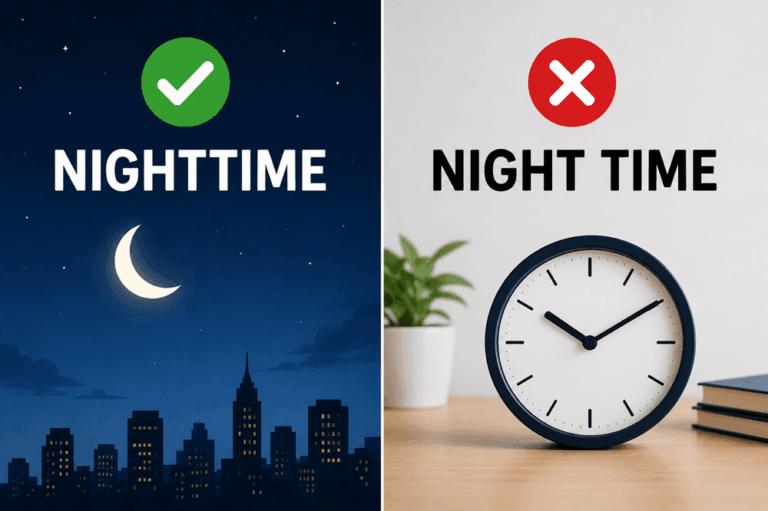
Is Noone One Word? The Correct Spelling Explained
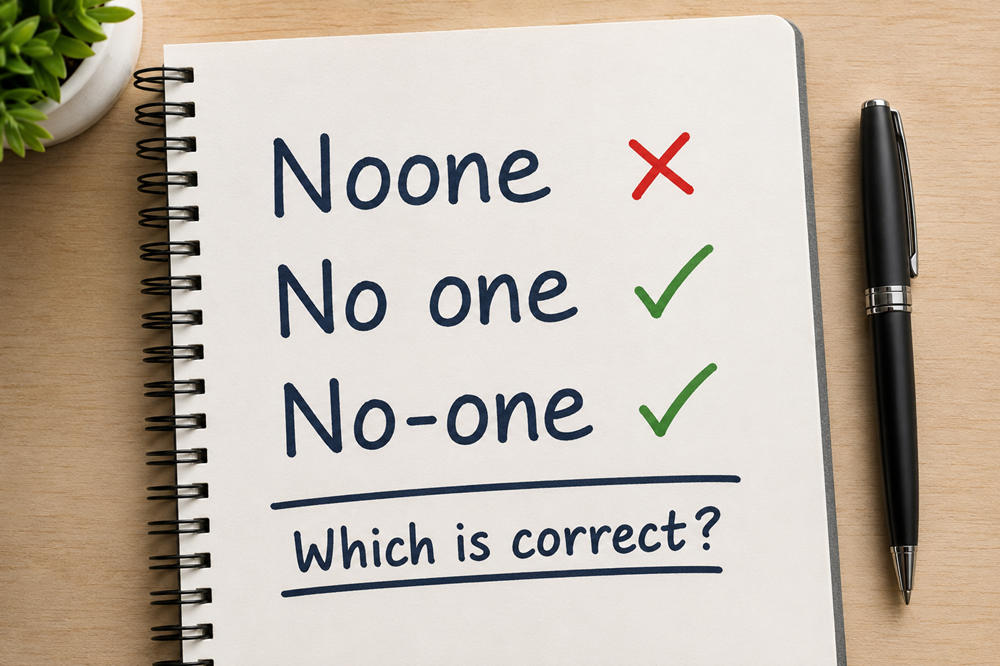
Noone is not the correct spelling when you mean “nobody.” The standard form is no one, written as two separate words.
This spelling may seem unusual because similar words such as someone, anyone, and everyone are written as one word. However, no one is an exception.
Is Noone a Word?
Noone is a common misspelling of no one. It should not be used as a pronoun meaning “no person.”
Incorrect: Noone answered the door.
Correct: No one answered the door.
The space between no and one should remain in both formal and informal writing.
No One, Noone, or No-One?
| Spelling | Is It Correct? | Usage |
|---|---|---|
| No one | Yes | The standard spelling and the safest choice in all varieties of English |
| Noone | No | A misspelling when it is intended to mean “nobody” |
| No-one | Yes | A hyphenated variant used mainly in British English |
The two-word form no one is the clearest option, especially in American English. The hyphenated form no-one also appears in British writing, but it is less common in American usage.
What Does No One Mean?
No one is a pronoun meaning “no person” or “not anyone.” It refers to people rather than objects or places.
- No one knew the answer.
- There was no one in the office.
- She told no one about the surprise.
- No one called while you were away.
It can appear at the beginning, middle, or end of a sentence without changing its spelling.
No One vs. Nobody
No one and nobody usually mean the same thing. In most sentences, one can replace the other without changing the meaning.
No one came to the meeting.
Nobody came to the meeting.
Nobody is slightly more informal and is common in everyday speech. No one is often preferred in writing, but both are grammatically correct.
Nobody can also be a noun describing someone who is considered unimportant:
He arrived in the city as a nobody and later became a successful musician.
No one is not normally used in that way.
Is No One Singular or Plural?
No one is grammatically singular, so it takes a singular verb.
Correct: No one is available.
Incorrect: No one are available.
Other examples include:
- No one has opened the package.
- No one wants to miss the concert.
- No one was waiting outside.
Although no one is singular, it is common to use they, them, or their when referring back to it:
No one should leave their belongings unattended.
This is known as singular they and is useful when a person’s gender is unknown or unimportant.
How to Use No One’s
No one’s is also correct. The apostrophe can show possession or form a contraction.
No One’s Showing Possession
No one’s name was written on the package.
Here, no one’s means that the name did not belong to any person.
No One’s as a Contraction
No one’s arrived yet.
In this sentence, no one’s is a shortened form of no one has.
It can also mean no one is:
No one’s ready to leave.
How to Remember the Correct Spelling
Think of no one as meaning not one person. Because one person is written as two words, the space also remains in no one.
- No one is correct.
- No-one is an accepted British variant.
- Noone is incorrect when it means “nobody.”
Final Answer
Noone is not one word. The correct standard spelling is no one, with a space between the two words.
You may occasionally see no-one in British English, but no one is the simplest and most widely accepted form to use.