Grateful or Greatful: Correct Spelling, Meaning, Usage, and Examples for Clear Writing
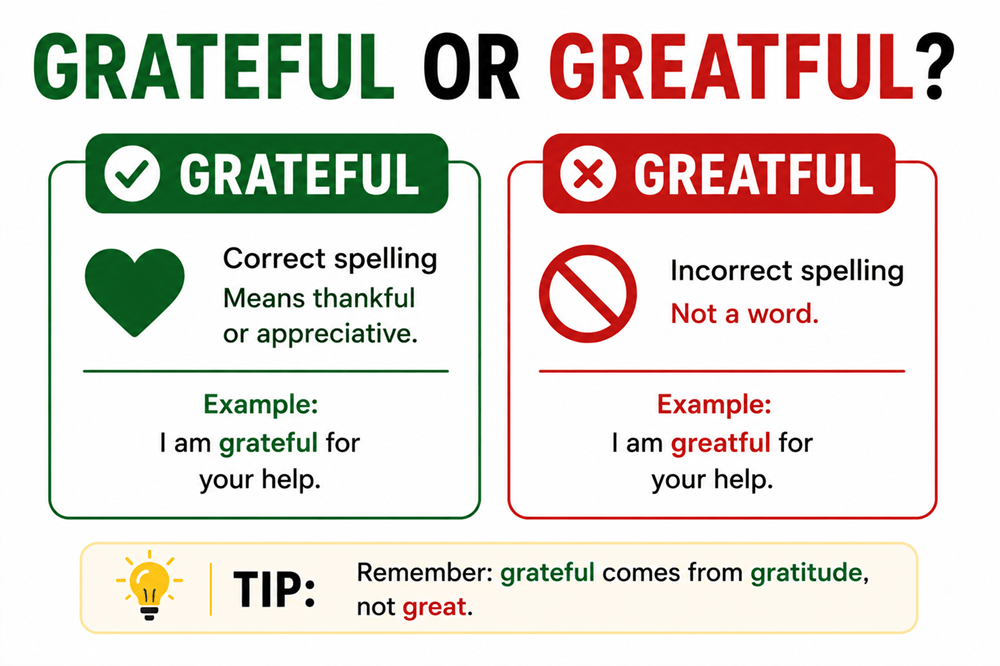
Grateful is the correct spelling when you mean thankful or appreciative. Greatful is a common misspelling and should not be used in standard English. The confusion usually happens because grateful sounds like it should be connected to great, but the correct word is spelled with grate, not great. The easiest rule is simple: if you mean thankful, write grateful.
Quick Answer
Use grateful when you mean thankful, appreciative, or glad because of something kind, helpful, or meaningful.
- Correct: I am grateful for your help.
- Correct: She felt grateful for the opportunity.
- Correct: They were grateful to everyone who supported them.
Greatful is not the correct spelling.
- Incorrect: I am greatful for your help.
- Incorrect: She felt greatful for the opportunity.
- Incorrect: They were greatful to everyone who supported them.
The simple rule is this: grateful is correct, and greatful is a spelling mistake.
Grateful or Greatful: What Is the Difference?
The difference between grateful and greatful is spelling. Grateful is the correct word. Greatful is a misspelling that happens because people connect the meaning of gratitude with the word great.
That connection makes sense at first. When you feel grateful, you may feel that something is great, valuable, kind, or meaningful. But the spelling does not follow the word great. The accepted spelling is grateful.
| Word | Status | Example |
|---|---|---|
| Grateful | Correct spelling | I am grateful for your kindness. |
| Greatful | Incorrect spelling | I am greatful for your kindness. |
If you are writing an email, thank-you note, card, essay, caption, article, or professional message, always use grateful.
What Does Grateful Mean?
Grateful means feeling or showing thanks. You use it when someone appreciates help, kindness, support, generosity, good luck, a chance, a lesson, or a positive experience.
Examples:
- I am grateful for your advice.
- He was grateful for a second chance.
- She felt grateful after receiving the letter.
- They are grateful to their neighbors for helping after the storm.
In each sentence, grateful expresses appreciation. It shows that someone recognizes the value of what they received or experienced.
Grateful can describe a feeling inside a person, but it can also describe words, actions, or attitudes that show thankfulness.
- She gave him a grateful smile.
- He sent a grateful message after the interview.
- The family offered grateful thanks to the volunteers.
Whether the gratitude is spoken, written, or quietly felt, the correct spelling is always grateful.
Why Greatful Is Incorrect
Greatful is incorrect because it is not the standard spelling of the word that means thankful. The mistake is understandable because great is a common English word, and gratitude often feels connected to something great. Still, English does not spell the word that way.
Compare these examples:
- Incorrect: I am greatful for your patience.
- Correct: I am grateful for your patience.
- Incorrect: She was greatful for the support.
- Correct: She was grateful for the support.
- Incorrect: We are greatful to be here.
- Correct: We are grateful to be here.
If you write greatful, most readers will know what you mean, but the spelling will look wrong. In polished writing, greatful can distract from the sincerity of the message. That matters because this word often appears in emotional, thoughtful, or professional situations.
Why Is Grateful Spelled With “Grate”?
Grateful may look strange because it begins with grat-, not great-. The spelling is connected to the same root seen in words like gratitude and gratify. That is why grateful belongs with words about thanks, appreciation, and pleasing feelings.
- grateful
- gratitude
- gratify
- gratifying
These words all share a similar idea: appreciation, pleasure, or thankfulness. Once you connect grateful with gratitude, the spelling becomes easier to remember.
A simple reminder is:
Grateful comes from gratitude, not great.
That one sentence helps explain why the correct spelling is grateful, even though greatful may look logical at first.
When to Use Grateful
Use grateful whenever you want to express thankfulness or appreciation. It works in formal, informal, personal, emotional, and professional writing.
Examples:
- I am grateful for everything you have done.
- We are grateful for your time and attention.
- She is grateful to have such supportive friends.
- He felt grateful for the quiet morning.
- The team is grateful for the community’s support.
Grateful is especially common in thank-you notes, sympathy messages, job applications, professional emails, speeches, and reflective writing.
- I would be grateful for the opportunity to interview.
- We are grateful for your generous donation.
- She was grateful for the memories they shared.
In every case, grateful shows appreciation. It is warmer than simply saying something was useful, helpful, or nice.
Grateful For or Grateful To?
Both grateful for and grateful to are correct, but they are used slightly differently.
Use grateful for when you are naming the thing, experience, action, or situation you appreciate.
- I am grateful for your help.
- She is grateful for the chance to learn.
- They were grateful for the warm welcome.
Use grateful to when you are naming the person or group you appreciate.
- I am grateful to you for your help.
- She is grateful to her teacher.
- They were grateful to the volunteers.
You can also use both together:
- I am grateful to my parents for their support.
- We are grateful to the staff for their hard work.
The spelling stays the same in all of these phrases: grateful.
Grateful vs Thankful
Grateful and thankful are very similar. Both mean appreciative or glad because of something good, kind, helpful, or meaningful. In many sentences, you can use either word.
- I am grateful for your help.
- I am thankful for your help.
Grateful can sometimes feel a little deeper or more emotional. It often suggests a thoughtful awareness of what someone has received. Thankful can be slightly more direct and everyday.
- She was grateful for the friendship that carried her through a difficult year.
- He was thankful the meeting ended early.
Both words are correct, but grateful often sounds warmer, more reflective, or more heartfelt.
Grateful vs Great
Grateful and great are different words. Grateful means thankful. Great means very good, large, important, impressive, or excellent.
| Word | Meaning | Example |
|---|---|---|
| Grateful | Thankful or appreciative | I am grateful for your help. |
| Great | Very good, large, or important | You did a great job. |
The mistake greatful happens when these two ideas get blended together. But even when something is great, the feeling of thankfulness is still spelled grateful.
- Correct: I am grateful for the great news.
- Incorrect: I am greatful for the great news.
Common Phrases With Grateful
Grateful appears in many common phrases. Learning these phrases can help you remember the spelling.
- grateful for your help
- grateful for your support
- grateful for the opportunity
- grateful to be here
- forever grateful
- deeply grateful
- truly grateful
- very grateful
Examples:
- We are grateful for your support.
- I am deeply grateful for your kindness.
- She is forever grateful for the second chance.
- He felt truly grateful to be included.
These phrases often appear in sincere writing. Spelling grateful correctly helps your message look careful and respectful.
Common Mistakes With Grateful and Greatful
The most common mistake is spelling grateful as greatful. This happens because great is familiar and positive, while grate may look unrelated to thankfulness.
Incorrect:
- I am greatful for your help.
- We are greatful for this opportunity.
- She felt greatful after the kind message.
- He was greatful to his family.
Correct:
- I am grateful for your help.
- We are grateful for this opportunity.
- She felt grateful after the kind message.
- He was grateful to his family.
Another mistake is using grateful when the sentence actually needs great.
Incorrect:
- You did a grateful job.
Correct:
- You did a great job.
Use great when you mean excellent. Use grateful when you mean thankful.
Examples of Grateful in Sentences
Here are examples of grateful used correctly:
- I am grateful for your patience.
- She was grateful for the quiet support of her friends.
- They felt grateful after the community helped rebuild their home.
- He is grateful to his teacher for believing in him.
- We are grateful for the chance to work with you.
- The family was grateful for every message and meal.
- She gave him a grateful smile.
- I will always be grateful for what you taught me.
In each sentence, grateful means thankful or appreciative.
Examples of Greatful as an Incorrect Spelling
Here are examples showing why greatful should be avoided:
- Incorrect: I am greatful for your kindness.
- Correct: I am grateful for your kindness.
- Incorrect: She is greatful to her parents.
- Correct: She is grateful to her parents.
- Incorrect: We are greatful for the invitation.
- Correct: We are grateful for the invitation.
- Incorrect: He felt greatful for the good news.
- Correct: He felt grateful for the good news.
The correct spelling is always grateful when the meaning is thankful.
How to Remember Grateful or Greatful
A simple way to remember the correct spelling is this:
- Grateful is connected to gratitude.
- Greatful is not a standard word.
- If you feel gratitude, you are grateful.
You can also remember this short phrase:
Grateful comes from gratitude.
That memory trick is helpful because gratitude clearly starts with grat-, not great-. If you can spell gratitude, you can remember grateful.
Another quick reminder is:
Be grateful, not greatful.
The word may sound like great, but the spelling you need is grateful.
Final Answer
Grateful is the correct spelling when you mean thankful, appreciative, or glad because of someone’s help, kindness, support, or a meaningful experience. Greatful is a common misspelling and should not be used in standard writing.
The easiest rule is simple: grateful comes from the same family as gratitude. If you are expressing thanks, appreciation, or heartfelt recognition, always write grateful, not greatful.