Drier or Dryer: Correct Meaning, Spelling Difference, Usage, and Examples Explained Clearly
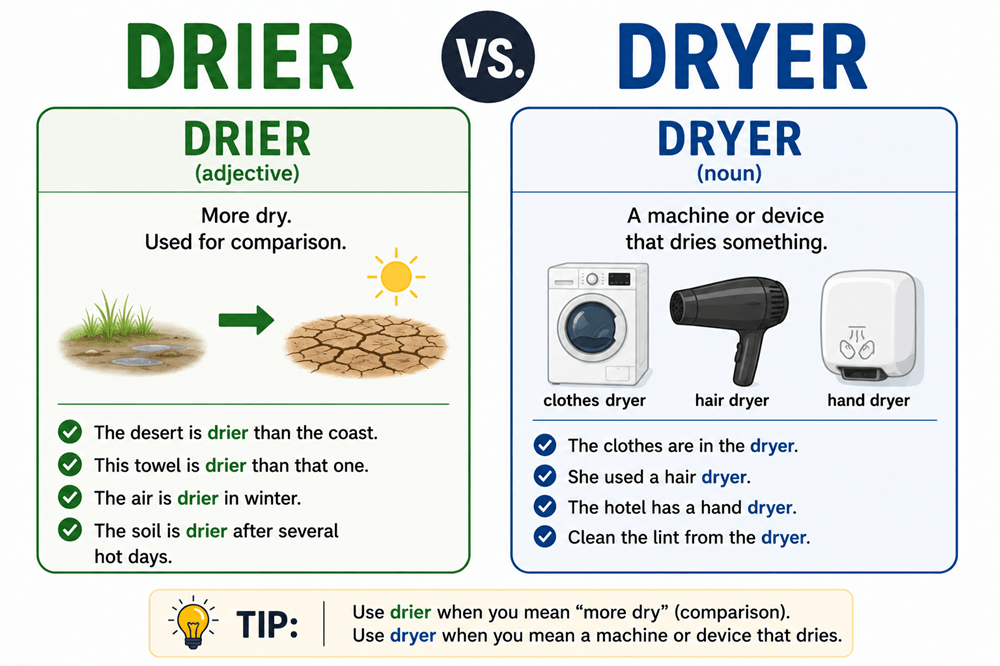
Drier and dryer are both correct words, but they are usually used differently. Use drier when you mean more dry. Use dryer when you mean a machine or object that dries something, such as a clothes dryer or hair dryer. The easiest rule is: drier compares dryness, while dryer is a thing that dries.
Quick Answer
Use drier as the comparative form of dry.
- This towel is drier than that one.
- The air feels drier in winter.
- The soil is drier after several hot days.
Use dryer for a machine, appliance, or object that dries something.
- The clothes are still in the dryer.
- She used a hair dryer.
- The hotel room has a hand dryer.
The simple rule is: drier means more dry. Dryer means something that dries.
Drier or Dryer: What Is the Difference?
The difference between drier and dryer is grammar and meaning. They sound the same, and they are spelled almost the same, but they usually do different jobs in a sentence.
Drier is an adjective. It is the comparative form of dry. You use it when comparing one thing with another and saying that one has less moisture.
Dryer is a noun. It names a person, machine, device, or object that dries something. In everyday writing, it most often refers to a clothes dryer, hair dryer, hand dryer, or industrial dryer.
| Word | Grammar | Meaning | Example |
|---|---|---|---|
| Drier | Adjective | More dry | The desert is drier than the coast. |
| Dryer | Noun | A thing that dries | The shirt is in the dryer. |
If your sentence compares dryness, use drier. If your sentence names a machine or tool, use dryer.
What Does Drier Mean?
Drier means more dry. It is used when comparing two or more things. Something is drier if it has less water, less moisture, or less humidity than something else.
Examples:
- The towel is drier now than it was an hour ago.
- The climate is drier in the desert.
- This cake is drier than the one we made yesterday.
- The ground became drier after the storm passed.
- My skin gets drier during cold weather.
In every example, drier describes a condition. It tells you that something has less moisture compared with another thing, time, place, or state.
What Does Dryer Mean?
Dryer is a noun. It means something that dries. The most common example is a clothes dryer, a household appliance that removes moisture from laundry.
Examples:
- The dryer stopped working last night.
- Please move the towels from the washer to the dryer.
- She packed a travel hair dryer.
- The bathroom has an electric hand dryer.
- The factory uses an industrial dryer.
In these sentences, dryer names a machine, appliance, or device. It is not comparing dryness. It is the thing that performs the drying.
Drier as a Comparative Adjective
Drier belongs to the same comparison pattern as many other adjectives ending in y. When an adjective ends in y, the y often changes to i before -er.
- dry → drier
- happy → happier
- easy → easier
- heavy → heavier
That is why drier is the expected spelling when you mean more dry.
Examples:
- The basement is drier after we fixed the leak.
- The bread tastes drier than usual.
- This region is much drier than the valley.
Dryer as a Machine or Device
Dryer is the spelling used for machines and devices that remove moisture. This includes many familiar objects.
- clothes dryer
- hair dryer
- hand dryer
- food dryer
- industrial dryer
Examples:
- The jeans shrank in the dryer.
- She dried her hair with a dryer.
- The restroom’s hand dryer was very loud.
- A food dryer can remove moisture from fruit.
Whenever you are naming the thing that dries something, use dryer.
Is Dryer Ever an Adjective?
In some writing, dryer may appear as a variant spelling of drier, especially in informal use. However, drier is usually the cleaner choice when you mean more dry.
Less preferred for comparison:
- The air is dryer today.
Preferred:
- The air is drier today.
Because dryer so strongly suggests an appliance or drying device, using drier for comparisons helps avoid confusion.
Clothes Dryer or Clothes Drier?
The standard phrase is clothes dryer.
Correct:
- The clothes are in the dryer.
- Our clothes dryer needs repair.
- Do not put wool sweaters in the dryer.
Less common:
- The clothes are in the drier.
If you mean the appliance that dries laundry, use dryer.
Hair Dryer or Hair Drier?
The standard phrase is hair dryer.
Correct:
- She used a hair dryer after showering.
- The hotel provided a hair dryer.
- My hair dryer stopped working.
Less common:
- She used a hair drier.
Because this is a device that dries hair, dryer is the expected spelling.
Examples of Drier in Sentences
Here are natural examples of drier used correctly:
- The towels are drier after another ten minutes outside.
- The weather is drier than it was last week.
- Her skin gets drier in the winter.
- The soil near the fence is drier than the soil by the garden.
- This roast chicken is drier than I expected.
- The mountain air felt drier than the air near the lake.
- The paint looked drier after sitting overnight.
- Use lotion if your hands become drier.
In each sentence, drier compares dryness.
Examples of Dryer in Sentences
Here are natural examples of dryer used correctly:
- The dryer finished its cycle.
- He cleaned lint out of the dryer.
- She bought a new hair dryer.
- The hand dryer in the restroom was broken.
- Put the wet towels in the dryer.
- The appliance store sells washers and dryers.
- The old dryer made a strange noise.
- A boot dryer can help after a rainy hike.
In each sentence, dryer names a thing that dries something.
Common Mistakes to Avoid
The biggest mistake is using dryer when the sentence needs the comparative adjective drier.
Less preferred:
- The air is dryer in Arizona.
- This towel is dryer than that one.
Better:
- The air is drier in Arizona.
- This towel is drier than that one.
Another mistake is using drier for the appliance.
Less common:
- The clothes are in the drier.
- I need a new hair drier.
Better:
- The clothes are in the dryer.
- I need a new hair dryer.
Use drier for comparison and dryer for the machine.
How to Remember Drier or Dryer
Here is an easy memory trick:
Drier has i, like comparison words such as happier and easier.
Dryer has y, like the base word dry, and names the thing that dries.
- Drier = more dry
- Dryer = machine or device that dries
You can also remember this sentence:
The towel is drier after time in the dryer.
In that sentence, drier describes the towel, and dryer names the appliance.
Final Answer
Drier and dryer are both correct, but they are usually used differently. Use drier when you mean more dry, as in the air is drier today. Use dryer when you mean a machine, appliance, or object that dries something, as in clothes dryer, hair dryer, or hand dryer. Remember: drier compares dryness, while dryer dries things.